Portuguese
  Spanish


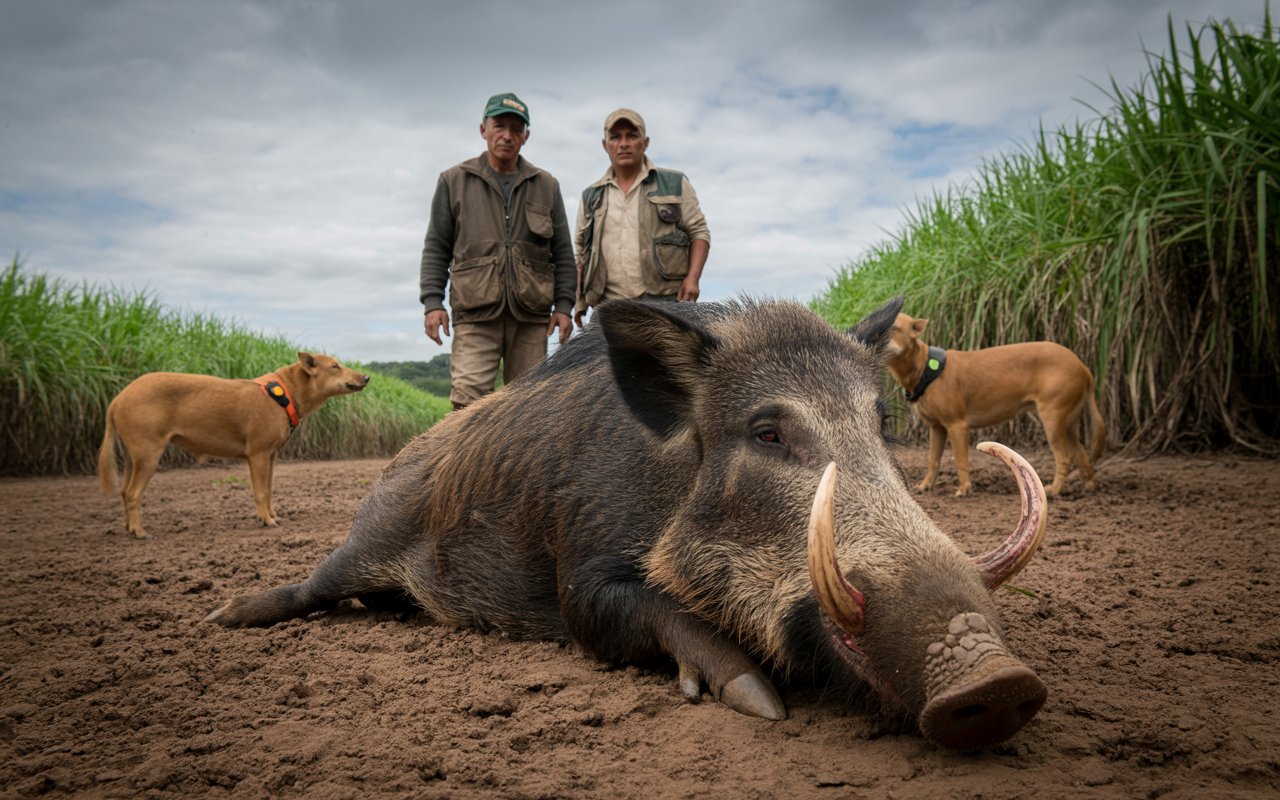


Animal Shot by Hunters Near Sugarcane Mill in João Pinheiro Reveals Possible Trend of Abnormal Growth of Wild Boars in the Country, Fueled by Abundance in Crop Fields and Absence of Natural Predators
An extraordinary wild boar was captured by hunters on May 27, in a rural area near a sugarcane mill in the municipality of João Pinheiro, northwest of Minas Gerais. According to the authorities, the animal measured about 2.40 meters in length, 1.55 meters in height and had an estimated weight of 300 kg, making it one of the largest ever recorded in the country.
The hunting operation was conducted by a licensed management group, equipped with scent-tracking dogs with GPS to track the animal over more than 5 km of dense forest. The wild boar had been sighted the previous night and showed recent injuries, possibly caused by encounters with other specimens of similar size. The action responds to requests from local farmers who are facing increasing losses due to the presence of the invasive species.
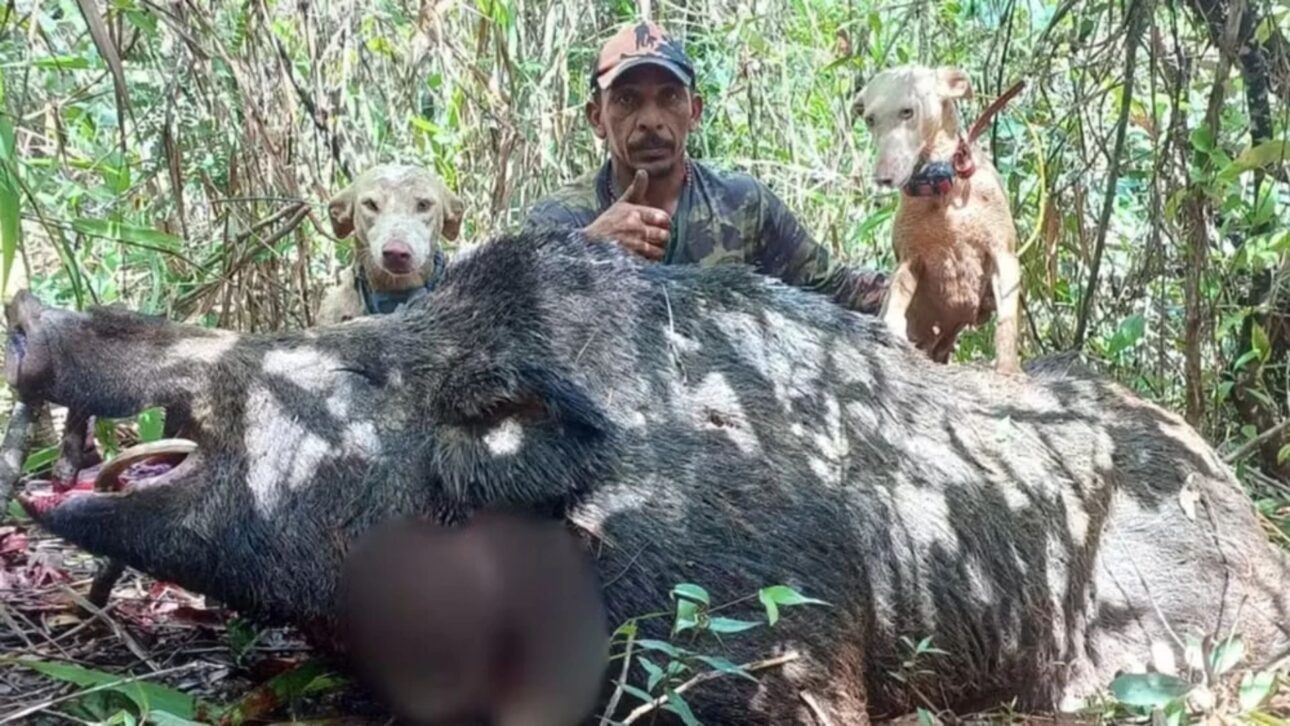
Experts point out that the abnormal growth of these animals may be related to the large food supply available in Brazil’s agricultural regions. With an abundance of grains such as corn, sorghum, soy, and sugarcane, wild boars — and especially their hybrid offspring, the so-called “javaporcos” — find ideal conditions to gain weight and size, without the pressure of natural predators or food scarcity.
-
World’s Fastest Tractor, the JCB Fastrac Two, Hits Nearly 247.5 km/h with Over 1,000 Horsepower

-
At 86, mountaineer Carlos Soria becomes the oldest person ever to summit an 8,000-meter peak, reaching the top of Manaslu in Nepal.

-
Brazil Secures Spot in International Mathematical Olympiad as Students Excel in One of the World’s Most Competitive Selections, Highlighting Growth in STEM Education Among Young Talents
-
June 2026 Heatwave in France Depletes “Blanc de Meudon” as Residents Use Chalk Powder to Cool Homes by 3 to 7°C Without Air Conditioning



Proliferation Favored by Hybrids and Superfeeding in the Field
Unlike their behavior in their original habitats in Europe and Asia, where they face harsh winters and intense competition for food, in Brazil, wild boars thrive in an abundant environment with a favorable climate. The presence of feed for other animals, cultivated fruits, and roots in rural areas contributes to continuous caloric gain.
The hunted wild boar may be an example of the subspecies Sus scrofa attila, considered one of the largest in the world. These animals have characteristics such as tusks up to 13 cm, developed neck muscles, and a jumping ability of up to 1.60 m — which makes them dangerous not only to crops but also to other animals and even humans. Reports of attacks in threatening situations have become more common.


In addition to physical risks, there is concern about the environmental impact caused by large wild boars. By turning over large areas of soil in search of food, these animals contribute to erosive processes and degradation of native vegetation. The containment of the species depends on coordinated actions between producers and environmental agencies.
Brazil Bets on Excavations; USA Uses Automatic Traps
In Brazil, one of the most commonly used tactics by farmers is digging trenches around crops in an attempt to prevent the entry of wild boars. Although simple, the strategy has proven limited in the face of the strength and skill of these animals to overcome obstacles. In the United States, farmers adopt automatic traps with remote monitoring, which allow for the mass capture of wild boars without the use of firearms or direct chases.
The difference between the approaches highlights the need for modernization of control practices in Brazil. The introduction of technologies similar to those used in the U.S. could optimize containment efforts and reduce risks for both people and the environment. The work of specialized groups, such as the one that hunted the wild boar in Minas Gerais, is also essential but needs logistical and legal reinforcement.
The information was reported by the channel Fatos Rurais, based on accounts from hunting instructor Ronaldo Simões and the group of hunters responsible for the culling. The episode reinforces the urgency of discussing more effective public policies to address the expansion of this invasive species in Brazil.
The episode reinforces the warning from experts about the urgency for more effective strategies and advanced technologies to contain the expansion of wild boars in the country. Continuous monitoring, combined with preventive actions in crops, will be essential to prevent the problem from growing even larger in the coming years.
Given this concerning scenario, do you believe that Brazil needs to invest in new technologies, like those used in the United States, or expand traditional management actions to curb the advance of giant wild boars?