






 Portuguese
  Spanish


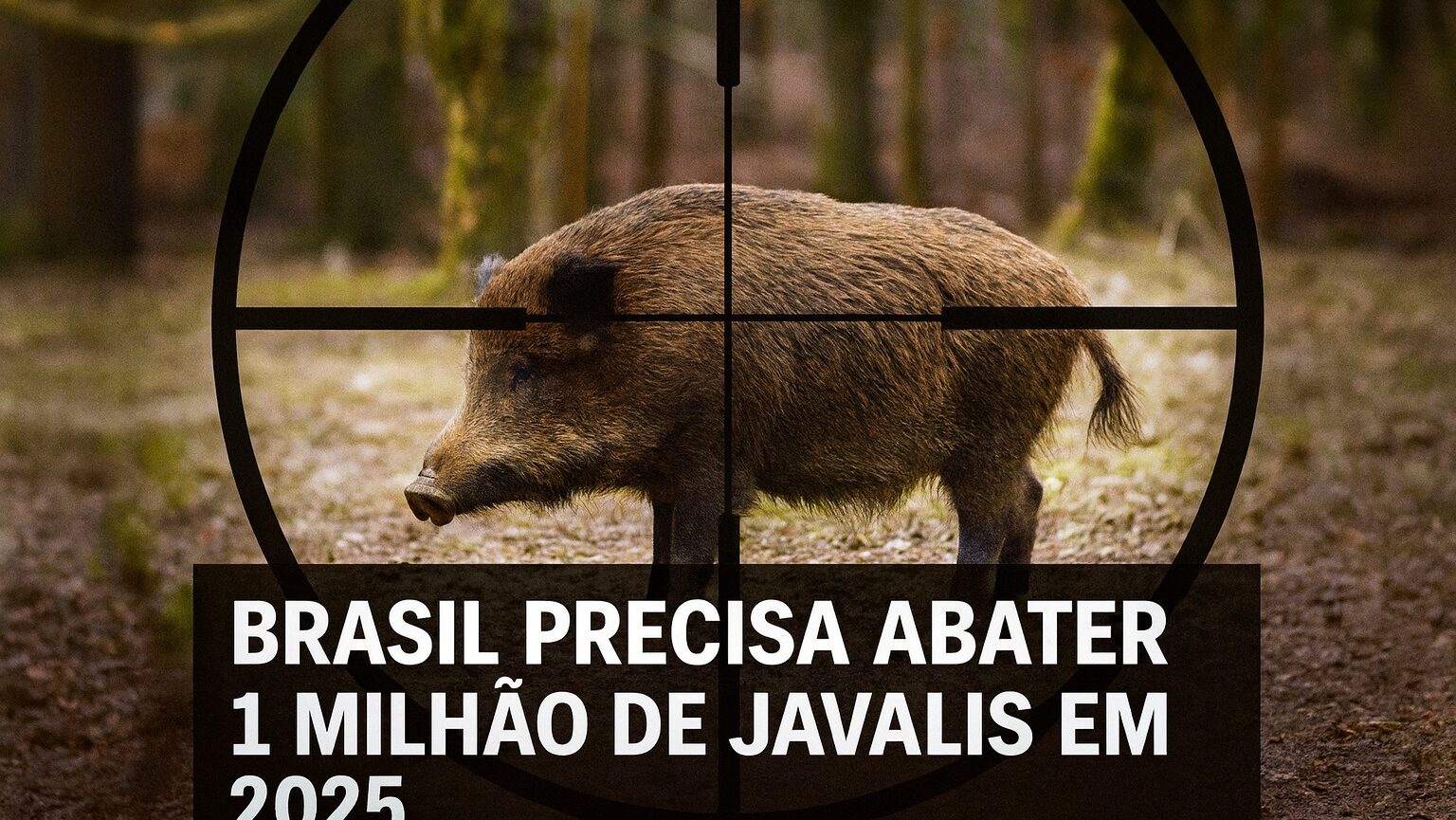
Wild Boar Advances Uncontrollably in Brazil, Threatens Crops and Livestock, Pressures Congress and Puts Decentralization, Bonuses, and Utilization of Meat on the Agenda
The uncontrolled presence of wild boars and hybrid boars in rural areas of Brazil has reignited an alarm in Congress and among agribusiness entities. Considered one of the major invasive pests in the country, the species destroys crops, threatens biodiversity, and endangers the health of livestock.
Studies show that Brazil will need to cull more than one million wild boars in 2025 to reduce the damage.
In 2024, around 500,000 animals were eliminated, but this number was not enough to curb population growth.
-
India’s Sugar Export Cuts and Ethanol Shift Amid El Niño Threat Could Impact Global Prices and Stocks

-
Quarantine Pest Threatening Palm Trees Puts Brazilian Authorities on Alert, Prompts Monitoring at University of Taubaté and Potential Control Measures Across São Paulo
-
Global Alert: Report Finds 159 Pesticides in Coffee Beans Sold in Europe, Posing Serious Risks to Millions of Farm Workers
-
Low-Demand Brazilian Beef Offal Gains Popularity Abroad: Indonesia Purchases $19.5 Million, Boosting Revenue and Reducing Waste



According to the Brazilian Association of Hunters Here is Wild Boar, the population continues to grow uncontrollably.
These animals can cause losses of up to 40% in corn and soybean crops in some regions. Furthermore, they degrade soil, compromise springs, and threaten native species.
However, the most concerning issue is the sanitary risk: wild boars transmit diseases such as classical swine fever and foot-and-mouth disease.
This could compromise Brazil’s sanitary status as a foot-and-mouth disease-free country and impact the competitiveness of agribusiness in international markets.
Ticking Time Bomb for Agribusiness
For Rafael Salerno, president of the Brazilian Association of Hunters Here is Wild Boar, the situation has become a “ticking time bomb against Brazilian agribusiness.”
He claims it is a mistake to compare the control of wild boars with the illegal hunting of native species, such as capybaras or jaguars.
“Due to the incompetence and complacency of the authorities, it has become impossible to eliminate these animals. The effort should be directed towards minimizing damage as is already happening in other countries,” he said. His viewpoint reinforces the urgency for specific public policies.
Decentralization of Control
Deputy Alceu Moreira (MDB-RS), institutional coordinator of the Parliamentary Front for Agriculture, has been one of the most outspoken voices in this discussion.
In an interview with Compre Rural, he highlighted Bill 4253/2025, which seeks to remove the exclusive control from Ibama and decentralize management to states and municipalities.
According to Moreira, those who live in the affected regions know the reality better and should have autonomy to act. “It is not right to imagine that municipal authorities are less responsible than Ibama. They have local means to manage control. We need national regulation that provides freedom according to sanitary and population needs,” he stated.
Bonus for Hunters
Another point advocated by the deputy is the creation of a bonus system for licensed hunters.
The idea is to transform the fight against them into an efficient public policy, scaling up management efforts. This model is already adopted in countries like Germany and the United States.
“If the wild boar threatens the economy and public health, control should be the state’s responsibility, just like combating dengue. But if the state does not take it on alone, it needs to pay those who do. Only with incentives will it be possible to ensure effective and large-scale control,” he explained.
Utilization of Wild Boar Meat
The legislator also advocates for the utilization of wild boar meat. For him, discarding a quality protein would be wasteful.
With adequate oversight, the culling could supply regional slaughterhouses and meet food demand.
“If the culled wild boar is healthy, a thorough veterinary inspection is all that’s needed. This meat can be allocated for human consumption. It is a resource that should not be treated as unusable, especially in a country with so many people in need of protein,” he argued.
Resistance and Ideological Barriers
Despite the urgency, Moreira acknowledges that there is strong ideological resistance around the topic. Sectors opposed to the use of firearms and the activities of hunters hinder the approval of more comprehensive measures.
“There is distrust that by allowing wild boar hunting, hunters will hunt other species. This is absurd. The country cannot be regulated by distrust,” he stated.
According to him, wild boar hunters follow rules, are part of associations, and do not want to lose their rights. Ignoring the seriousness of the problem due to ideological prejudice would be an irresponsibility capable of putting the entire economy at risk.
Pressure for Changes in Wild Boar Control
The wild boar is no longer just an environmental problem. It has become a direct threat to agribusiness, food security, and livestock health.
The proposal advocated by Alceu Moreira points towards a new policy based on decentralization, bonuses for hunters, and the utilization of meat.
The pressure from parliamentarians and sector entities indicates that Congress could expedite the processing of the projects. Otherwise, the country risks facing a large-scale sanitary crisis.
With information from Compre Rural.






-

1 person reacted to this.