Portuguese
  Spanish


Petrobras, WEG, and Statkraft Inaugurated the Largest Wind Turbine in Brazil in Bahia, Standing 220 Meters Tall and Weighing 1,830 Tons, in an Investment of R$ 130 Million That Promises to Reduce Costs and Boost the National Energy Matrix.
Petrobras, in partnership with WEG and Statkraft, began on this Thursday (18) the operation of the largest wind turbine ever installed in the country, with a capacity of 7 MW, located at the Statkraft wind complex in Bahia.
The project received R$ 130 million from the state-owned company, with funds linked to the R&D clause from ANP, alongside support from BNDES and the federal government through the Ministry of the Environment.
According to CNN Brasil, the equipment reaches 220 meters from the ground to the tip of the blade and weighs 1,830 tons.
-
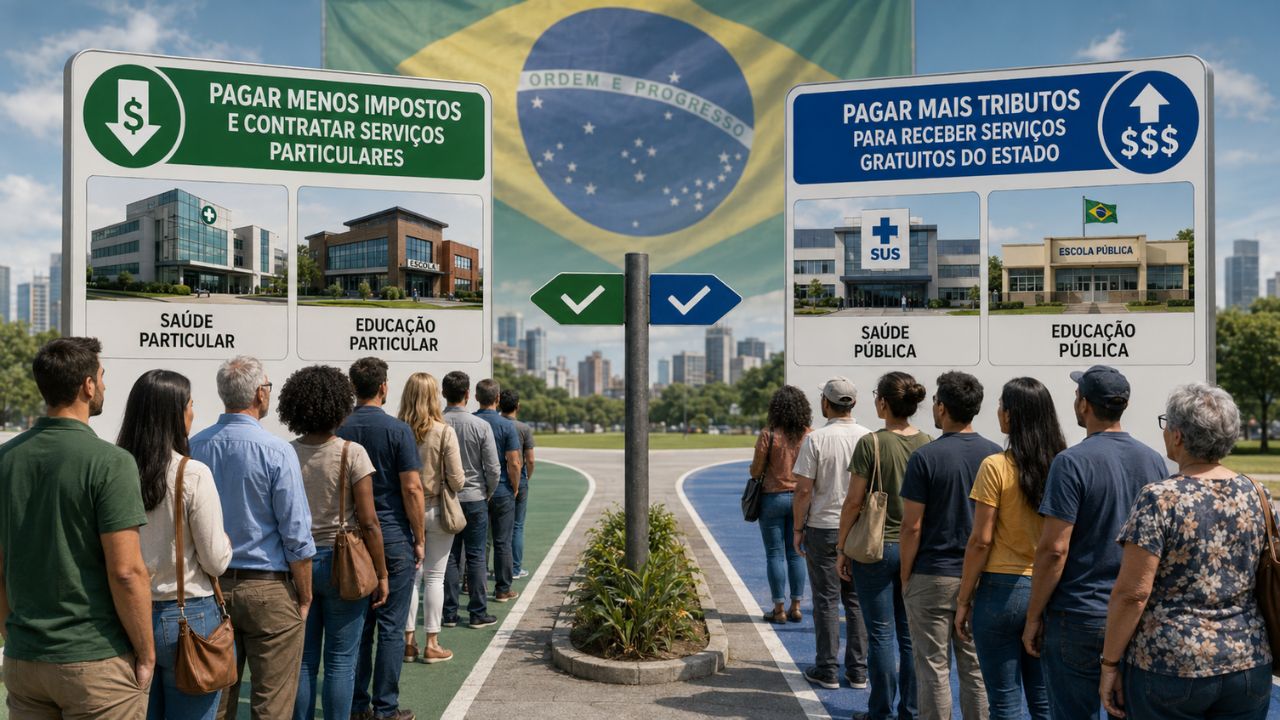
Half of Brazilians Prefer Lower Taxes with Private Health and Education, While 44% Opt for Higher Taxes for State-Provided Services, Datafolha Survey Reveals

-
Brazil’s Most Expensive Toll Rises to R$ 40.60 on Route from São Paulo to the Coast, Nearly Matching Bus Fare to Santos

-
As Brazil Expands Social Welfare, Survey Reveals 40% Blame Poverty on Laziness, While 58% Cite Lack of Opportunities

-
China Tightens Control on Antimony, Driving Prices from $22,000 to Nearly $40,000 per Ton as U.S. Rushes to Bolster Strategic Reserves



Project Location and Financing
The wind turbine was acquired and installed by Statkraft at the Seabra Wind Farm, in the Complex of Brotas de Macaúbas (BA).
Petrobras provided funds as outlined in exploration contracts that require investments in research, development, and innovation, a mechanism that allocates part of the revenue from high-production fields to technologies of interest in the energy sector.
The financing from BNDES and the institutional support from the federal government complement the financial engineering of the project.
Dimensions and Capacity of the Turbine
As a result of an agreement reached in 2023, the equipment developed by WEG boasts uncommon dimensions for the Brazilian wind farm: 220 meters total height and 1,830 tons.
According to the companies, the turbine has an installed capacity of 7 MW and can generate approximately 2,500 MWh per month, a volume equivalent to the annual consumption of about 15,000 households in Brazilian standards.
The partners classify the model as the largest onshore wind turbine in the Americas, reinforcing the technological demonstration aspect of the project.
Cost Reduction in Energy Generation
The joint effort aims at reducing the cost of energy.
With higher unit power, the wind turbine delivers more electricity per occupied area and reduces the need for multiple machines at the same site.
This density gain tends to optimize land use and cut expenses associated with civil infrastructure, electrical connection, and maintenance, elements that weigh on the long-term average cost formation.
In operational terms, fewer units to inspect and repair also mean potentially smaller downtimes.
What Petrobras and WEG Are Saying
In the announcement, Petrobras linked the project to its technological diversification strategy.
In a statement, the Director of Engineering, Technology, and Innovation, Renata Baruzzi, said:
“By directing part of its investments to co-create a new generation of wind energy equipment, Petrobras acquires knowledge that can support the company in future projects, as well as contribute to the diversification of the Brazilian energy matrix.”
The company also emphasized that the joint development accelerates the mastery of solutions that can be applied in future projects.
WEG, responsible for development, stated that it could produce the equipment in series, contingent upon market demand for new wind projects.
The assessment is pragmatic: despite technological advancements, the recent cycle in Brazil has shown weaker contracts, impacting the manufacturing chain and leading to the closure of production lines in some links.
Wind Market in Brazil
In recent years, the national wind industry has faced slower contracting rates in some markets, especially outside major regulated auctions.
This dynamic has contributed to the dismantling of suppliers and greater selectivity in investments.
Still, Bahia maintains favorable wind conditions, established infrastructure, and modernization projects, a scenario where larger turbines can increase productivity of existing parks.
Importance of the New Wind Turbine
The new wind turbine serves as a learning platform.
For Petrobras, participating in development broadens the technical repertoire for decisions in renewables and accelerates the understanding of costs, risks, and operational requirements.
For WEG, the prototype creates industrial capacity in large machines and paves the way for a potential commercial scale when the contracting environment strengthens.
For Statkraft, there is a gain in efficiency in the Bahia complex by incorporating a high-power unit into its modernization program.
Installation at the Brotas de Macaúbas Complex
Installed at the Brotas de Macaúbas Complex, the equipment takes advantage of a recognized wind regime and infrastructure already connected to the electrical system.
By concentrating more generation in a single turbine, the project rationalizes civil works and allows for practical comparisons of capacity factor, availability, and operational costs with smaller wind turbines.
These data are essential for assessing the learning curve and guiding decisions about replication.
Outlook and Next Steps
The possibility of series production remains linked to the project pipeline.
Without public commitments to a timeline, the industry monitors component prices, exchange rates, contracted demand, and regulatory milestones.
In the meantime, the prototype begins operating in a real environment, providing evidence of performance, reliability, and maintenance under Brazilian conditions.
This history will be decisive in determining whether 7 MW machines establish themselves as the new onshore standard in the country.
How might the adoption of larger turbines redefine costs and accelerate the modernization of Brazilian wind farms throughout upcoming auctions and contracts in the free market?