






 Portuguese
  Spanish
  6 min of reading
  0 comments


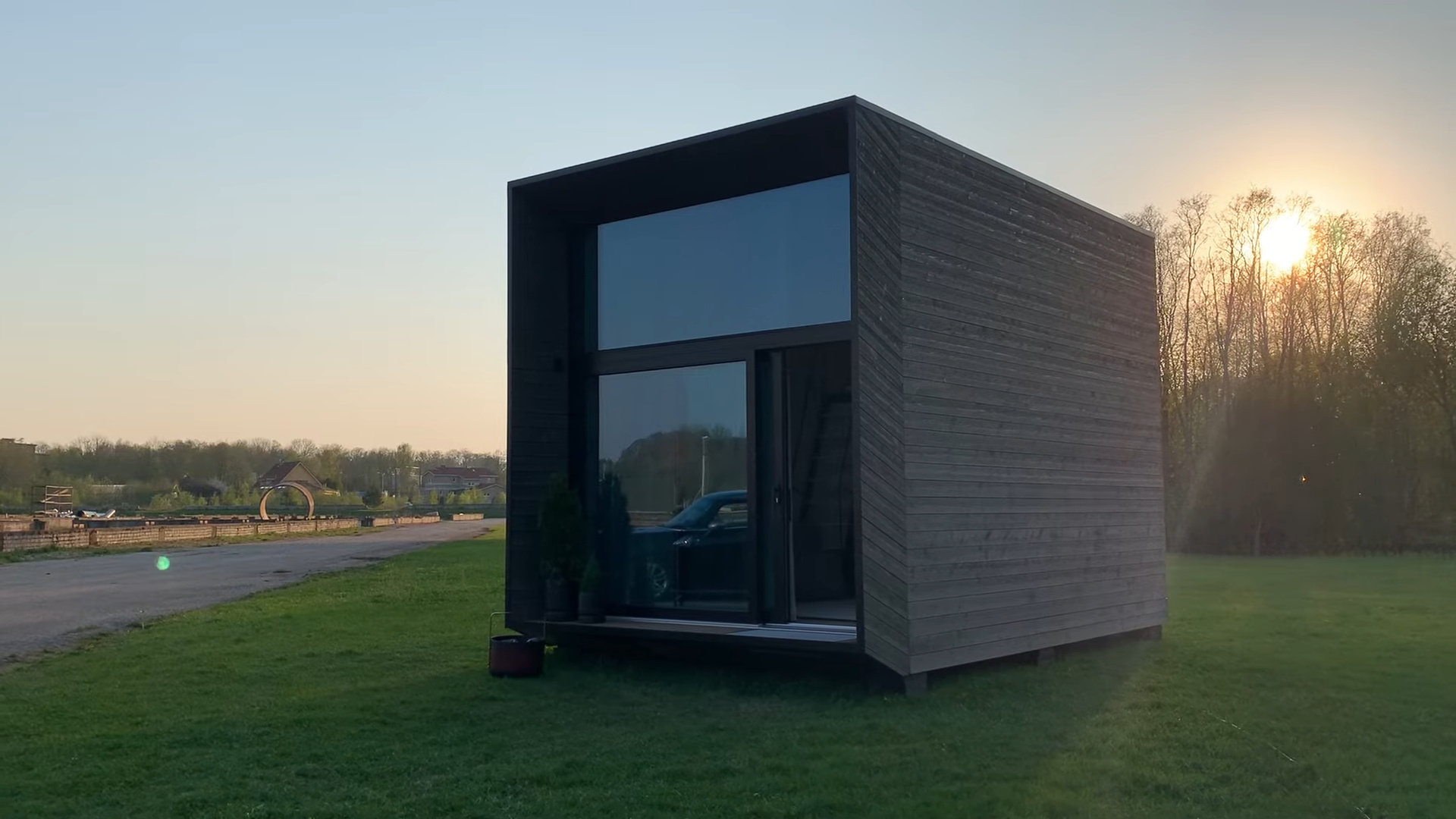
KODA modular house bets on quick installation, pre-cast concrete, and mobile concept to challenge traditional construction.
For decades, building a house meant facing months of construction, trucks of material, masons, noise, dust, and unpredictable costs. But, ever since Kodasema, an Estonian company, presented the KODA modular house at the Tallinn Architecture Biennale in 2015, the project has circulated internationally as one of the most radical examples of prefabricated housing: a compact, mobile unit made with materials like concrete and glass, according to ArchDaily, on July 9, 2016.
The company’s proposal goes against part of the logic of traditional construction. Instead of erecting walls on the site over months, KODA relies on components manufactured in a controlled environment and quick on-site assembly. Divisare reported, on July 18, 2016, that installation can take up to seven hours, without the need for additional finishing after assembly, provided there is a level base and connection points for water, electricity, and sewage.
KODA modular house attempts to transform civil construction into an accelerated industrial process
The big difference with KODA lies in its production model. Instead of building directly on site, the company produces almost the entire structure in a controlled industrial environment.
-
Without mortar, grout, or traditional construction: the ClickBrick system assembles brick facades with ceramic pieces held by metal clips, eliminating the need for glue, speeding up installation, and even allowing everything to be dismantled later without turning the construction into expensive permanent debris.

-
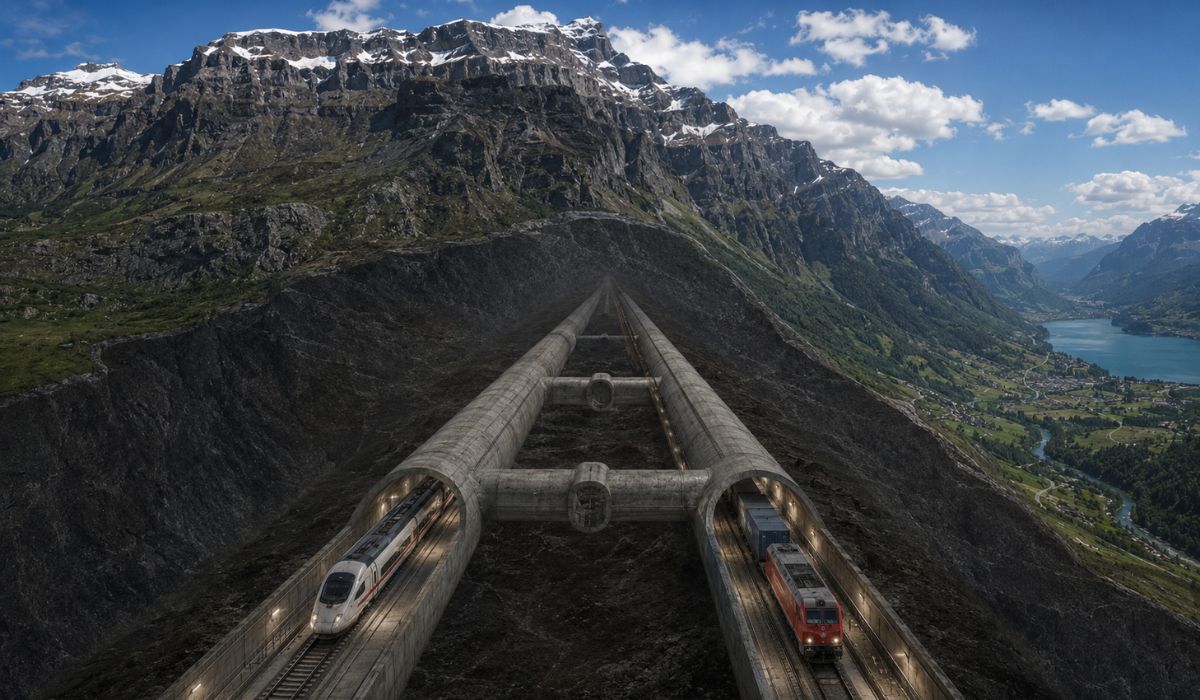
Switzerland took 17 years to tear through the Alps and build the world’s largest railway tunnel, a 57.1 km passage under 2,300 meters of rock, with 50 °C heat and 28.2 million tons excavated to connect the north to the south of Europe.

-
With 1,415 m², a frontal view of the sea, and surrounded by skyscrapers, the mansion worth R$ 140 million bought by Luciano Hang is the last standing residence on the waterfront of the ‘Brazilian Dubai’ in Balneário Camboriú.

-
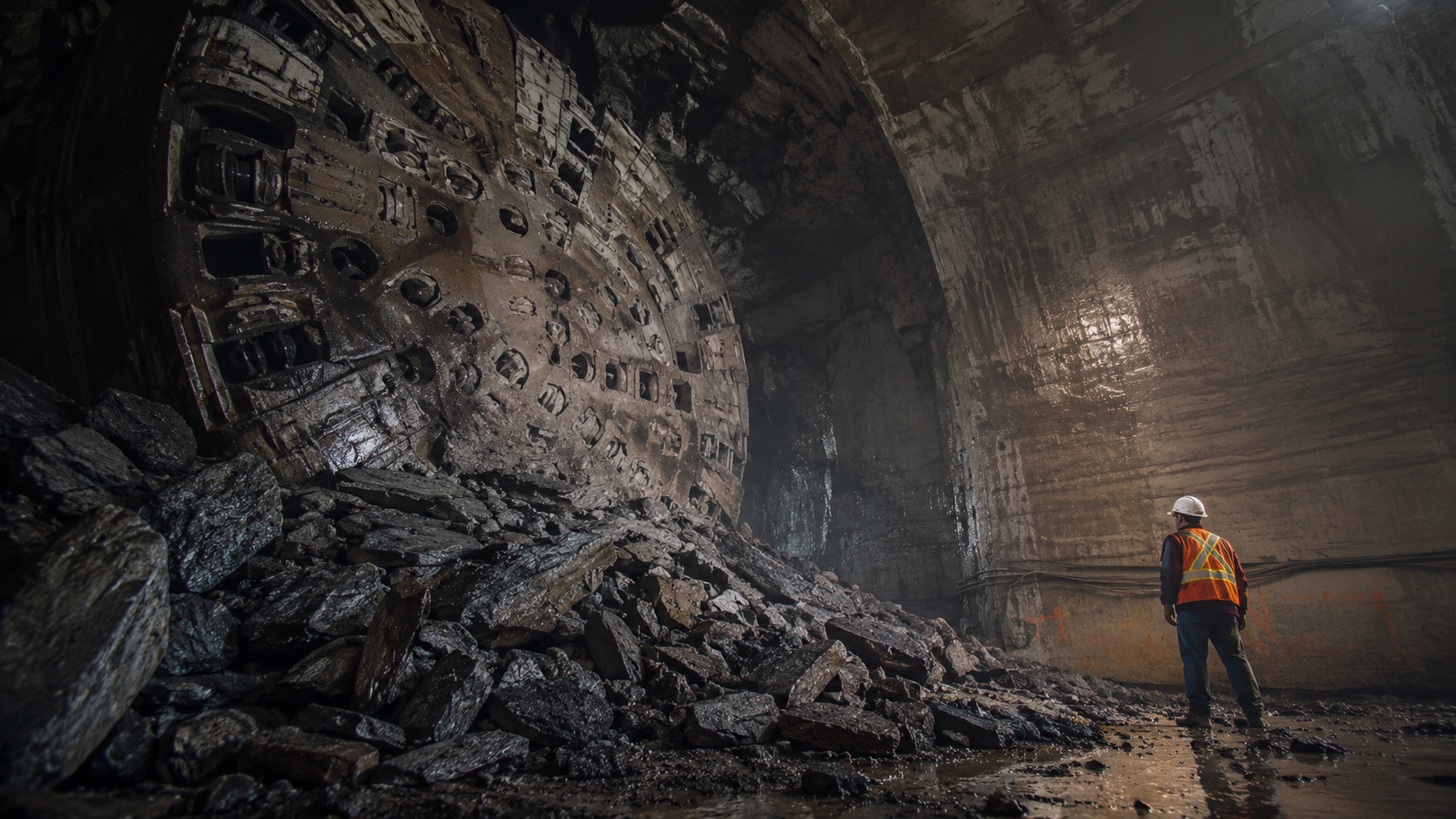
“Big Becky,” the 4,000-ton steel monster with the height of a four-story building, spent five years tearing through 10.2 km of solid rock beneath Niagara Falls to divert the river’s force and generate clean energy for 160,000 homes.



This reduces common steps in conventional construction, such as manual wall erection, large volumes of debris, and delays caused by weather or lack of materials. The proposal follows a logic similar to the automotive industry, where a large part of the product already leaves the factory ready.


The idea is to transform the house into a transportable and replicable module, reducing execution time and increasing the predictability of the construction process.
Pre-cast concrete structure arrives practically ready on site
KODA uses prefabricated modules composed of concrete, thermal insulation, and industrial finishes integrated into the structure.
According to Kodasema, the modules already leave the factory with much of the internal infrastructure installed, including internal divisions, electrical systems, plumbing, and finishing elements. This drastically reduces the work required at the installation site.
In practice, the site ceases to function as a large construction site and acts almost as a connection base for an already finished structure.
Installation in about 7 hours became one of the company’s main arguments
The fact that garnered the most international attention was precisely the reduced installation time. Kodasema states that KODA can be positioned and connected in approximately seven hours after arriving on site.

While this does not mean that all bureaucracy and site preparation disappear, the time is still much shorter than that of conventional masonry construction, which often takes months or even over a year.
House can be disassembled and transported to another plot
Another important differential is the relative mobility of the structure. Unlike a conventional house permanently fixed to the ground, KODA was designed to be disassembled and transported again.
This allows the owner to take the residence to another plot if necessary, something practically impossible in traditional concrete and masonry constructions.
This characteristic helped popularize the concept of “high-standard transportable housing” within the international modular market.
Minimalist design attempts to unite modern architecture and compact functionality
Visually, KODA follows a very strong minimalist line. Large glass surfaces, straight lines, and integrated environments are part of the company’s architectural concept.
The proposal is to combine a modern appearance with compact and highly functional spaces. Many models use mezzanines, integrated living and kitchen areas, and vertical utilization solutions to enhance the feeling of internal space.
This makes the modular house seem much more sophisticated than old prefabricated constructions traditionally associated with low standards.
Modular concrete seeks to reduce waste and accelerate construction
The industrialization of civil construction is also related to material efficiency. In conventional systems, waste of concrete, mortar, and coatings is usually high.

In the modular model, much of the process takes place in a controlled environment, allowing for more precise cuts, less material loss, and a reduction in improvised on-site steps.
Kodasema uses precisely this argument to advocate for greater productive efficiency compared to the traditional construction model.
Modular homes gained strength after global housing crisis and rising construction costs
The growth of modular homes did not happen by chance. In several countries, rising property prices, labor shortages, and the increasing cost of traditional construction accelerated the search for industrialized solutions.
Companies like Kodasema, Boxabl, and Brette Haus began to gain international attention precisely by promising reduced deadlines, greater predictability, and lower operational complexity.
The idea of producing housing almost like industrial products began to attract governments, investors, and consumers. Although the most viral image is that of the “mobile home,” Kodasema works with much broader applications.
The modules can be used for compact hotels, offices, cabins, temporary housing, and even commercial structures. This significantly expands the potential market for modular technology. Installation flexibility has become one of the system’s greatest differentiators.
Modular homes still face regulatory challenges in several countries
Despite the sector’s growth, modular constructions still face significant obstacles related to legislation, licensing, and urban adaptation.

Each country has different rules involving foundations, mobility, structural norms, and infrastructure connections. This means that the promise of extremely fast installation does not always immediately translate into legal occupancy of the residence.
Even so, the advancement of modular construction continues to accelerate in several markets. The traditional civil construction model relies heavily on manual on-site labor. The modular system, however, shifts much of the complexity to specialized factories.
This completely changes the operational logic of the sector, reducing dependence on artisanal steps performed directly on the site.
KODA has become an example of precisely this attempt to transform housing into a transportable industrial product.
Mobile concrete houses challenge the traditional idea of a fixed residence
Historically, concrete houses have always been associated with permanent structures and were practically impossible to move.
KODA’s concept precisely breaks this perception by combining pre-molded concrete, modular engineering, and partial disassembly capability for transport. This creates a hybrid category between traditional residence and transportable structure.
The civil construction industry is undergoing a phase of strong technological transformation. 3D printing, industrialized modules, automation, and prefabrication gained strength after a global increase in the cost of labor and materials.

KODA appears within this scenario as an attempt to drastically accelerate processes that remained practically the same for decades.
Therefore, the modular house has become one of the most symbolic images of the industrialization of modern housing.
KODA shows how modular construction attempts to transform houses into transportable products
Perhaps the most impressive aspect of the project is precisely the change in mindset it represents. Instead of thinking of a house as something slowly built on the land, Kodasema treats the residence almost as a large-scale industrial product.
Everything revolves around speed, modularity, predictability, and mobility. Construction ceases to be a continuous artisanal process and begins to function as a highly planned assembly.
Ultimately, KODA reveals how part of the industry believes that the future of civil construction may be much closer to automated factories than to traditional construction sites full of cement, debris, and months of delays.







Be the first to react!