Portuguese
  Spanish


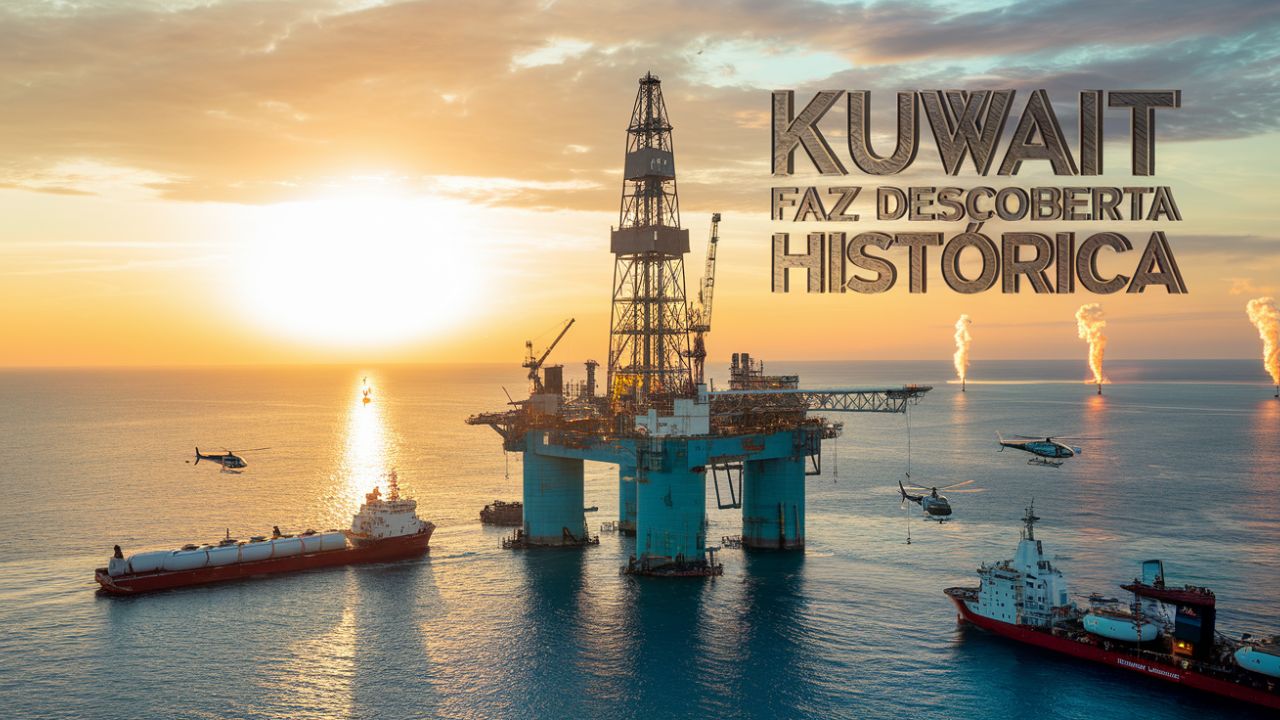

New Oil Reserve With 950 Million Barrels and 600 Billion Cubic Feet of Natural Gas Strengthens Kuwait’s Leadership in the Global Market and Promises to Revolutionize Energy Geopolitics!
Have you ever imagined finding a hidden treasure that could change the game? That’s exactly what Kuwait has done! In a recent announcement, the Kuwait Oil Company revealed the discovery of a massive reserve off the coast of al-Julaiah. With an estimated 950 million barrels, this discovery has everything to further strengthen the country’s role as one of the global leaders in the oil market.
But what does this news really mean? Let’s dive deep into this discovery that promises to shake up the global energy sector.
A Strategic Discovery
The Julaiah 2 exploration field, located in the Zubair geological reserve, is the newest gem of Kuwait. Covering an area of 74 km², the reserves found there amount to about 800 million barrels of medium density oil, characterized by its purity and low environmental impact, a rarity in the sector. The field also contains 600 billion cubic feet of associated natural gas, which further elevates the strategic value of this discovery.
-
China could reduce iron ore imports from 80% to 50% of consumption by 2030, while its share in global steel production falls from 52% to 46%, in a shift that could reshape the global market, says CMRG.

-
Brazil is sitting on one of the largest lithium reserves in the world, in the Jequitinhonha Valley, but national mining has almost become an appendage of China: 97% of the metal’s export goes to a single country, which also dominates refining.
-
Iron ore falls to 762 yuan in China as real estate sales decline and steel production hits lowest level since 2018
-
Brazil has minerals, clean energy, and a waiting market, but it could miss a billion-dollar opportunity if it doesn’t speed up the race for green minerals, while the steel industry seeks to reduce emissions.


This is not Kuwait’s first recent victory. In July 2024, the country had already announced the Al-Nukhadha field, also in territorial waters. These consecutive successes show that Kuwait is playing to win in the energy sector.
The Impact on the Global Oil Sector
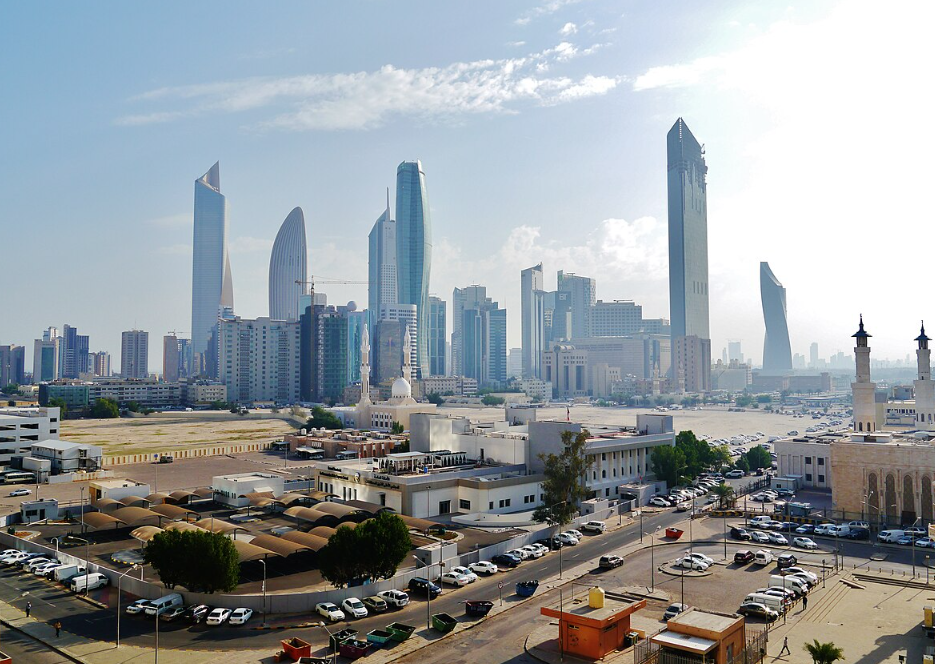
If oil is “black gold,” Kuwait has just found a vault full of it. This discovery reinforces the country’s role as one of the largest exporters of crude oil. With the Julaiah reserves, Kuwait not only secures its leadership position but also expands its influence in the global market.
Geopolitically, this puts the Middle East back in the spotlight. In a world where the transition to renewable sources is gaining momentum, discoveries like this still carry considerable weight in the energy balance.
Technology and Strategy Behind the Oil Discovery
None of this would be possible without cutting-edge technology. The tests conducted at the Julaiah 2 well are proof that investment in innovation pays off. By using advanced geological mapping tools and reservoir analysis, Kuwait has managed to identify a valuable resource and maximize its potential.
These advances show how the oil sector is far from static. New discoveries depend on a combination of technical knowledge, strategic planning, and long-term vision.
Opportunities and Challenges
On one hand, the Julaiah field offers clear economic benefits, such as increased national revenue and job creation. On the other hand, there are significant challenges to be faced. The environmental impact of oil extraction is a global concern, and Kuwait will need to balance its production with demands for sustainability.
According to Monitor do Orienta, the natural gas present in the reserve can be a trump card in the energy transition. It is seen as a bridge between traditional fossil fuels and renewable sources, being less polluting than oil.
A Step Ahead in Global Competitiveness
With this new discovery, Kuwait proves that it still has cards to play when it comes to oil. In an increasingly competitive energy landscape, the ability to explore strategic reserves can make the difference between leading or falling behind.
However, the future of the oil market is uncertain. Pressures for sustainability and advances in renewable energy are changing the game. Will Kuwait be able to adapt? Only time will tell, but for now, the Julaiah field is a reminder that “black gold” still has much to offer.