Portuguese
  Spanish


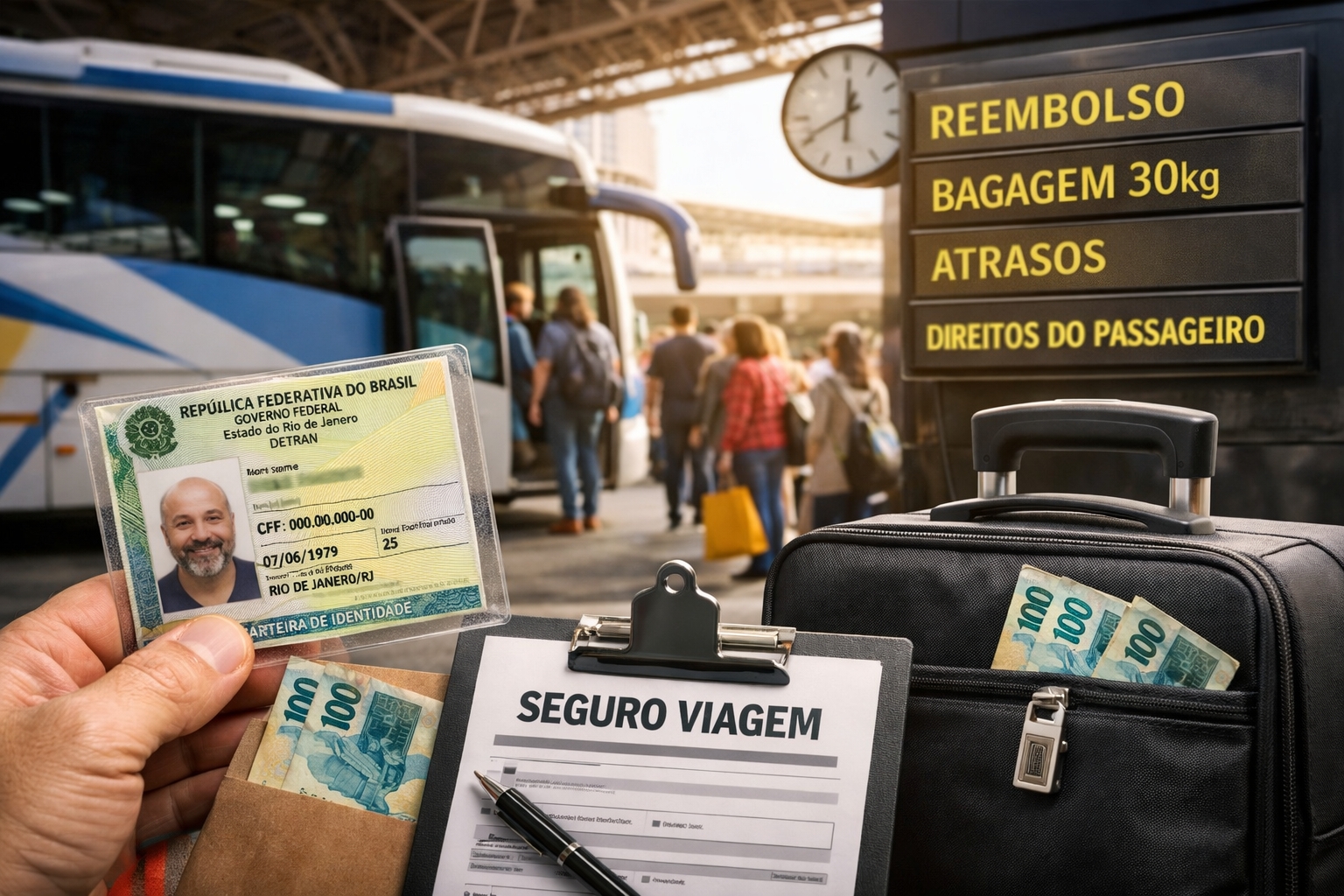


Traveling By Bus? Here Are 14 Rights Guaranteed By Law For Interstate Trips (Baggage, Delays, Refunds, Insurance, Validity of the Ticket) And How To File A Complaint With ANTT.
Bus station crowded, road busy, tight schedule… and one detail that many people only remember when something goes wrong: in interstate bus transport, the passenger has very clear rules on their side. The good news is that these rights are enforced by ANTT and are valid before, during, and after the trip.
Below, you’ll find a practical guide (and without legal jargon) on what you are entitled to by law — and how to act if something goes off track.
Before Boarding: The Basics That Need To Be Right And Are Not A Favor
1) The Service Must Be Decent From Start To Finish
When purchasing the ticket, you are entitled to an adequate service, with punctuality, safety, hygiene, and comfort — from boarding to the destination. If something goes wrong, the official channel to file a complaint is the ANTT, with electronic service available 24 hours (and human service at hours informed by the channel).
-
As Brazil Expands Social Welfare, Survey Reveals 40% Blame Poverty on Laziness, While 58% Cite Lack of Opportunities

-
China Tightens Control on Antimony, Driving Prices from $22,000 to Nearly $40,000 per Ton as U.S. Rushes to Bolster Strategic Reserves

-
BlackRock Freezes $1 Billion in Brazilian Renewable Energy, Impacting 1.5 GW of Planned Projects and Highlighting Investor Concerns Over Infrastructure Bottlenecks Cutting Up to 25% of Solar and Wind Generation
-
Labor Shortage: Despite Record Average Salary, 90% of Brazilian Bar and Restaurant Owners Struggle to Hire Key Roles Like Sushi Chefs and Head Cooks


To clarify without fuss: ANTT itself summarizes the point by listing as a user’s right to “be transported with punctuality, safety, hygiene, and comfort.”
2) Check The Ticket Like You Check A PIX: Names And Details Matter
The name on the ticket must match the document presented at boarding. Passenger identification is mandatory when requested, and the company can refuse boarding if the person does not identify themselves.
3) Avoid “Cheap Miracles”: Illegal Services Are Expensive
Choose a regular, authorized company that sells tickets through bus stations and official channels. In the illegal sector, you miss out on the protection package (assistance, insurance, refund rules, and oversight). The logic here is simple: rights exist but need a legal service to be effectively enforced.
4) Bought The Seat? It’s Yours, It’s The Law
The carrier must ensure the seat indicated on the ticket and respect the reservation. And yes: service must be provided with respect and civility.
5) Those Who Need Help Have Real Priority, Not “Workarounds”
Children, elderly people, and those with mobility difficulties have the right to assistance during boarding and disembarking. In practice, this means support to get on/off the bus safely and independently (fully or with assistance).
6) Small Children Can Travel Free — With One Condition
It is permitted to transport one child under six years old, per responsible adult, as long as they do not occupy a seat.
7) Photo ID: Without It, You May Have Issues At The Gate
Starting at age 12, it is mandatory to present an official photo ID at boarding. It can be physical or digital, as long as it has public validity and national acceptance.
8) Clear Information Is Not “Kindness”: It’s A Right
Schedules, travel duration, prices, destinations, and other service information must be available and updated at points of sale and the company’s channels. If the passenger buys in the dark, the chance for confusion (and losses) increases — and that shouldn’t happen.
Baggage Law: Where Many People Waste Time And Money Due To Lack Of Receipt
9) There’s A Free Limit And The Company Must Protect You In This
You can carry, at no extra cost, up to 30 kg in the baggage compartment and an additional 5 kg in the luggage holder. When checking baggage in the compartment, the company must provide a receipt. This document (or record) is what separates “no one saw” from “let’s resolve this.”
10) Lost Or Damaged? There’s Compensation, But There’s A Mandatory Step
If there is loss or damage of baggage in the compartment, you are entitled to compensation. The complaint must be made at the end of the trip, on a specific form provided by the carrier. In other words: don’t wait to “see later at home.”
A recent important addition (without changing the sense of what you already had in the original text): the regulation of the current TRIP framework details the company’s responsibility for checked baggage and reinforces that the luggage in the luggage holder is the passenger’s responsibility.
Delays, Interruptions, And Refunds: What To Do Without Falling For Empty Talk And Making The Law Count
11) Delayed Over 1 Hour? You Choose The Course
If the delay exceeds 1 hour, you can choose to either: continue with the same company, board another equivalent one to the same destination (at the carrier’s expense), or receive a refund immediately.
And if the delay exceeds 3 hours due to the company’s responsibility (defect, failure, or reason attributable to the carrier), they must provide meals and, if necessary, accommodation for the duration of the situation.
12) You Can Request A Refund, But There’s A Timing Rule
If you decide to cancel, you can request a refund provided you notify them at least 3 hours before the ticket departure time. The rule allows the company to retain up to 5% in certain situations as a commission/penalty, and there are return timing rules outlined in regulations tied to the current framework.
Law On Insurance And Ticket Validity (Bill): Two Points That Usually Cause Confusion
13) Insurance Is Already Included And No One Can Force You To Buy Extra
Every passenger is covered by Civil Liability Insurance provided by the carrier, and you are not obligated to purchase optional supplementary insurance to travel. ANTT also points out the coexistence with other applicable legal coverages, when applicable.
14) Your Ticket Does Not “Expire” In A Month: It’s Valid For 1 Year
The ticket is valid for one year from the first issue. Within this period, you can rebook and also transfer the ticket (subject to the conditions of the contracted service).
How To File A Complaint The Right Way To Have A Real Chance Of Resolution
If something happens, register your complaint via ANTT’s official channels: Central 166, electronic form, and other means listed in the “Contact Us” section.
If possible, keep the ticket, baggage receipt, and any service protocols, as this speeds up analysis and avoids redundancy.
To learn about all the rights and duties of passengers and travel more safely, visit ANTT’s official website.
Have you ever had a tough time during a bus trip or faced a situation where you had to assert your rights? Leave a comment sharing what happened and share this article with someone who is traveling by bus in the coming weeks — it might save them time, money, and a lot of headaches.