Portuguese
  Spanish


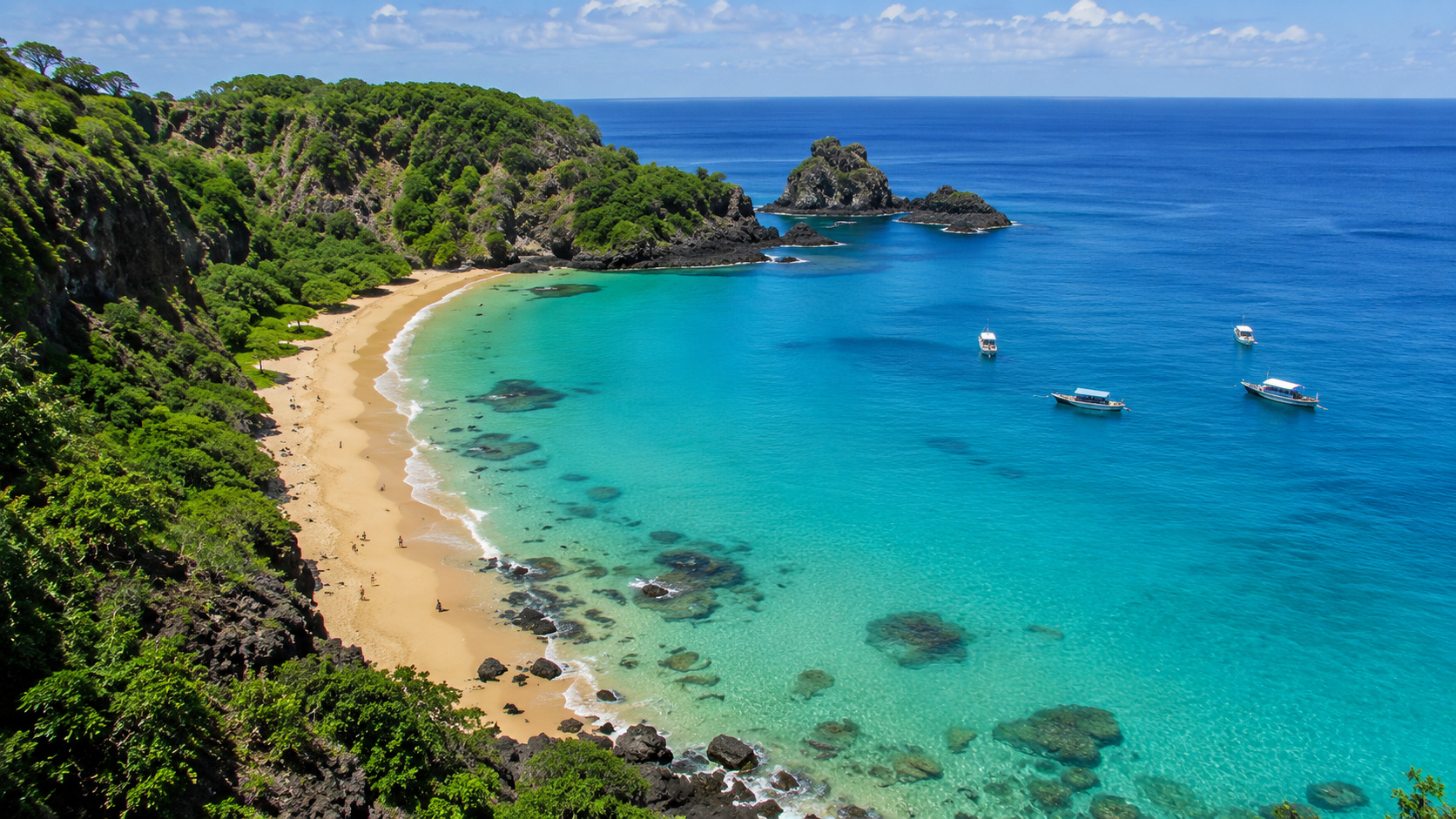

In the Pernambuco archipelago, Baía do Sancho surpassed popular destinations in the Caribbean and the Maldives in international rankings, remaining practically untouched thanks to strict environmental preservation rules
There are beaches made for postcard photos. And there are beaches that seem to have been designed before there were even people to photograph them. Baía do Sancho, hidden between cliffs in the Fernando de Noronha archipelago, is of the latter type. To get there, the visitor needs to break a sweat — literally — by descending a vertical staircase carved into the rock. It is precisely this difficulty, combined with decades of rigorous preservation, that has transformed Sancho into the most awarded beach on the planet.
According to Baía do Sancho’s official page on TripAdvisor, the beach carries the “Travelers’ Choice Best of the Best” seal — the platform’s highest distinction, awarded only to places that rank among the top 1% worldwide. Over the last decade, the bay has won this title of best beach on the planet in seven editions of the ranking, a feat that no other Brazilian beach has matched in consistency, surpassing highly sought-after destinations in the Caribbean and the Maldives.
The marine jewel that carries over 500 years of history
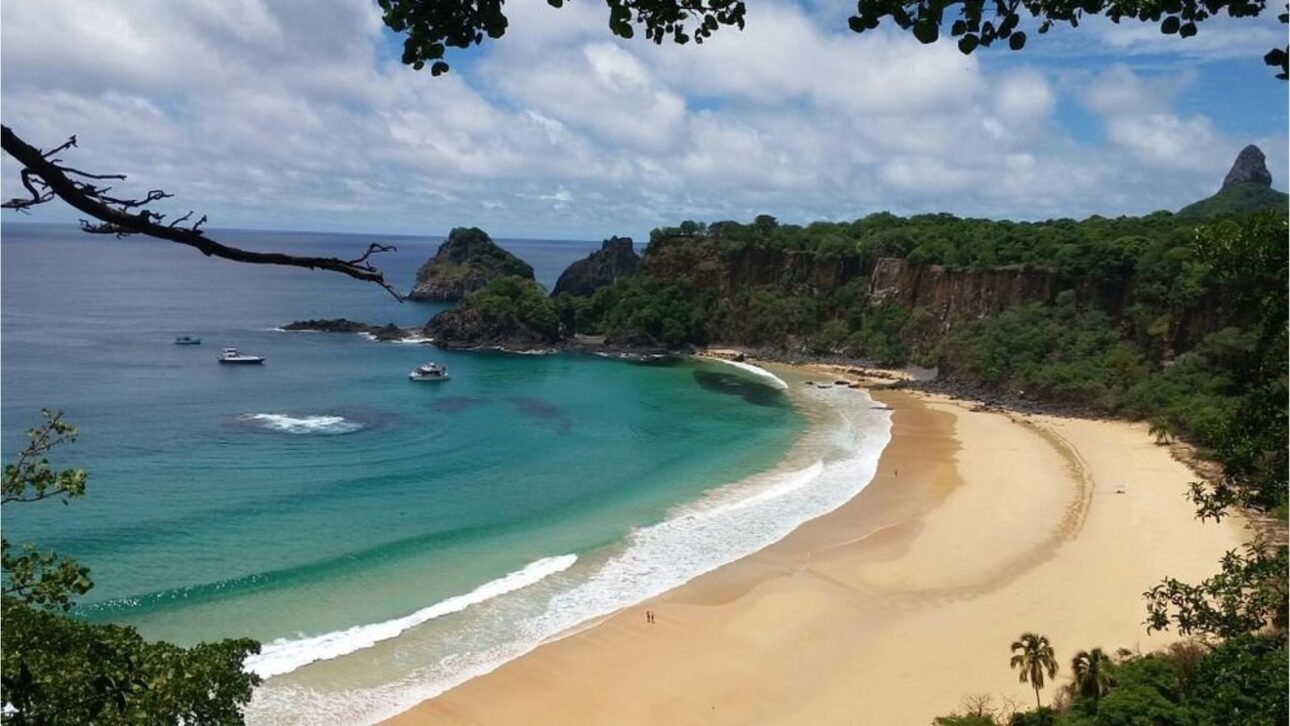
Located about 354 kilometers from the coast of Pernambuco, Baía do Sancho is part of an archipelago discovered back in 1503. Over the centuries, Fernando de Noronha had uses quite different from tourism: it once served as a military surveillance post and, during the Estado Novo, functioned as a political prison. Today, preserved structures from that era remain in Vila dos Remédios, a historic urban center that still maintains the 18th-century layout.
-
Wave Rock: Australia’s Giant Granite Wave Stands 15 Meters Tall, Spans 110 Meters, and Showcases 2.7 Billion Years of Erosion in the Australian Desert

-
How to Unclog Showerhead Holes Blocked by Limescale and Hard Water Without Replacing or Hiring a Technician

-
Award-Winning Korean Electric Scooter Concept Folds to Briefcase Size, Eases Transport Challenges

-
YouTuber Discovers Surreal Collection in 400-Year-Old Italian Fortress Near Florence: 419 Anvils, Giant Walruses, Ancient Church, and WWII Tunnels


In 2001, the archipelago was awarded the title of Natural World Heritage by UNESCO, a recognition that reinforced the need for area protection. In this regard, the Fernando de Noronha Marine National Park, created in 1988, today covers about 70% of the entire territory, ensuring the preservation of beaches, trails, and natural pools that attract travelers from all over the world.
Seven-time champion: what made Sancho surpass the Caribbean and the Maldives
On the other hand, international recognition does not come only from scenic beauty. With over 8,700 five-star reviews recorded on its own TripAdvisor page, Baía do Sancho is part of the select group of 1% of the highest-rated attractions among the 8 million sites listed on the platform. Furthermore, according to a survey released by the Portal de Prefeitura in celebration of World Oceans Day, on June 10, 2026, Sancho appeared among the 10 best beaches on the planet in a ranking of the 100 highest-rated in the world — once again being the only representative from Pernambuco on the list.
Its crystal-clear waters, ranging from emerald green to turquoise blue, offer visibility of up to 50 meters during the dry season. Surrounded by cliffs covered with native vegetation, the bay also serves as a reproductive sanctuary for sea turtles and hosts one of the most popular free diving spots in Brazil, especially on the right side of the beach, where the rocks harbor a great diversity of marine life.
A beach without infrastructure — on purpose
Perhaps the most surprising detail of Sancho is precisely what is not there: there are no kiosks, street vendors, or umbrellas for rent on the sand. According to the official website of the Fernando de Noronha Marine National Park, managed jointly with the Chico Mendes Institute for Biodiversity Conservation (ICMBio), the total absence of commerce is intentional and part of the conservation unit’s preservation strategy, which also limits the daily number of visitors on various trails and beaches, also requiring the use of certified guides in certain sections.
Therefore, those planning to spend the day in the bay need to plan ahead: it’s necessary to bring your own water and light snacks in reusable containers, and to collect all the waste produced before leaving the site. The complete gastronomic experience is reserved for after the tour, in Vila dos Remédios or in the restaurants scattered around the island, where dishes like the Noronha fish stew and preparations based on salted and dried shark — called tubalhau — reinforce the local culinary identity.
The adventure of descending to the world’s most awarded sand
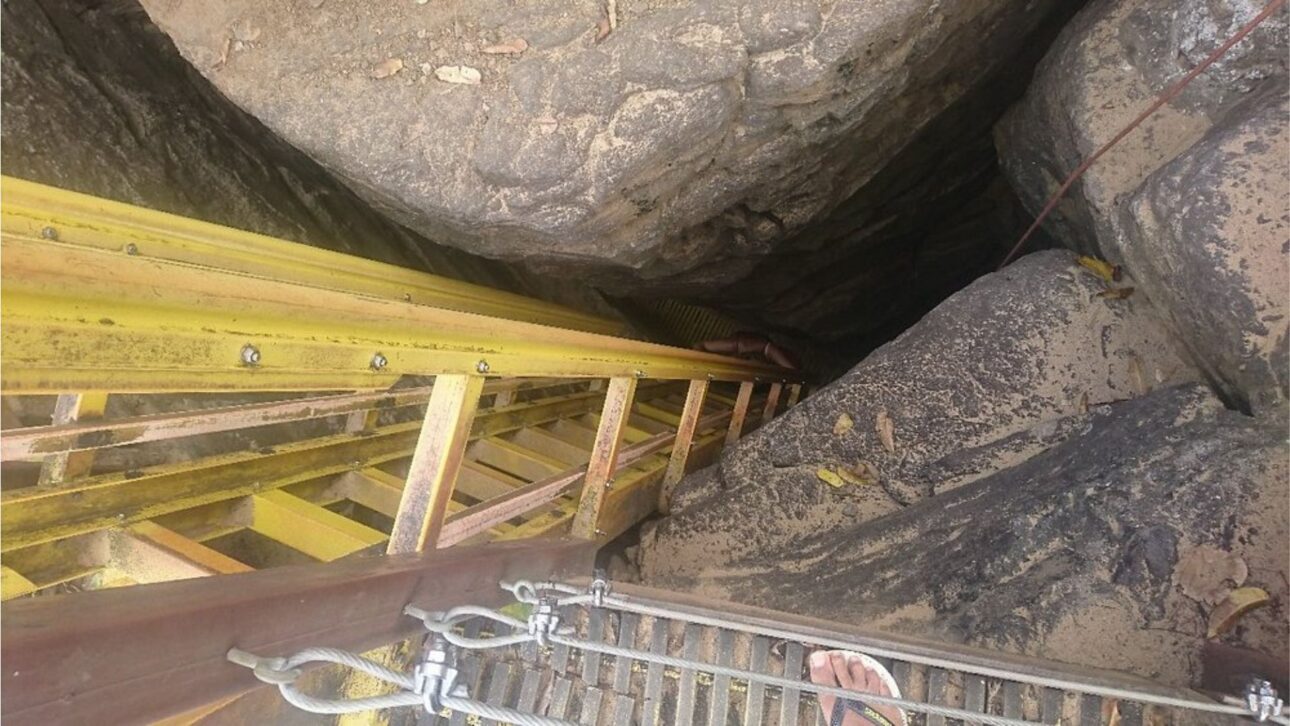
Reaching Sancho, in fact, is part of the experience. After landing at Fernando de Noronha Airport (FEN), visitors must head to the Golfinho-Sancho Information and Control Post (PIC), the mandatory entry point upon presentation of the Marine National Park ticket.
The main access is via a suspended trail, with wooden walkways leading to the viewpoints — a section that is accessible for people with reduced mobility. From there, however, the adventure intensifies: to descend to the beach, you must tackle about 208 steps distributed over two vertical staircases carved into the crevice between the cliffs, with a drop of approximately 50 meters. ICMBio itself organizes specific intervals for ascent and descent, avoiding crowds in the narrowest section.
Meanwhile, those who prefer to avoid the physical effort of the staircase have an alternative: hire one of the authorized boat tours, which anchor directly in the bay and allow swimming in the water without the need to step on the sand.
What else to do in the archipelago besides Sancho


The itinerary of Fernando de Noronha, however, goes far beyond the most awarded beach. Among the attractions that usually make up the tour of the archipelago, the highlights are:
- Baía dos Porcos: natural pools with emerald tones and a privileged view of Morro Dois Irmãos, one of the most photographed postcards of Brazil;
- Mirante da Baía dos Golfinhos: observation point for spinner dolphins at dawn, starting at 6:30 AM — Fernando de Noronha is home to the largest concentration of this species in the entire Atlantic Ocean;
- Praia do Sueste: snorkeling spot in shallow waters, ideal for swimming alongside sea turtles.
When to go: the two seasons of the Brazilian paradise
The archipelago has a tropical oceanic climate, with two well-defined seasons, and choosing the right time depends on the type of experience the visitor seeks. Between August and January, with practically no rain, the sea transforms into a vast natural aquarium — the ideal window for diving and snorkeling, with visibility that can reach 50 meters. Between February and June, the rains make the water a bit murkier, but compensate with a choppy sea, perfect for surfing, and the formation of two temporary waterfalls that descend directly from the cliffs to the sand of the bay.
How to get there and how much it costs to visit the world’s most awarded beach
Access to Fernando de Noronha is via regular flights from Recife, taking about 1h10, or from Natal, with approximately a 1-hour flight. To visit Baía do Sancho specifically, you need to be up to date with two different charges. The first is the Marine National Park entrance fee, mandatory only to access protected areas like Sancho, Baía dos Porcos, and Praia do Sueste: according to an official statement from the Marine National Park of Fernando de Noronha, based on ICMBio Ordinance No. 4,423, dated October 14, 2025, the fee has been set at R$ 384 for foreigners and R$ 192 for Brazilians — who are entitled to a 50% discount — starting November 1, 2025, valid for 10 consecutive days.
The second charge is the Environmental Preservation Fee (TPA), which is mandatory for every visitor to the archipelago, regardless of whether they intend to visit the national park areas or not. Calculated per day of stay on the island, the TPA starts at R$ 105.79 for one day and increases progressively according to the length of stay — an important detail for those planning their travel budget, as the two fees are charged separately and in different ways.
Even so, for those who have already made the trip, the effort — both physical and financial — is often described as fully rewarding. After all, not every place in the world offers the chance to dive in a bay that, seven times in a row, has been considered the most beautiful on the planet — and which, precisely by resisting the temptation of mass tourism, remains untouched as it has for centuries.