Portuguese
  Spanish


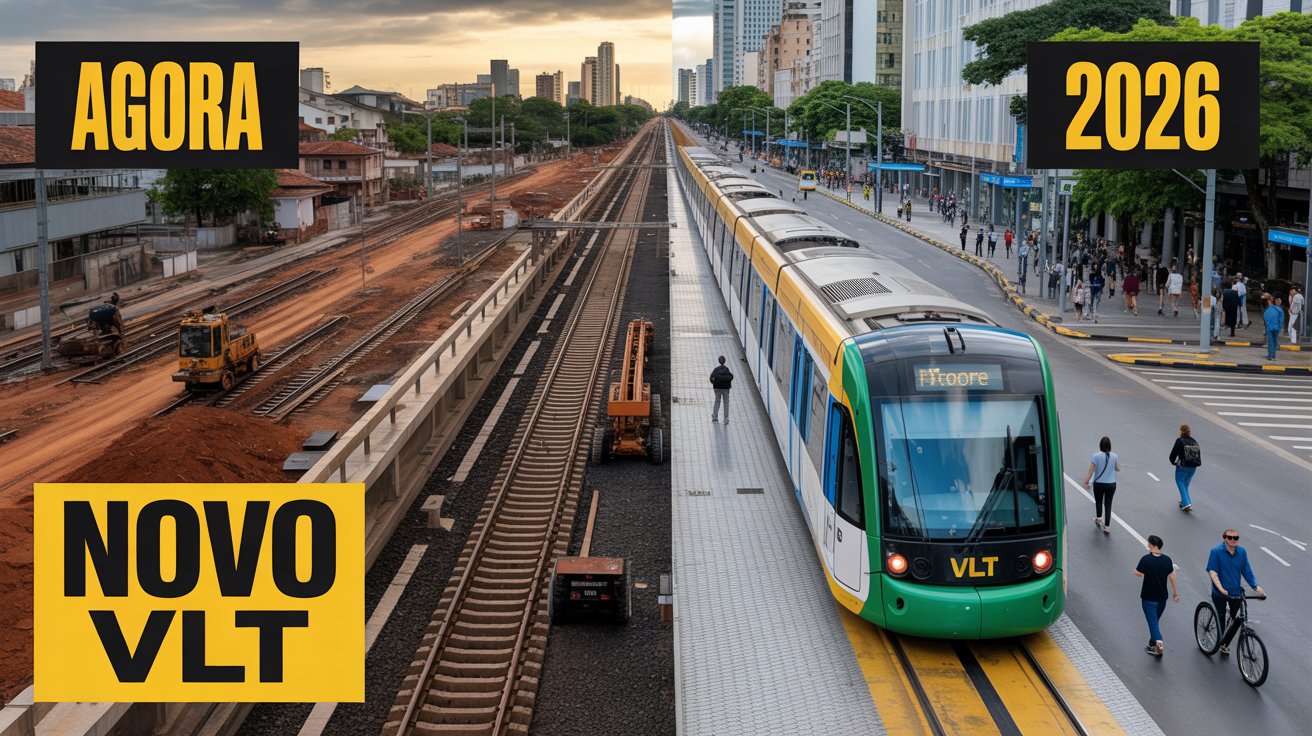

VLT Project Should Transform Urban Mobility in Campina Grande, Bringing Million-Dollar Public Investment and Promising to Positively Impact the Lives of Thousands of Residents in the Region.
One of the main urban mobility initiatives in the Northeast is about to become a reality with the arrival of the Light Rail Vehicle (LRV) in Campina Grande, Paraíba.
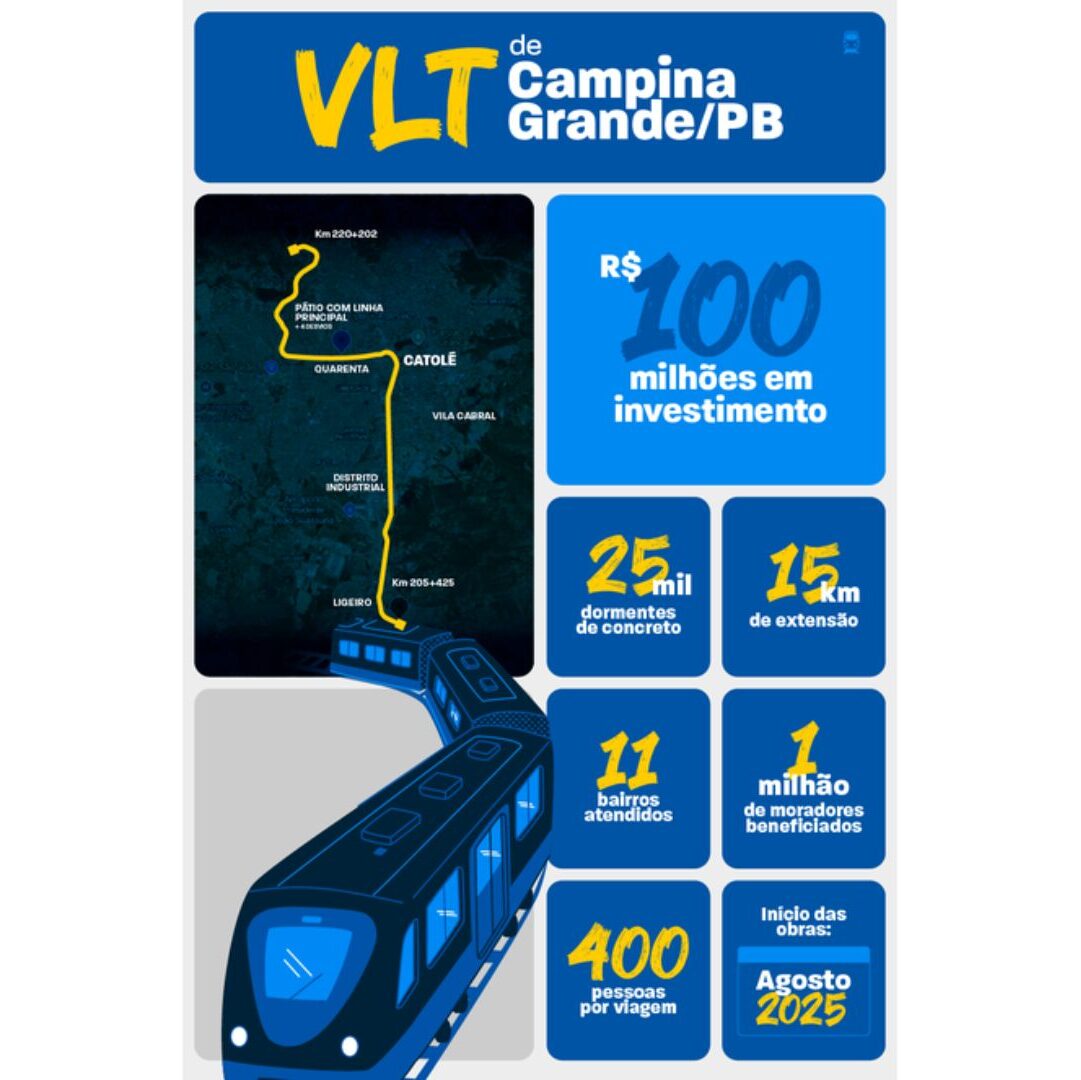
With an expected investment of R$ 100 million from the Federal Government, the revitalization of the railway line that has been inactive for years already has a date set to begin operations: 2026.
The expectation is to directly benefit more than 100,000 residents of the region, according to projections from the authorities involved.
-
Brazil to Auction 9,000 km of New Railways, Aiming to Attract $28 Billion by 2026

-
Brazil Plans $160 Billion Investment to Revitalize Railways and Reduce Reliance on Long-Distance Trucking

-
Retired Railway Workers in Brazil Preserve Locomotive for 52 Years, Now See It Donated by the Government

-
Railway returns to prominence in Brazil after STF approval: a R$ 25.2 billion project promises to save R$ 9 billion in freight, transport 50 million tons per year, and transform Sinop into a logistics powerhouse for agribusiness.


The announcement was made this Friday (11) during the official visit of the Minister of Transport, Renan Filho, to the municipality.
According to the minister, the allocated funds will allow not only the reactivation of the tracks but also the implementation of a modern and efficient transportation system, aligned with the current urban demands.
“Our big challenge is to have this project running by 2026, so we can come here with President Lula, alongside Senator Veneziano, a great enthusiast and a major advocate of the LRV, to deliver this project to the population,” stated Renan Filho in an interview with the local press.
During the project presentation ceremony, Tufi Daher Filho, president of Ferrovia Transnordestina Logística (FTL), the company responsible for the railway network, guaranteed that the schedule anticipates the complete recovery of the urban section of the railway line in up to twelve months.

“In twelve months, at most, this railway line will be fully remodeled,” explained the director, detailing that the rehabilitation works will include both the modernization of the tracks and the adaptation of the stations to accommodate the new LRV.
The railway recovery project covers 14.8 kilometers in length and will interconnect five urban hubs in Campina Grande.
The proposal is to connect densely populated neighborhoods and strategic areas of the city, promoting faster, safer, and more sustainable access to public transport.
In total, the expectation is that more than 100,000 people will be directly served by the new infrastructure, according to data presented by the municipal government.
The railway line that will be revitalized had been inactive for decades and was previously considered one of the major challenges of urban mobility in the city.
Now, with the million-dollar investment, the region is preparing to receive a mode recognized for its efficiency in several Brazilian capitals.
The LRV has been nationally highlighted for combining low environmental impact, passenger comfort, and potential to alleviate traffic in medium and large cities.
Details of the New LRV in Campina Grande
The Light Rail Vehicle is a collective transportation system that uses smaller trains, usually electric, operating on segregated or shared tracks.
The model announced for Campina Grande follows national technology and sustainability standards, aiming to meet not only urban demand but also accessibility and intermodal integration criteria.
The project also anticipates the installation of modern systems for electronic ticketing and real-time monitoring, enhancing operational control and passenger safety.
In addition, the new LRV will bring significant impacts to the local economy, according to mobility experts.
The public investment is expected to boost direct and indirect job creation during the construction, maintenance, and operation stages of the system.
Businesses in areas near the stations are also expected to benefit, enhancing real estate appreciation and promoting a virtuous cycle of urban development.
Forecast for the Start of LRV Operations
According to the official schedule, the complete reactivation of the line is expected by July 2026, a deadline set by the Ministry of Transport.
The planning includes stages of infrastructure modernization, operational tests, and training of the teams responsible for the operation of the LRV.
If there are no delays, the population should have the new mode operational by the second half of 2026.
In other Brazilian cities where the LRV has been implemented, such as Rio de Janeiro and Fortaleza, improvements in urban mobility have been notable, with gains in speed, comfort, and sustainability.
In Campina Grande, the expectation is that the model will provide similar benefits, boosting the economy and reducing travel time for the population.