






 Portuguese
  Spanish


In a secret boss gesture, Lufthansa CEO Jens Ritter, who was a pilot for 12 years, swapped the cockpit for the airplane aisle. He worked as a flight attendant alongside the cabin crew, served the economy class, and discovered a flaw that no one in the management saw.
When imagining the president of a large airline on board, one thinks of him sitting in first class, glass in hand. The CEO of Lufthansa did the opposite: he donned the crew uniform, pushed the cart down the aisle, and served trays in economy class, taking on the most down-to-earth role in the entire flight operation. The question this case provokes is irresistible: what drives a top executive to spend hours serving coffee at 11,000 meters altitude?
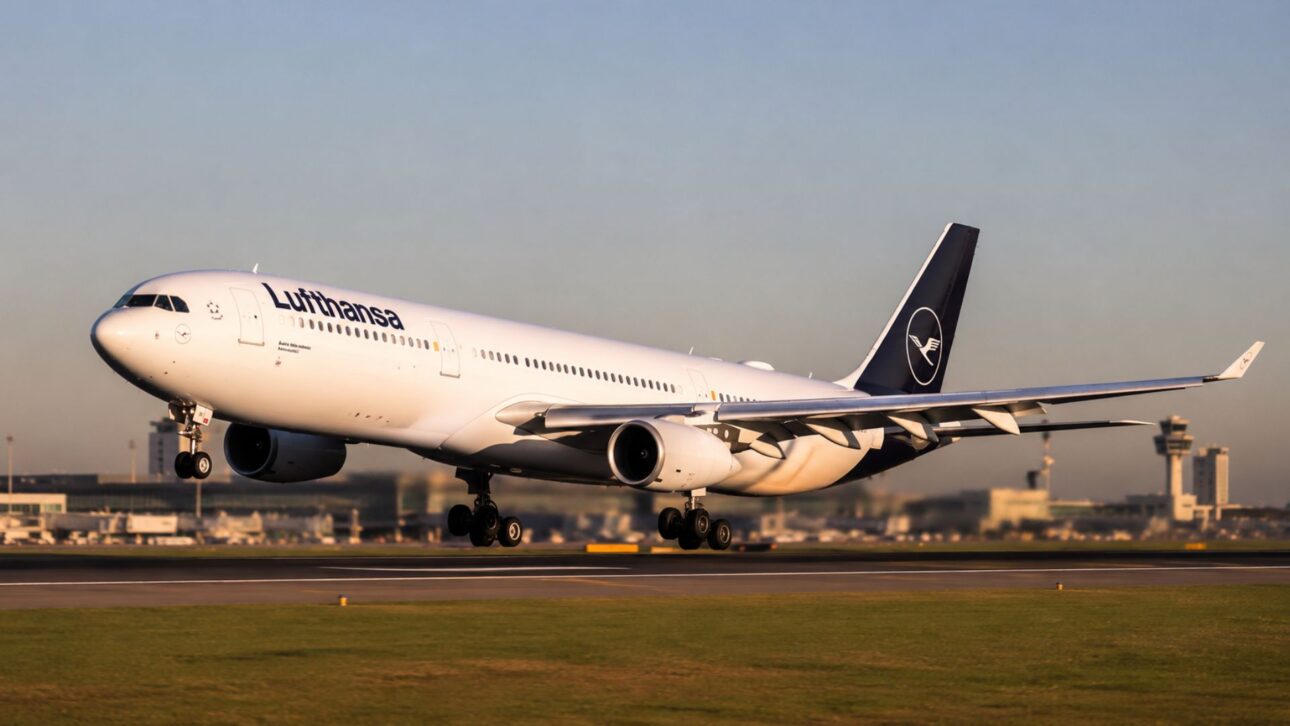
According to UNILAD, the answer came loaded with practical learning. Jens Ritter accompanied a crew on an Airbus A330 from Frankfurt to Riyadh and Bahrain, helped in business class on the way there, and on the way back, acted as a flight attendant in economy class, where he encountered a problem invisible to those who decide everything from inside an office.
From cockpit to aisle: the CEO who became a flight attendant
Jens Ritter is not just any executive who has never set foot inside an airplane: he was a career pilot for about twelve years before reaching the company’s command. Even so, despite all the familiarity with the aircraft seen from the cockpit, he had never worked as a flight attendant, and it was this gap he decided to fill by boarding as an extra crew member.
-
7-Year-Old Estela Wins Ballet Qualifier; Family Crowdfunds for Argentina Finals in October

-
Before taking over as CEO of Starbucks, Laxman Narasimhan spent about six months training as a barista and committed to working a half shift each month to stay connected to the store floor.

-
After Selling Meetup for $200 Million, Founder Scott Heiferman Spent Nine Months Working at an Amazon Distribution Center to Reconnect with the Everyday Worker
-
The Atlantic Journalist Given $10,000 to Bet on NFL Season Ends Experiment as Compulsive Gambler with Just $109 Left, Family Says


The choice to cross the door that separates the cockpit from the passenger cabin is symbolic and revealing. Piloting and serving are two worlds within the same plane, and mastering one does not mean understanding the other, no matter how physically close they are. By placing himself as a flight attendant, the CEO of Lufthansa exchanged the privileged view of the one who pilots for the perspective of the one who serves, discovering that the experience of the aisle has little to do with that of the pilot’s seat.
Who is Jens Ritter, the former pilot in command
To understand the gesture, it is worth knowing the unusual trajectory of the one who made it. Jens Ritter built his career within Lufthansa itself, where he spent years as a pilot, mainly flying the A330 and A340 models on long-haul routes. It was this aeronautical experience that shaped the professional before he assumed the role of president of the airline, giving him a rare intimacy with the product he commands.
This technical background, however, had a blind spot that he himself recognized. Knowing the plane as a pilot is very different from knowing the operation as cabin crew, who deal directly with the passenger from the beginning to the end of the flight. Precisely because he already mastered one side of the aircraft, Jens Ritter realized how much he did not know the other, and it was this honest curiosity that led him to wear the flight attendant uniform and face an entire journey in the aisle.
The flaw that no one in command saw: the menu that didn’t match
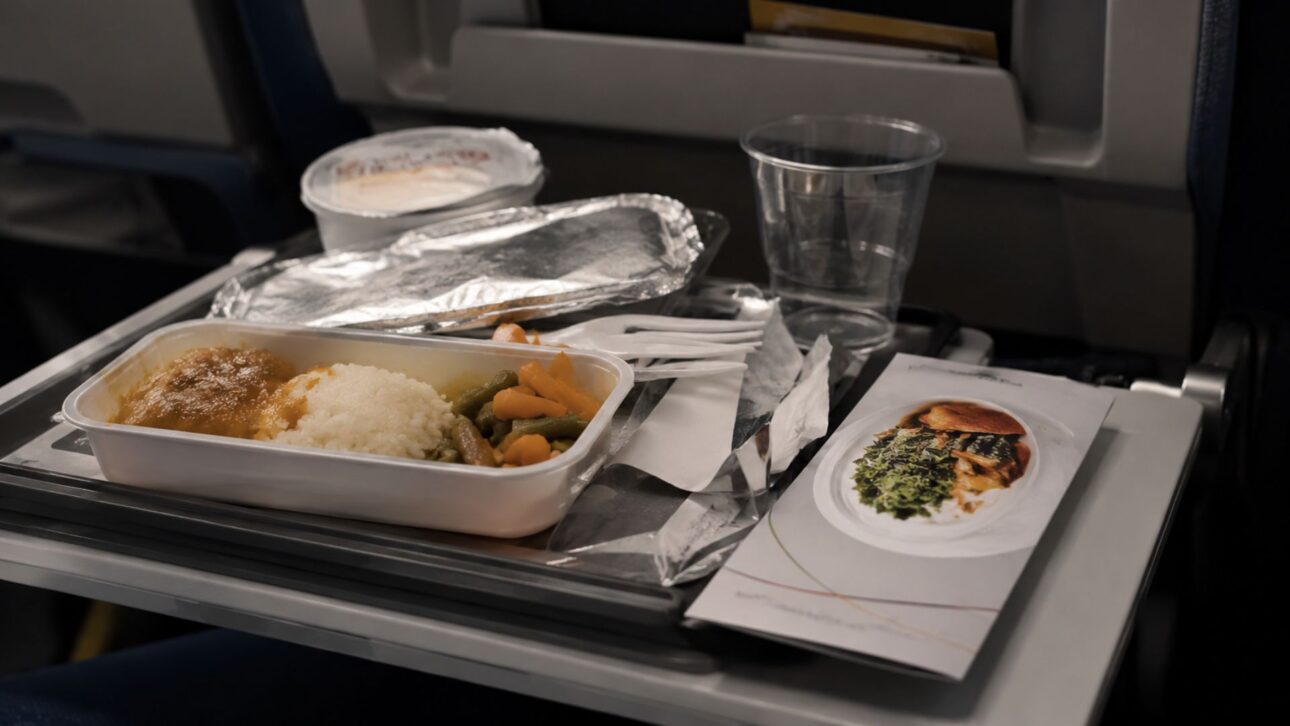
The most concrete finding of the immersion is also the most symbolic of how small details escape the top. Serving on board, Ritter noticed that the meals described on the menu cards given to passengers did not exactly match what was actually loaded on the plane. It was an apparently small flaw, but embarrassing at the end: the passenger read an option on the printed menu and received another on the tray, a mismatch that the cabin crew managed alone, away from the eyes of the board.
This type of problem would hardly appear in an executive report, and that’s where the lesson lies. No performance spreadsheet records the small friction of a menu that promises what the onboard kitchen did not deliver, but it is exactly this detail that undermines the experience of those who pay for the ticket. By catching the discrepancy with his own hands, the CEO of Lufthansa turned a silent complaint from the aisle into a concrete agenda for improvement, something that only the experience of a flight attendant could have revealed.
3h30 of service and the real weight of the aisle
More than the menu error, it was the physical effort of the work that impressed the executive. On a flight lasting about six and a half to seven hours, the full meal service in economy class consumed nearly three and a half hours, a marathon of carts, trays, and service with almost no break. Ritter reported being amazed at how much he learned in just a few hours, especially about the requirement to remain present, attentive, and kind to the passenger even in the face of fatigue and sleep deprivation.
This perception of wear and tear is one of the most valuable gains from the experience. It’s one thing to know, in theory, that the cabin crew works hard; it’s another to feel your legs grow heavy and your friendliness tested after hours standing in a narrow aisle. By experiencing the real pace of a flight attendant, the company president came to understand that decisions made in the comfort of an office take on a different weight when you know, firsthand, their effect on those who execute the service.
The “secret boss” effect and what it reveals
The difference here is that there was no disguise or hidden camera, but the same underlying logic: going down to the front line to capture what the organizational chart hides. Ritter shared the experience publicly on social media, under the idea of changing perspective, emphasizing that the secret boss gesture was less about the image and more about operational learning.
The power of this approach lies in breaking the bubble that surrounds any high management. The higher the position, the more filtered the information arrives, and the easier it is to lose sight of the detail that irritates the customer and overloads the employee. The charm of the secret boss, even without disguise, is precisely this: by becoming a flight attendant for a day, the CEO of Lufthansa accessed a layer of reality that no board meeting would ever deliver to him.
Why small details matter so much in an airline
It may seem like an exaggeration to give so much importance to a swapped menu, but in aviation, detail is everything. The passenger experience is made up of a sum of small moments, and each mismatch between what is promised and what is delivered erodes trust in the brand, even if almost imperceptibly. In an industry where companies compete for customers in the detail of service, the flaw found by the CEO of Lufthansa is the type of noise that, multiplied by thousands of flights, makes a difference in reputation.
That’s why direct experience is worth more than it seems at first glance. Data and satisfaction surveys point to trends, but rarely capture the fine texture of a problem like a mismatched menu. By feeling the decision on his own tray, instead of just reading it in a report, Jens Ritter illustrated a simple truth of management: commanding from afar and executing up close are different experiences, and the cabin crew sees frictions that the command doesn’t even imagine.
What the case of the Lufthansa CEO as a flight attendant shows
Jens Ritter’s story is a good example of curious leadership, but it deserves to be read with balance. It shows the concrete value of a Lufthansa CEO who becomes a flight attendant and returns with a real problem in hand, proving that the immersion of a secret boss can indeed yield more than just a good photo when it translates into an identified and correctable flaw. Even so, it’s worth keeping your feet on the ground, because a single flight is a snapshot, and the merit of the gesture is only confirmed if the company actually corrects the menu and addresses the other frictions the crew faces every day.
There is also the inevitable limit of any such immersion, which should be recognized without cynicism. An executive can take off the uniform and return to the office whenever they want, while the real flight attendant faces that routine flight after flight, without the safety net of a managerial position. Even so, few cases summarize so well the gain of descending to the base: it took just one day of the Lufthansa CEO serving economy class to see a flaw that his entire board, from above, simply did not see.
And you, would you like the president of the company you work for to spend a day doing exactly your job, as Jens Ritter did? Comment here if you think the immersion of the Lufthansa CEO as a flight attendant generates real change or if it’s just a good example that rarely comes to fruition.


