Portuguese
  Spanish


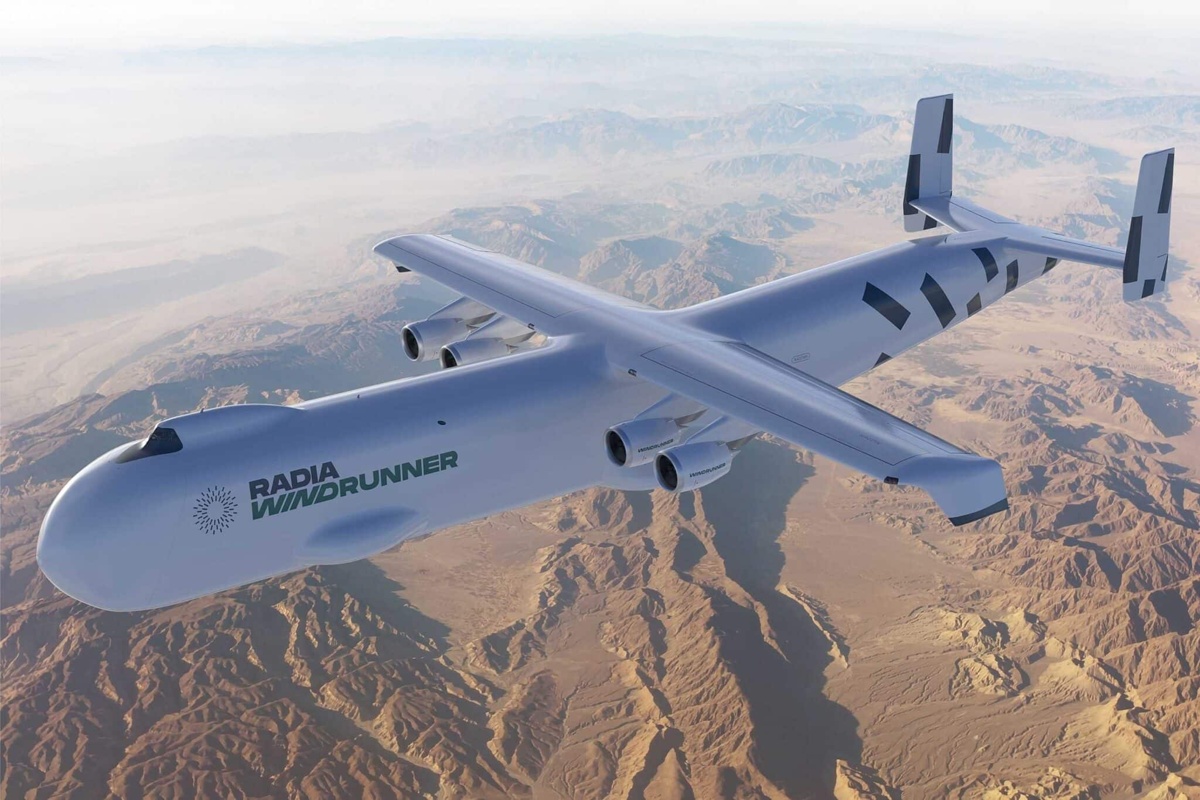


Unprecedented Partnership at the Paris Air Show
On June 17, 2025, during the Paris Air Show, Akaer was officially selected to design the Cabin Pressure Vessel of the WindRunner.
The Brazilian company, based in São José dos Campos, will participate in the development of the largest cargo aircraft ever designed.
This pressurized cabin will be manufactured at Akaer’s facilities.
It will ensure a safe environment for crew members and critical systems during flights.
-
Brazil Welcomes Spanish Wamos Air and Nigerian Air Peace, Potentially Transforming International Routes and Increasing Competition

-
Offshore air transport soars in Brazil, surpasses 2.5 million passengers, and reveals how oil has transformed Rio’s airports into key pieces of national logistics.

-
Latin America becomes the “global champion” of aviation taxes, tickets may become more expensive in Brazil, and IATA’s warning exposes risk for flights, tourism, and passengers.
-
Brazil has lost 85 air routes since 2019 and is still flying less than before the pandemic, leaving passengers with fewer destinations, fewer frequencies, and a more limited air network.


See More Details About The Aircraft Below:

Redefining Global Logistics
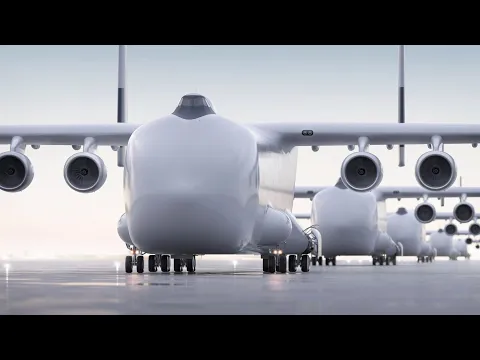
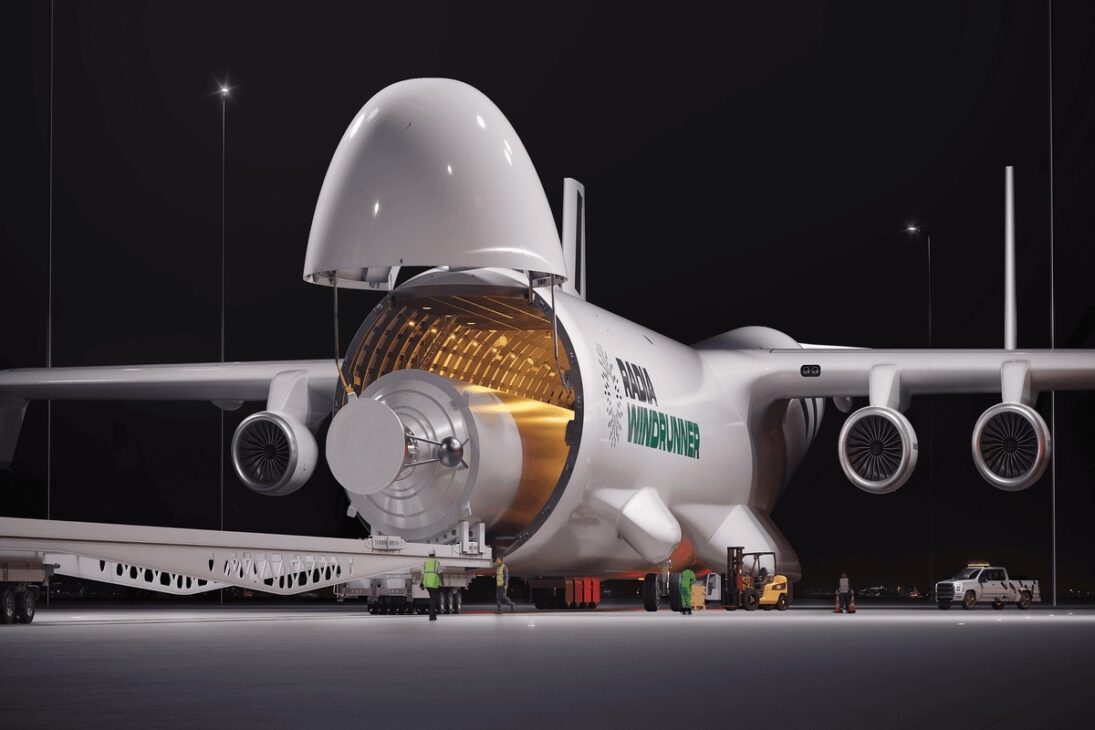
The WindRunner was developed by Radia. The aircraft is 108 meters long and has 7,700 cubic meters of internal volume.
This represents about 12 times the cargo volume of a Boeing 747. The aircraft can carry up to 72.6 tons of payload.
It can also operate on short runways of at least 1,800 meters. Even unpaved runways are among its landing possibilities.
This feature eliminates the need for specialized airport infrastructure. This makes the WindRunner ideal for deliveries in remote and hard-to-reach areas.
The freighter transports oversized loads. These include wind blades up to 100 meters, satellites, and armored vehicles.
This capacity reduces logistics timelines and operational costs, redefining the air transport of special cargo.
Excellence of Brazilian Engineering
Akaer has 33 years of experience in the aerospace sector. The company’s portfolio adds up to more than 10 million hours of engineering.
Its history includes more than 50 global aerospace projects. The company has participated in the development of important aircraft.
Among the projects are the C-390 Millennium freighter from Embraer and the Gripen E fighter from Saab.
It also participated in the supersonic Hürjet from Turkish Aerospace. In 2024, it achieved Tier 1 supplier status for Deutsche Aircraft.
This title was earned with the D328eco project. Now, the presence in the WindRunner strengthens Akaer’s international network of partners.
Among the WindRunner partners are Aciturri, Astronautics, Element, and Ingenium. All contribute to this new reference in air mobility.
Recognition and Technical Challenges
Cesar Silva, CEO of Akaer, also highlighted the company’s pride in participating in the WindRunner.
He further emphasized the complexity and technical challenges of the project.
The selection of Akaer, therefore, reflects the international recognition of its expertise.
Years of experience, in addition, have solidified the company’s reputation in the aerospace sector.
Mark Lundstrom, founder and CEO of Radia, for his part, also celebrated the partnership.
According to him, the collaboration thus reinforces a new era of sustainable and integrated logistics.
The joint effort between Radia and Akaer, therefore, seeks to develop innovative solutions.
The focus, above all, is to ensure efficiency and safety in future logistics operations.
Impact and Future Perspectives
The first flight of the WindRunner is expected to take place by the end of 2027.
The aircraft’s certification should be completed between 2028 and 2029.
Thus, experts maintain high expectations for the project.
Furthermore, the aircraft certification is expected to occur by the beginning of the next decade.
In addition to transporting wind components, the aircraft, twill also perform other functions.
Consequently, it will extend its utility in various logistics operations.
Therefore, it will meet missions in defense, aerospace, and disaster response.
On May 8, 2025, Radia, therefore, entered into an agreement with the U.S. Department of Defense.
With this measure, it seeks, in addition, to evaluate the dual-use of the aircraft.
Thus, the WindRunner could operate both in civilian and military missions.
Therefore, this initiative reinforces the aircraft’s versatility.