Portuguese
  Spanish


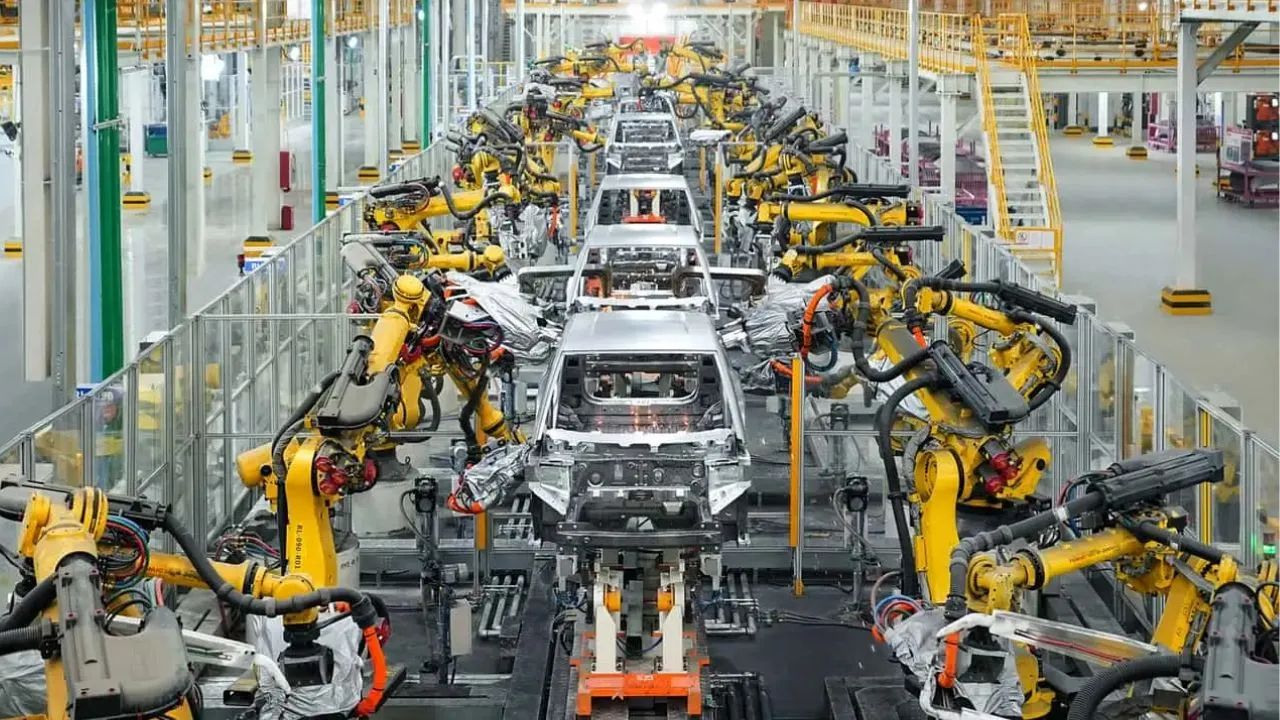

With Gigantic Structure and Advanced Technology, BYD Opens the Largest Car Factory on the Planet in China and Sets a New Standard for the Global Automotive Industry.
BYD took a historic step by putting into operation what is already recognized as the largest car factory on the planet, located in the city of Zhengzhou, China.
The mega project goes into operation to meet the growing global demand for vehicles, especially electric ones, and represents a technological milestone in the automotive industry.
The facility recently began operations and has the capacity to produce thousands of vehicles per day.
-
Nissan Kicks S Direct 2018: Affordable Used SUV with Over 13 km/l Fuel Efficiency, 432-Liter Trunk, and CVT Automatic Transmission

-
Iconic Orange Double-Decker Bus, a Dutch Fan Favorite for Over 20 Years, Arrives in Texas for the World Cup After Touring Brazil, England, Qatar, and More
-
$100 Million Hypercar Collection, Including Ferrari LaFerrari and McLaren Speedtail, Found Abandoned at Los Angeles Airport
-
Hyundai ix35 2019: A Forgotten SUV with 2.0 Engine and 650 km Range Costs Less Than a New Kwid in Brazil


The direct impact affects the global automotive sector, with repercussions on cost, technology, and production scale.
The complex belongs to BYD, one of the world’s giants in the electric mobility sector.
The company decided to unify various stages of the industrial chain in one location. This reduces logistical costs, speeds up deliveries, and increases productive efficiency.
The automaker’s proposal is simple: produce quickly, with cutting-edge technology, and increasingly less dependence on external suppliers.
As a result, the factory becomes not only one of the largest in the world but also one of the most strategic.
The Size of the Largest Car Factory on the Planet Is Impressive
When talking about the largest car factory on the planet, the numbers are hard to imagine.
The complex occupies more than 10 square kilometers, exactly 10.67 km², equivalent to dozens of football stadiums combined.
Within this territory, there are battery factories, administrative buildings, industrial warehouses, logistics centers, and vehicle testing areas.
Everything functions like a small industrial city entirely focused on automobile production.
In addition, more than 57,000 people work directly or indirectly at the site. This makes the factory one of the largest industrial job hubs in China.
Technology Is the Heart of the Largest Car Factory on the Planet
Production is dominated by automation. Robots carry out everything from welding to painting vehicles, reducing human errors and increasing delivery speed.
A key feature is that about 70% of the components are manufactured within the complex itself.
This model, known as “vertical integration,” allows for complete control over cost, quality, and timing.

Why Did BYD Decide to Build the Largest Car Factory on the Planet?
The explosive growth of the electric vehicle market required a leap in production.
As BYD is one of the leaders in this sector, expanding capacity became a strategic priority.
By concentrating everything in a single mega-structure, the company reduces delays, depends less on suppliers, and ensures greater global scale.
In summary: produces more, faster, and at a lower cost.
Additionally, the factory was designed to be more environmentally efficient, with water reuse and optimized energy use.
The Impact of the Largest Car Factory on the Planet on the International Market
The inauguration of this unit changed the global balance of the automotive industry. Traditional automakers now face a competitor that operates at a different level of speed and cost.
This could result in cheaper vehicles, greater supply, and changes in business models. Countries that rely on car exports will need to adapt.
Experts also point out that China is consolidating itself as a leader in global electromobility.
The largest car factory on the planet is not just an industrial complex.
It symbolizes a new phase in the industry: more technology, less external dependency, and production at an “extreme industrial” level.
And, it seems, this model will be replicated in other regions of China and the world in the coming years.
For consumers, this could mean more affordable cars. For competitors, a significant challenge.
Source: Diário do Litoral