






 Portuguese
  Spanish


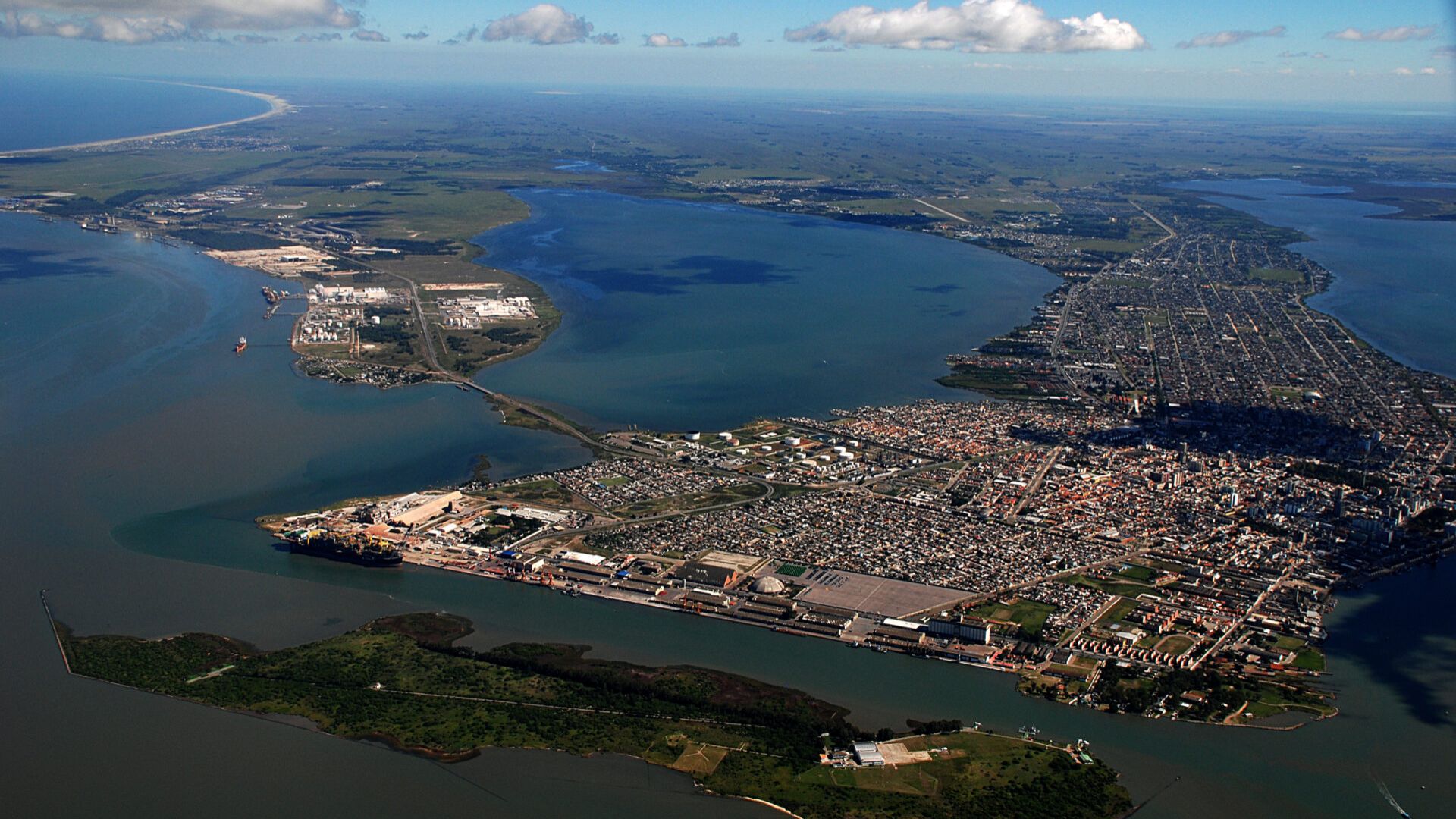


With Surprising Dimensions, Lagoa dos Patos Stands Out In Brazil And South America, Easily Identified On Maps And Playing An Essential Role In The Ecosystem, The Economy, And The History Of The Southern Regions Of Brazil.
Few people know, but the largest lake in South America is located in Brazilian territory, in the state of Rio Grande do Sul.
The Lagoa dos Patos impresses with its size and relevance, easily appearing on any national map due to its expanse.
With about 265 kilometers in length and a width that can reach 60 kilometers, the lagoon surpasses in area other famous lakes on the continent, consolidating itself as one of Brazil’s main natural postcards.
-
12-Year-Old Takes the Wheel After Mother Faints, Prevents Highway Tragedy in Brazil, Impresses Rescuers

-
From Father to Daughters: Aline Leaves Career to Modernize Family’s Four-Decade-Old Artisanal Cachaça Business in Rural Brazil, Expanding Production with Her Sister
-
Couple’s 17-Year-Old Home Garden Destroyed by Local Authorities, Threatened with Fines

-
Frustrated by local government inaction, Brazilian villagers crowdfund $800 to build wooden bridge for coffee transport across stream





Lagoa dos Patos: Giant of the Brazilian Ecosystem
Its importance goes far beyond size.
The Lagoa dos Patos plays a strategic role for the regional ecosystem, connecting to the Atlantic Ocean through the São Gonçalo channel and the mouth of the Rio Grande.
This connection to the sea creates a transition environment between fresh and salt water, favoring great biodiversity.

Thousands of migratory birds use the site as a route for passage and rest, while species of fish and crustaceans thrive thanks to the variety of aquatic environments found there.
Economy And Historical Cities Of Lagoa Dos Patos
The region around Lagoa dos Patos is home to historical and port cities, such as Rio Grande, Pelotas, and São Lourenço do Sul, whose economy is deeply linked to the activities provided by the lake.
Fishing, tourism, irrigated agriculture, and navigation are just some of the traditional practices developed along the shores.
According to data from the Brazilian Institute of Geography and Statistics (IBGE), about two million people live near the lagoon, which also serves as an important source of water supply and recreation for the population.
Ecological Relevance And Environmental Challenges
Beyond the economic aspect, the ecological role of Lagoa dos Patos is fundamental for the environmental balance of Southern Brazil.
The local ecosystem contributes to maintaining water quality, protecting endangered species, and regulating the regional microclimate.
Researchers point out that the area is considered a high priority for conservation due to the risk of pollution and the pressure of urban growth in neighboring cities.

Other Large Lakes Of South America
In the South American context, other lakes also stand out for their unique characteristics, but none surpass Lagoa dos Patos in surface area.
The Titicaca Lake, for example, located on the border between Peru and Bolivia, is internationally known as the highest navigable lake in the world, situated over 3,800 meters above sea level.
With approximately 8,372 square kilometers in area, Titicaca is a symbol of cultural wealth for Andean civilizations but still has a smaller area than Lagoa dos Patos, which reaches 10,144 square kilometers.
Another relevant case is Lake Maracaibo, located in Venezuela, whose area exceeds 13 thousand square kilometers.
However, many experts classify Maracaibo as a bay due to its intense connection with the Caribbean Sea, excluding it from the list of freshwater lakes.
Meanwhile, Lake Argentino, in Argentine Patagonia, is noted for its scenic beauty and the presence of the Perito Moreno Glacier, attracting tourists from all over the world.
Still, its dimensions fall short of the Brazilian lagoon, reinforcing the uniqueness of Lagoa dos Patos on the continent.
Social And Economic Functions Of The Largest Lake In South America
Lagoa dos Patos is recognized for integrating different economic and social uses in its area of influence.
The port of Rio Grande, for example, one of the country’s main ports, handles thousands of tons of goods annually and serves as a strategic point for agricultural and industrial exports.
At the same time, traditional fishing communities maintain sustainable activities for catching shrimp, crabs, and typical fish, such as mullet, which has great gastronomic and commercial value in the region.
With so many functions, the largest lake in South America faces increasingly evident environmental challenges.

Recent studies warn of the risk of eutrophication (nutrient accumulation that can harm aquatic life), uncontrolled urban occupation, and waste disposal.
For water resources and environmental specialists, integrated management of the lagoon is urgent to ensure the continuity of ecological, social, and economic benefits in the medium and long term.
Lagoa dos Patos: Brazilian Natural Symbol
Little known nationally, Lagoa dos Patos even appears on school maps, but is not always given the value it deserves in the Brazilian scenario.
Its waters bathe historical cities, support local economies, and protect a vast biodiversity, becoming a symbol of natural wealth.
As the population becomes aware of the size and importance of this Brazilian giant, the debate over public policies for conservation and sustainable development in the region intensifies.
Did you already know the story of Lagoa dos Patos or were you surprised to find out that the largest lake in South America is in Brazil? In your opinion, what is needed for the lagoon to be recognized and preserved as it deserves?


