Portuguese
  Spanish


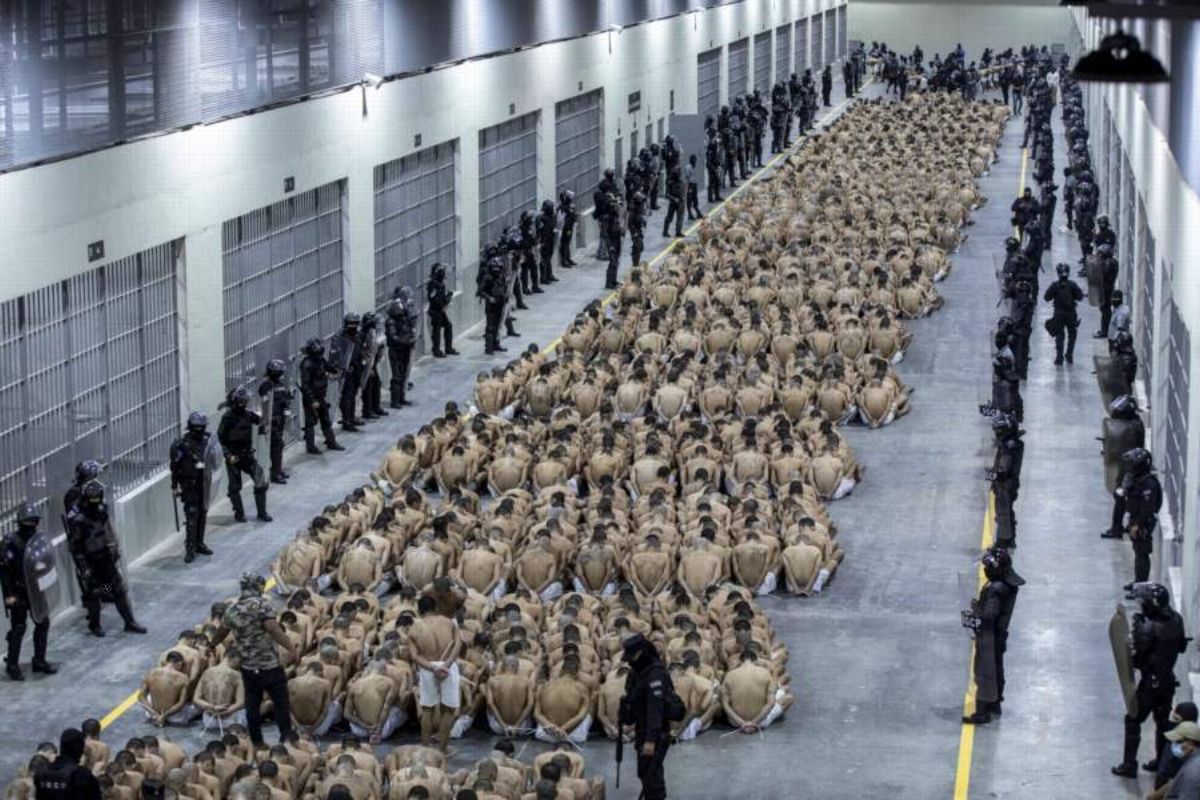


The Largest Prison In Latin America, The Terrorism Confinement Center In El Salvador, Was Inaugurated In 2023 With Capacity For 40 Thousand Inmates, Total Surveillance Routine And Received Even Deportees From The United States Amid Criticisms Of Human Rights Violations
The largest prison in Latin America is not just a prison, but a symbol of a security policy that divides opinions. Inaugurated in 2023 by the government of Nayib Bukele, the Terrorism Confinement Center (CECOT), located in Tecoluca, El Salvador, was built to house up to 40 thousand inmates in extreme incarceration conditions.
Designed as part of the “war on gangs,” the CECOT gained international attention for its unprecedented dimensions and for its strict regime: cells without windows, lights on 24 hours a day, and total isolation from the outside world. Since 2025, the prison has also started receiving deportees from the United States, further expanding the controversies surrounding its operation.
The Origin Of The Largest Prison In Latin America
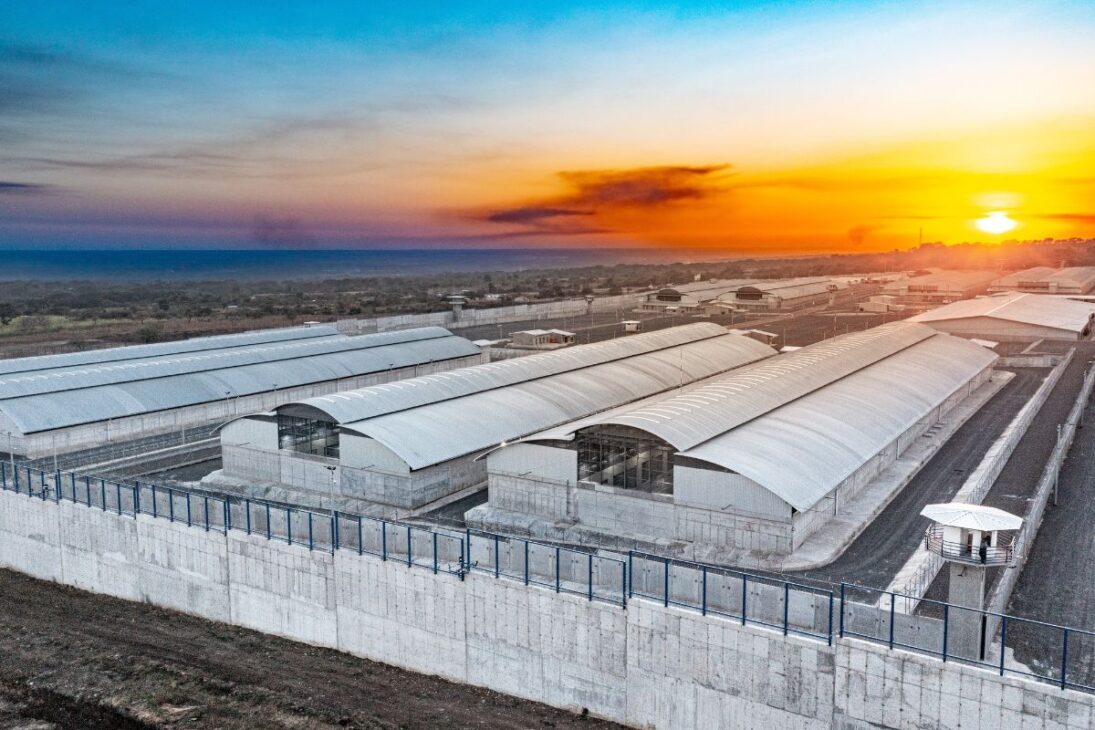
The CECOT was born from the zero tolerance to gangs strategy adopted by Bukele.
-
Brazilian Farmer Turns to Artisan Baked Goods After Poultry Venture Fails in Rural Bahia

-
Japanese Botanist Akira Miyawaki Plants 30,000 Trees on a Tennis Court-Sized Plot, Intentionally Sacrificing Many to Accelerate Forest Growth; Miyawaki Method Has Spread Over 40 Million Trees Across 15 Countries

-
Couple Converts Retired U.S. Navy Research Barge into Off-Grid Floating Home on Idaho Lake with DIY 3-Stage Water Filtration System Using UV Light
-
Brazilian Military Police Officer Turns Family Farm into Internationally Certified Guava Producer, Eyes Exports to UK, Portugal, and Canada After Cooperative Boosts Sales by 580%



In 2022, the government declared a state of emergency to combat groups like Mara Salvatrucha (MS-13) and Barrio 18, resulting in thousands of mass arrests.
The overcrowding of existing prisons paved the way for the creation of a new monumental structure.
Built in record time, about 70 km from the capital San Salvador, the complex was presented as the definitive solution against the violence that has plagued the country for decades.
For the government, the CECOT would be a tool to restore order, but for international critics, it came to represent a model of mass incarceration with serious risks to human rights.
Structure And Operation Of The Prison
With capacity for 40 thousand inmates, the prison functions like a true walled city.
There are giant pavilions connected by monitored corridors, overcrowded collective cells, and constant monitoring by cameras and armed guards.
There are no rehabilitation or social reintegration programs: the proposal is total isolation of the inmates.
One of the most criticized points is the absence of windows in the cells.
The inmates live with artificial light on 24 hours a day, in metal bunk beds without mattresses, sharing a collective bathroom and receiving limited food, usually just rice and beans.
The conditions resemble more a permanent confinement center than a traditional prison.
Human Rights And International Controversies
Since its inauguration, the CECOT has been the target of allegations of human rights violations. Reports from organizations like Amnesty International point to cases of torture, deaths in custody, and absolute restriction of external contact.
There are no family visits, no books or letters are allowed, and cell phone signals are blocked for kilometers around.
From 2025, the prison also began receiving deportees directly from the United States, raising questions about the legality of these procedures.
Critics claim that many of those sent did not receive proper trial, while supporters of the measure argue that the CECOT is the necessary response to deal with international criminals linked to gangs.
Historical Comparisons And Social Impact


Before the CECOT, the title of largest prison in Latin America had already belonged to Carandiru, in São Paulo, which housed more than 8 thousand inmates in the 1990s, until it was deactivated after the 1992 massacre.
The difference is that, while Carandiru operated under precarious conditions, the CECOT was planned to be a maximum security mega-complex from its conception.
For part of the Salvadoran population, the creation of the prison is seen as a success, as homicide rates have fallen in recent years.
However, the social and political cost of mass incarceration remains under debate, with experts warning of the risks of maintaining a model based solely on repression without space for reintegration.
The largest prison in Latin America represents one of the largest mass incarceration experiments in the current world.
Its monumental scale, strict rules, and the arrival of deportees from the United States place the CECOT at the center of a discussion that involves public safety, international politics, and human rights.
And you, do you believe that a prison model like the CECOT is effective in reducing violence or do you understand that it simply transfers the problem without solving it? Leave your opinion in the comments and participate in the debate.