






 Portuguese
  Spanish


The World’s Largest Tunnel Is Inaugurated and Promises to Revolutionize the Chinese Economy. With 24 km in Length, the New Tunnel in China Will Support 100 Thousand Vehicle Trips per Day.
The new system of transoceanic tunnels and bridges in China, called Shenzhen-Zhongshan, was finally inaugurated in Guangdong Province after seven years of construction. The name of the world’s largest tunnel refers to the two cities interconnected by the system, which is 24 km long, has eight lanes, and a speed limit of 100 km/h, allowing a journey that would normally take two hours to be completed in just 30 minutes.
New 24 km Tunnel in China Can Transport Up to 100 Thousand Vehicles per Day
The tunnel in China, an impressive engineering feat in the Guangdong-Hong Kong-Macau Greater Bay Area (GBA), was inaugurated on Sunday, June 30, at 3:00 PM, revolutionizing transportation in the region. In the very first hour of operation of the world’s largest tunnel, over 7 thousand vehicles crossed the bridge, demonstrating the enormous demand and efficiency of the project, as reported by the Xinhua News Agency.
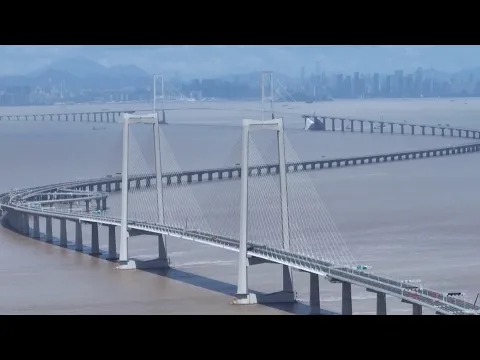

The average daily traffic volume is estimated at 80 thousand to 100 thousand vehicle trips, and the expectation is that the new 24 km tunnel in China will operate at full capacity after opening. The crossing will significantly enhance economic and social connectivity, facilitating the movement of goods throughout the Pearl River Estuary, promoting balanced development in the GBA, according to local transport authorities.
-
Eni Acquires 25% Stake in Chilean Lithium Project, Plans to Invest Up to $225 Million in Eco-Friendly Extraction Method

-
French Brand Transforms 6 Million Brazilian PET Bottles into Sustainable Sneakers for Global Fashion Market
-
Abandoned Factory in Rio’s North Zone Becomes Urban Hazard with Standing Water and Debris

-
The U.S. Navy Conducts Submarine Tests in Idaho Lake to Detect Underwater Noises Hidden by the Ocean


The Chinese president Xi Jinping sent a letter of congratulations on Sunday for the opening of the waterway. He noted that the project fully illustrates that Chinese modernization can only be achieved through solid work, according to Xinhua.
Understand the Importance of the Chinese Tunnel
Authorities state that the toll for the entire route is 66 yuan (US$ 9) per vehicle trip. The world’s largest tunnel marks a significant improvement in connectivity not only between GBA cities but throughout southern China, bringing accessibility, convenience, and speed for travelers and businesses, according to local authorities.
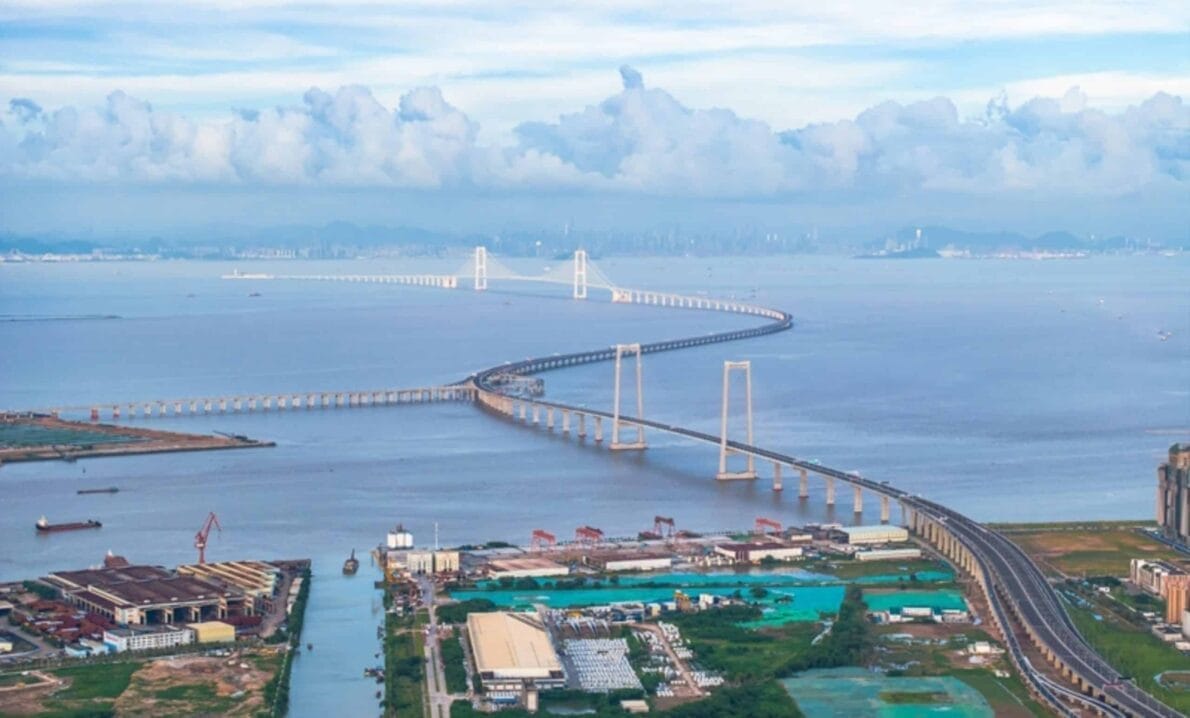
The tunnel in China, which integrates two bridges, two islands, and an underwater tunnel, consists of an eight-lane expressway 24 kilometers long with a speed limit of 100 kilometers per hour.
It is an important part of the national expressway network that crosses the Pearl River Estuary, about 30 km south of the Humen Bridge and 31 kilometers north of the Hong Kong-Zhuhai-Macau Bridge, another mega waterway in the GBA.
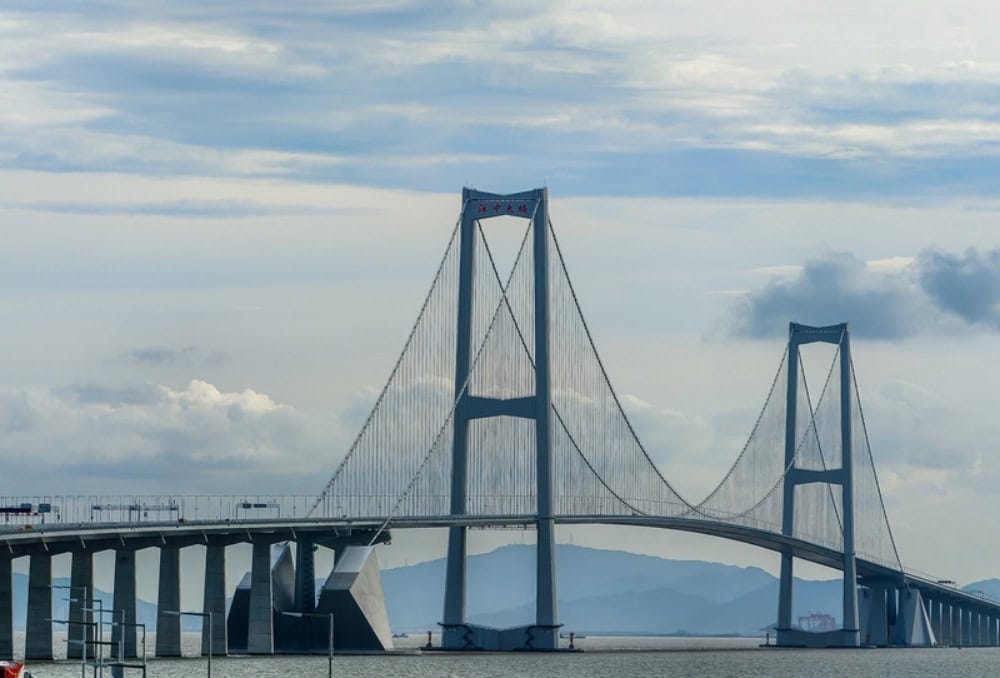
According to Xinhua, the new 24 km tunnel in China, along with existing structures like the Hong Kong-Zhuhai-Macau Bridge, will form a network of transoceanic and river passages in the Greater Bay Area, increasing connectivity for urban clusters there, says Deng Xiaohua, head of Guangdong Provincial Communication Group Co.
Records Achieved
Several important innovations and technological advancements were made during the construction process of the world’s largest tunnel. The canal, touted as an engineering marvel, is considered one of the most challenging transoceanic transport projects ever completed in the world, taking seven years to build.
The 24 km tunnel in China has set several world records, including being the world’s first long-distance double-tube underwater tunnel with eight lanes and the world’s first high-speed underwater interchange connecting an airport and a highway.
A significant step toward China’s goal of becoming a transportation powerhouse, the tunnel in China also signals that the construction of the GBA has yielded fruitful results, according to experts.


