Portuguese
  Spanish


Steam locomotive built by Glen Smythe in Ironbank started in 2003 and left the shed on January 29, 2026, heading to Pichi Richi Railway, between Quorn and Port Augusta. The handcrafted machine still needs the boiler before operating with tourists on the South Australian historic railway.
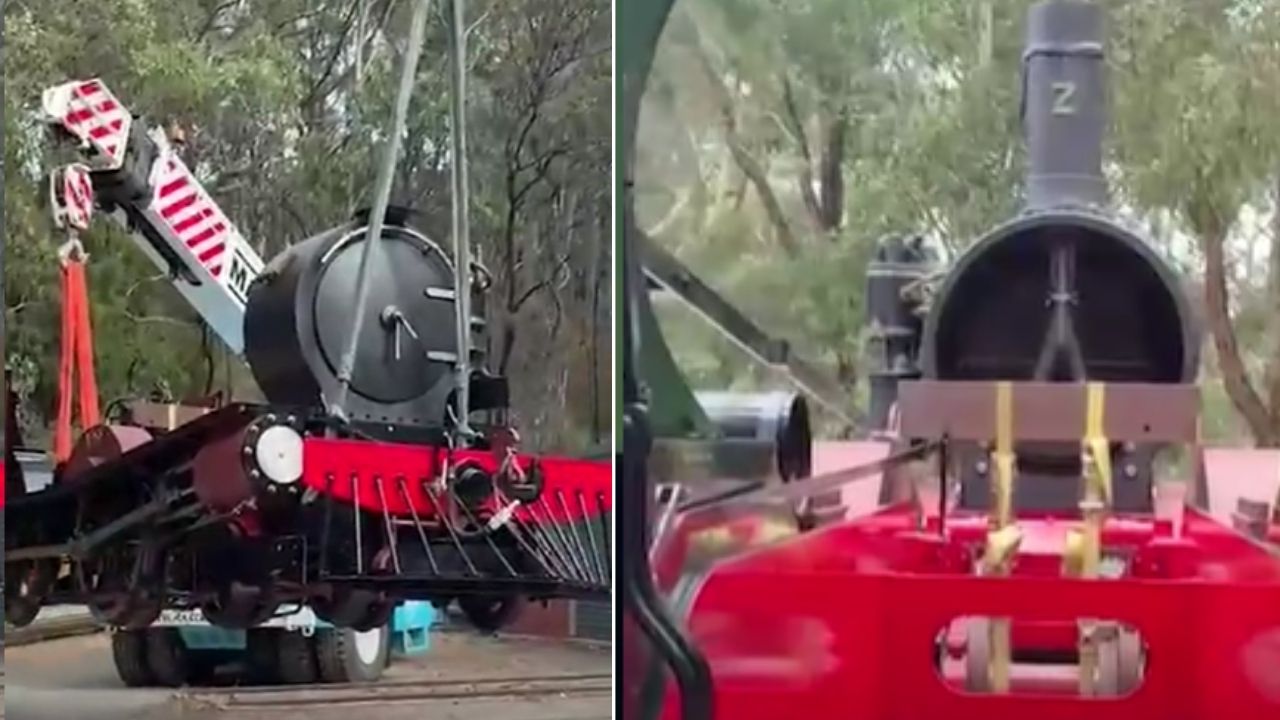
The steam locomotive built by Glen Smythe, a resident of Ironbank, in the Adelaide Hills region, Australia, left the shed where it was born after 23 years of work. The machine was built from scratch, with parts manufactured from raw materials, according to a report published by ABC Radio Adelaide on January 29, 2026.
The project began in 2003 as a personal engineering challenge. On Thursday, January 29, 2026, Smythe watched the structure being hoisted by crane and placed on a truck to travel about 350 kilometers to Quorn, the base of the Pichi Richi Railway, a historic railway operating between Quorn and Port Augusta.
Glen Smythe started the project in 2003
Glen Smythe was already involved with the maintenance and preservation of steam trains before starting his own construction. According to what he told ABC Radio Adelaide, the idea gained momentum in the 1990s when he followed a new railway project being undertaken in the United Kingdom.
-
Thailand Converts 8 Tons of PET Bottles into 3,500 School Backpacks, Showcasing Circular Economy with Over 40 Factories Involved

-
Mysterious Bats Spotted in Paris’s Père Lachaise Cemetery, Drawing Tourists to the “Vampire Cemetery”

-
From Selling Street Food to Leading a $300 Million Construction Firm: The Journey of a Brazilian Entrepreneur

-
Abandoned Penthouse in Houston Reveals Million-Dollar Suite with 24-Karat Gold, Tiffany Crystals, and Opulence Even Elvis Might Have Snubbed




From there, Smythe began to believe that, with enough time and equipment, he could also build a machine from scratch. The result of this thought took more than two decades to leave the shed, in a process that required persistence, technical knowledge, and continuous manual work.
Parts were made from raw materials
The steam locomotive was not assembled from a ready-made kit. According to the source, Glen Smythe manufactured the parts from raw materials, within his own workspace.
This detail makes the story even more unusual. Building a locomotive requires mechanical precision, mastery of metallurgy, project reading, and the ability to transform raw materials into functional components, something very different from restoring an existing machine.
Machine follows a 1982 project
The locomotive was built based on a 1982 design, according to ABC Radio Adelaide. The source does not detail all the technical aspects of the project but states that the main structure has already been completed.
This information helps to understand the handcrafted nature of the work. Smythe not only reproduced an old idea: he dedicated years to transforming a technical project into a physical machine, made piece by piece, until it reached the point of being transportable.
Exit from the shed marked an emotional turning point
The removal of the locomotive from the shed was done using a crane before it was placed on a truck. For Glen Smythe, the moment had an evident emotional weight because the machine left the place where it was built for 23 years.
He told the Australian broadcaster that there was a certain sadness in seeing the locomotive leaving its “birthplace.” The shed would be emptier, but the exit also marked the beginning of a new phase of the project.
Journey to Quorn will be about 350 kilometers
After leaving Ironbank, the locomotive headed towards Quorn, on the edge of the Flinders Ranges region, in southern Australia. The truck journey would be about 350 kilometers.
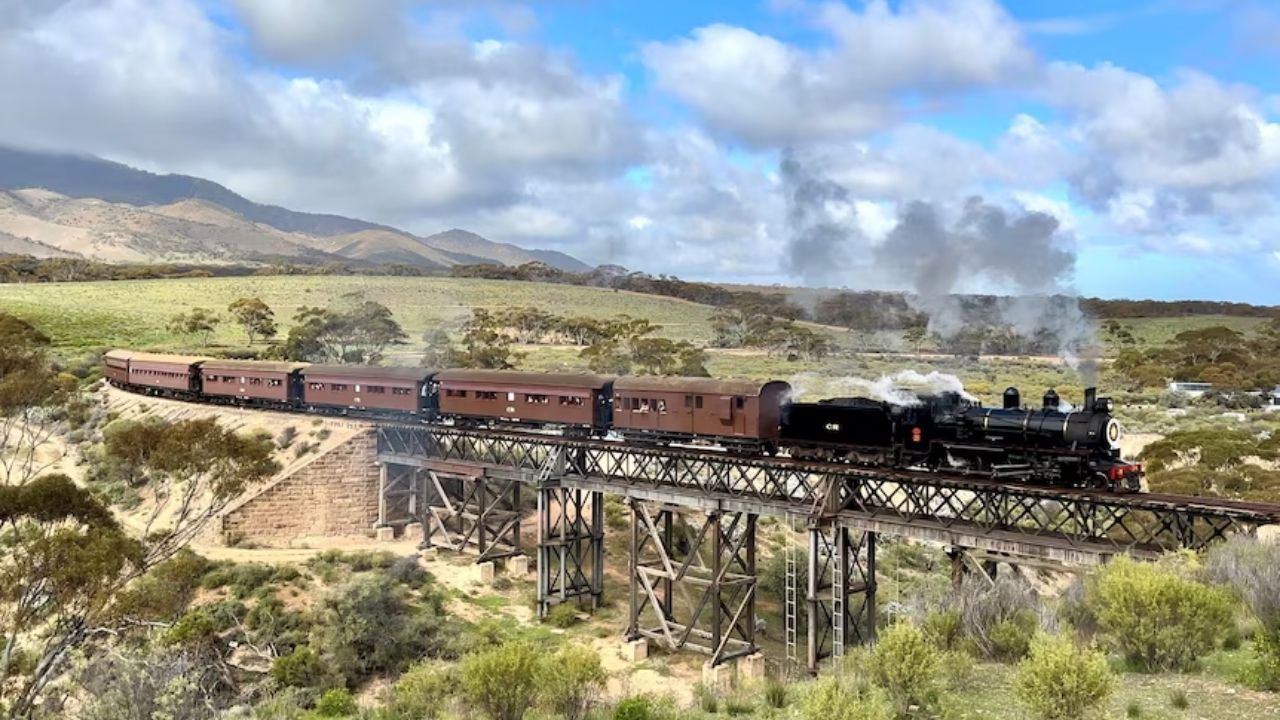
Quorn is the base of the Pichi Richi Railway, a historic railway that connects Quorn to Port Augusta. It is in this touristic and heritage environment that the machine is expected to fulfill its function when it is complete and operational.
Pichi Richi Railway will be the machine’s destination
The Pichi Richi Railway is a historic railway in South Australia, known for operating tourist trains on a preserved route. According to the source, the locomotive built by Glen Smythe is expected to join the railway’s fleet when completed.
The goal is for the machine to pull passengers on tourist trips. The locomotive was not made just for display: the intention is to put it into operation on a railway preservation line.
Boiler still needs to be built
Despite leaving the shed, the steam locomotive is not yet fully ready to operate. Glen Smythe explained that the transported part was 100% finished, but there was still a lot of work ahead in building the boiler.
The boiler is essential in a locomotive of this type because it generates the steam necessary for operation. The removal of the main structure made space in the shed for Smythe to continue this crucial phase of the project.
Project was funded by the builder himself
The source states that the locomotive was self-funded by Glen Smythe. This point emphasizes the personal nature of the project, which does not appear as a large business or state initiative.
For 23 years, the construction progressed as a work of passion, engineering, and railway preservation. The scale of the effort is noteworthy precisely because it was born inside a private shed, not in a specialized factory.
Technical challenge turned into psychological challenge
Smythe said he started the project as an engineering challenge but realized that the hardest part was maintaining motivation for so long. He described the experience as a psychological challenge greater than he imagined.
According to the builder, there were moments when he would wake up at night worried about the magnitude of the responsibility he had taken on. Keeping a project alive for 23 years required more than skill: it required mental resilience to continue.
Passion for railway preservation drove the work
Glen Smythe’s story connects to a larger movement of historic railway preservation. In several countries, volunteers and enthusiasts maintain old locomotives, restore tracks, and preserve railway experiences for tourists.
In the Australian case, the future integration into the Pichi Richi Railway gives practical meaning to the project. The machine ceases to be just a personal achievement and becomes part of a tourist route linked to local railway memory.
A slow construction in times of fast production
The steam locomotive made by Smythe contrasts with the current pace of industrial production. While many modern pieces of equipment are manufactured on automated lines, the Australian project progressed over decades in a shed.
This difference helps explain the fascination of the story. It shows a rare work, built outside the rush, with technical mastery and almost artisanal patience, at a time when few personal projects span so much time.
Machine still needs to prove complete operation
Although the main structure has left the shed, the boiler stage will still be decisive. Without it, the locomotive cannot fully fulfill its function as an operational steam machine.
The source does not provide an exact date for entry into tourist service. Therefore, the most accurate thing to say is that the locomotive should join the Pichi Richi Railway fleet when it is complete and ready to operate.
A personal project that became a historical attraction
The construction by Glen Smythe brings together elements that explain the impact: extreme dedication time, artisanal manufacturing, exciting exit from the shed, and destination on a tourist railway.
The steam locomotive has left home, but its journey is not yet over. It now enters a new phase, far from the shed where it was created, with the promise of one day pulling tourists between Quorn and Port Augusta.
When a shed becomes a dream factory
The story shows how an individual project can surpass the idea of a hobby. In 23 years, Glen Smythe transformed raw material into a locomotive capable of heading to a historical railway.
Now it remains to follow the construction of the boiler and the future entry into operation. Do you think artisanal projects like this steam locomotive still have a place in a world dominated by mass production and fast technology? Leave your opinion in the comments.