





 Portuguese
  English
  Spanish
  5 min of reading
  0 comments


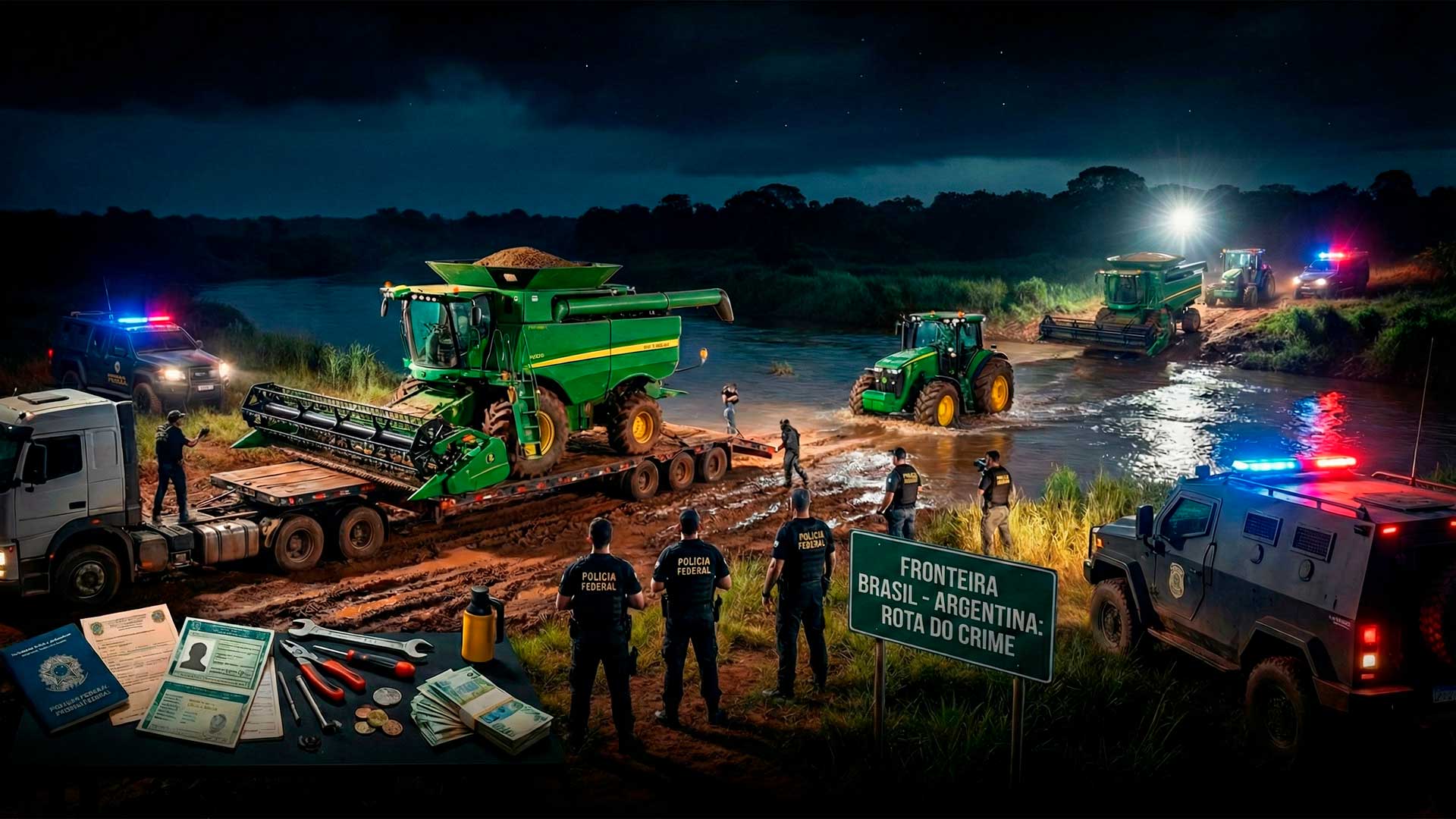
Investigations Indicate That Stolen Tractors, Sprayers, and Planters in Brazil Have Been Taken to the Border with Argentina. The High Value of the Equipment and the Cheaper Resale Attract Criminals and Buyers, and Authorities Strengthen Actions to Combat Crime.
The theft of agricultural machinery has become one of the most profitable crimes in the countryside, with a direct impact on agribusiness and rural safety. In the first half of 2025, occurrences grew by 37.5 percent compared to the previous year, concentrated in São Paulo and also increasing in states with significant logistical corridors.
In this context, investigations conducted by security forces have identified a cross-border route with a recurring destination. The inquiry indicates that part of the stolen machinery is taken to the border of Brazil with Argentina and ends up operating in productive areas of the neighboring country.
According to the Federal Police, there are cases where the Argentine producer buys without being certain of the illicit origin, which increases the risk of receiving stolen goods and makes it difficult to recover the asset. This type of parallel market relies on offers below market value and the urgency to “renew fleets” at a lower cost.
-
A single tank in the lake of a plant yields 90,000 kilos of tilapia every six months, and the company wants to multiply this by 500 to take Mato Grosso do Sul from 11th place to the top in the country.

-
Russia recognizes Brazil as free from foot-and-mouth disease without vaccination on June 10, 2026, strengthens Brazilian agribusiness, and paves the way for more meat, fish, nuts, and new business with a billion-dollar market.

-
Fish farming becomes the new giant of Brazilian agribusiness and transforms tilapia into the “water ox,” in a chain that already moves R$ 11 billion per year and exceeds 1 million tons produced.

-
A family from Martins, in the interior of RN, planted seeds in their backyard that no one remembered where they came from and harvested a green and yellow fruit with the face of the Brazilian flag; the nickname “jerimum da Copa” caught on before they discovered what had actually grown there.


Experts and investigators point out that, unlike cars, tracking agricultural machinery tends to be more complex and time-consuming. Identifying the path of the asset, the first sale, and who transported it can take months, which favors the rapid circulation of equipment between states and countries.
The Crime Route Takes Advantage of Gaps at the Border and Difficult Terrain to Monitor
The Federal Police point out that machines from producing regions in Brazil head to the border area, particularly in the southwest of Paraná. A vulnerability factor is the geography itself, as the stretch of land border is small and there are multiple informal crossing points in river areas.
According to a report from an agent who worked in the region, the Santo Antônio River appears as a sensitive point, allowing crossings at shallow and easily accessible locations. The investigation cited dozens of crossing points along the riverbed, which requires ongoing blocking and monitoring actions.
The same monitoring indicates that part of the transport involves logistics to move large machinery, which reinforces the organized nature of the scheme. For investigators, the route is not fixed and changes as inspections increase in certain segments.
High Prices and Quick Resale Make Tractors and Harvesters a Preferred Target
The main attraction is financial. A new harvester can have an average price around R$ 800 thousand, while tractors can cost about R$ 600 thousand, with models exceeding R$ 1 million, amounts that help explain the sophistication of the crime.
Aside from the listed price, the distinction is liquidity. When the equipment appears cheaper near the border, it becomes an “opportunity” for those looking to quickly increase productivity, which fuels the machinery of receiving stolen goods and encourages new thefts.
Police Operations Target Gangs and Strengthen Cooperation Between States and Federal Forces
In 2023, operations began targeting suspect groups involved in this chain, from theft to distribution. In the month prior to April 2023, the Pantaneira Operation in Paraná aimed to dismantle a gang and resulted in arrests and recovery of part of the machinery, according to the investigation published at the time.
Along the same lines, the Public Prosecutor’s Office of Minas Gerais launched the Integrated Border Operation on March 16, 2023, against a criminal organization specialized in the theft of tractors and machinery, with arrest warrants, searches in various states, and asset seizures. The investigation cited interstate operations and the presence of receivers who purchased below market value.
The logic of integration also appears in the discourse of authorities operating at the border. In a published account, a Federal Police officer stated that cooperation with the Military Police in rural patrolling increases resistance to smuggling, even with the many crossing points.
In the countryside, initiatives such as the Community Rural Patrol gain importance by shortening response times and creating networks with producers. The Military Police of Paraná reports that there are already more than 20,000 registered properties, in addition to community networks and identification signs as a form of deterrence.
In border operations, the model usually gathers Armed Forces and various police units, targeting cross-border and environmental crimes. An example cited in 2023 was the resumption of actions like Ágata in the South, with joint operations focused on patrolling and inspections.
Security in the Countryside Involves Prevention, Quick Registration, and Attention to the Origin of Machinery
The guidance from sector entities is to combine technology, control routines, and community organization. A guidebook launched on July 30, 2024, with support from the FAEP System and the state government in Paraná, includes prevention measures such as improving lighting, controlling access, and reinforcing physical structures.
Another front is registration in patrolling and prevention programs, which allow for technical visits and alignment of safety procedures. In the pre-registration channel linked to the FAEP System, the guidance is to start online registration and wait for contact to schedule a police visit to the property.
For those buying used machinery, the central care is to reduce the risk of receiving stolen goods. Checking the origin, documentation, seller’s history, and signs of tampering can prevent producers from investing heavily in an asset that will later be seized, in addition to helping cut the economic incentive for crime.
In the end, there is an uncomfortable discussion for the sector: when a “too good” offer appears, part of the market turns a blind eye to the origin, and this shifts the injury to those who produce and those who pay for insurance and replacement. Do you think that receiving stolen goods in agriculture is a lack of information or tolerance for the easy way out? Leave your comment with your opinion.







-

-

2 people reacted to this.