Portuguese
  Spanish



Discover How Natural Gas and Exploration in the Equatorial Margin Are Leading Maranhão Towards a Cleaner and More Sustainable Energy Future.
The state of Maranhão is experiencing one of the most significant phases of its economic and energy history.
After decades marked by exclusion and a lack of infrastructure, the State finally enters the center of exploration in the Equatorial Margin, a region that promises to transform the Brazilian energy sector reality.
With significant potential in oil and natural gas, this new frontier points to a future of growth, innovation, and sustainability.
Already, natural gas is establishing itself as the protagonist of this new phase.
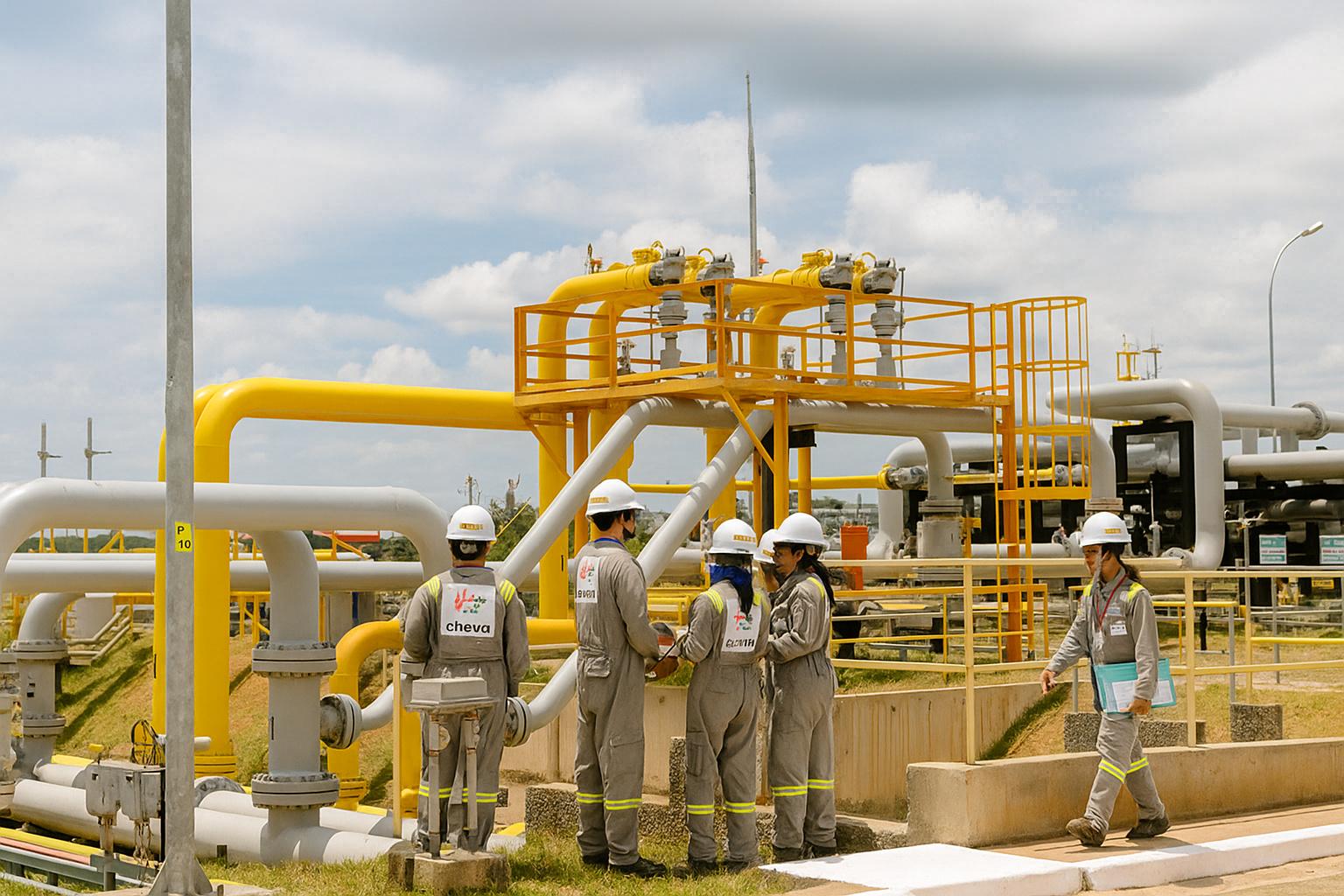
Extracted in Maranhão territory, it powers plants, generates jobs, and drives industries.
Moreover, it directly contributes to the increase of royalties and to the strengthening of the regional economy.
The transformation is visible in Santo Antônio dos Lopes, a city that has become a symbol of the State’s energy turnaround.
For many years, Maranhão was distant from the major development axes.
However, this reality changed as the State began investing in infrastructure and energy.
Thus, natural gas and exploration in the Equatorial Margin place Maranhão on the global map of energy transition, reinforcing the Northeast’s role as a driver of clean and accessible energy production.
-
Petrobras Approves $1.2 Billion Refinery in Brazil to Produce Aviation Fuel and Diesel from Plants

-
Petrobras Secures $2.2 Billion Contract to Build and Operate Four Support Vessels for Brazil’s Offshore Oil Fields
-
Oil production grows in Rio, but reserve replacement raises a warning sign

-
Petrobras is expected to complete the drilling of the Morpho well in the Foz do Amazonas in August 2026, the first well in the Equatorial Margin, an oil frontier that the ANP estimates at more than 30 billion barrels and could redraw the map of Brazil.



Natural Gas as a Driver of Regional Development
With the advancement of energy activities, natural gas has started to play an essential role in the economic transformation of Maranhão.
As it is 35% less polluting than diesel, it represents a cleaner and more efficient alternative for the energy matrix.
Thus, the fuel not only reduces emissions but also promotes industrial competitiveness, generating jobs and development.
The energy generated by the Parnaíba Complex plants can supply up to 9 million homes, demonstrating the reach of this new growth axis.
Additionally, natural gas facilitates logistical integration between the interior and the coast, allowing new industrial hubs to emerge, especially on the Island of São Luís, where the ports of Itaqui, Vale, and Alumar are located.
According to Governor Carlos Brandão, natural gas is already a central component in the strategy to attract investments.
He emphasizes that “the trend is to increasingly use a cheaper and cleaner energy source, which is the case with gas.”
Therefore, Maranhão positions itself strategically, combining energy efficiency, cost reduction, and a commitment to sustainable development.
Equatorial Margin: New Energy Frontier of Brazil
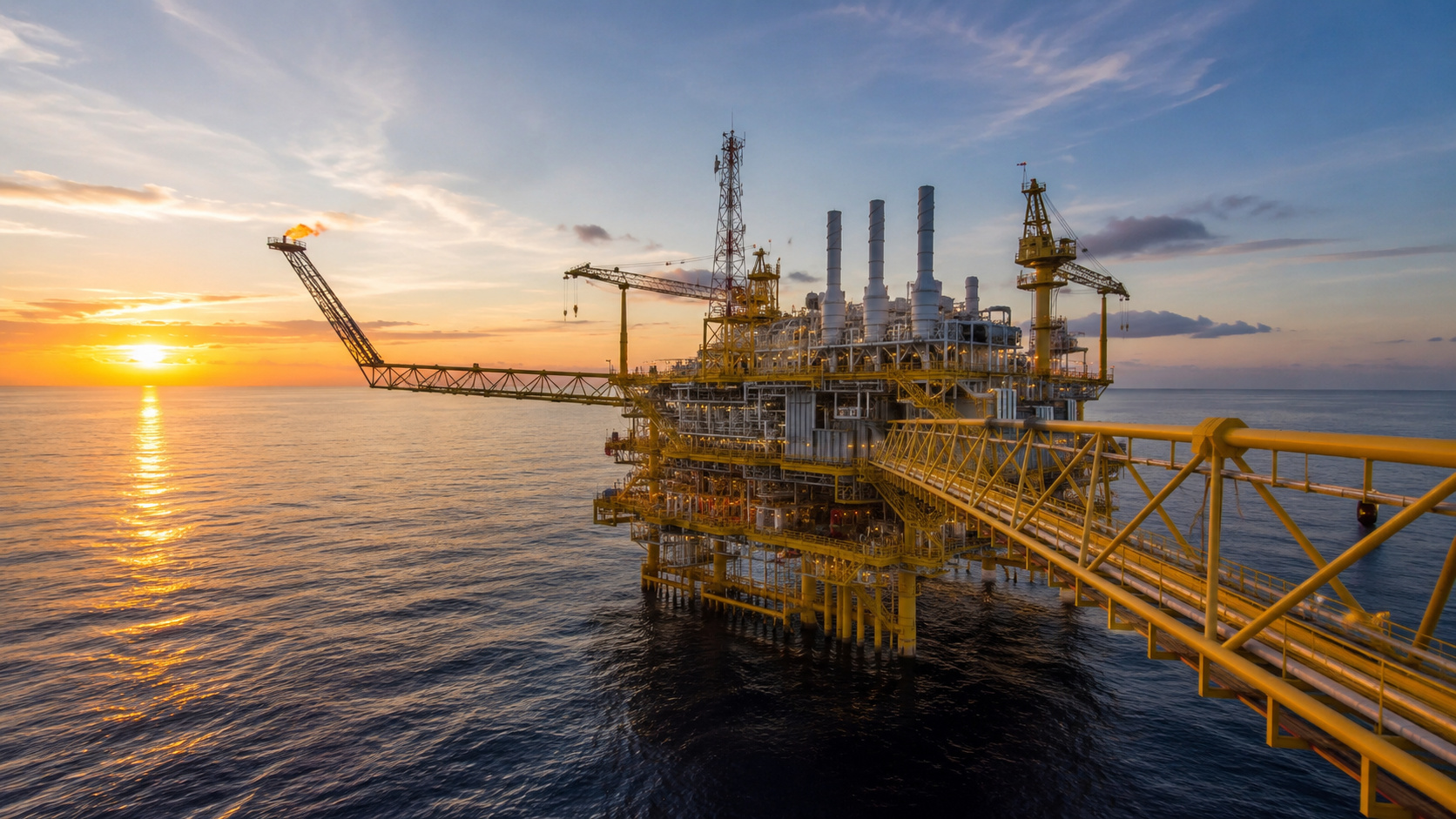
While natural gas strengthens the present, exploration in the Equatorial Margin stands out as the great promise of the future.
This region, extending from Amapá to Rio Grande do Norte, has attracted the attention of Petrobras and other companies due to its immense production potential.
According to technical studies, the Equatorial Margin could double the national oil and gas reserves, ushering in a new era for the Brazilian energy sector.
In Maranhão, this process has already begun.
Ibama granted Petrobras, in October, the necessary license to start exploratory activities.
As a result, the State becomes an essential part of the country’s new energy frontier.
The expectation is that, if studies are confirmed, the Equatorial Margin may hold up to 30 billion barrels of oil just off the Maranhão coast — double what exists in the pre-salt.
Therefore, what was once an expectation is gradually transforming into a concrete development project.
The governor Carlos Brandão emphasizes that this new frontier can represent a historic turning point, capable of definitively inserting Maranhão into the global energy geopolitics.
Between the Past and the Future: Energy as a Transformative Agent
Over the past decades, Maranhão faced social inequalities, low industrialization rates, and little productive diversification.
However, the scenario is starting to change consistently.
Natural gas and exploration in the Equatorial Margin represent much more than economic opportunities: they symbolize a historical reconstruction.
The Parnaíba Complex, one of the largest thermoelectric hubs in Brazil, exemplifies how energy can drive deep social changes.
Thanks to electricity generation from natural gas, thousands of direct and indirect jobs have been created.
Consequently, the regional economy gained dynamism, and the State has taken on a more active role in discussions about sustainability and technological innovation.
Furthermore, the arrival of new companies in the energy sector encourages investments in technical education and research.
Thus, Maranhão begins to train qualified professionals capable of contributing to local development.
In this way, energy solidifies as an instrument of social and environmental transformation, uniting past, present, and future in a single purpose.
Integration Between Energy and Sustainability
The energy transformation in Maranhão is in tune with global demands for decarbonization.
Although natural gas is still a fossil fuel, it plays a fundamental role as a transition source.
Being less polluting and more efficient, it allows the State to move toward a cleaner and more diversified energy matrix.
Additionally, exploration in the Equatorial Margin paves the way for investments in sustainable technologies, such as biogas, solar energy, and wind energy.
As the State expands its production, it also strengthens its environmental and technological infrastructure, creating conditions for a balanced growth.
Therefore, Maranhão’s strategy combines innovation with preservation.
The conscious use of natural resources and the commitment to environmental policies show that it is possible to reconcile economic progress and ecological responsibility.
This integrated vision positions Maranhão among the most promising States in the new phase of Brazilian energy.
Long-Term Perspectives
Even though current advances are already significant, the future promises to be even more transformative.
The exploration of natural gas and the Equatorial Margin creates a solid foundation for sustainable long-term development.
To ensure that the benefits reach the entire population, it will be necessary to continuously invest in infrastructure, education, and innovation.
The state government shows it is attentive to this need.
Programs for professional training and research incentives have been expanded.
Thus, Maranhão is preparing to transform its natural resources into lasting opportunities for employment, income, and social progress.
Finally, the energy trajectory of Maranhão demonstrates that it is possible to unite economic growth, social justice, and environmental protection.
With natural gas and exploration in the Equatorial Margin, the State not only participates in the Brazilian energy transition but also redefines the meaning of balanced and sustainable development.