






 Portuguese
  Spanish



The Brazilian Navy Is Advancing in the Nuclear Energy Sector in Search of Independence in the Segment. Brazil Recently Inaugurated the First Phase of the Uranium Enrichment Plant.
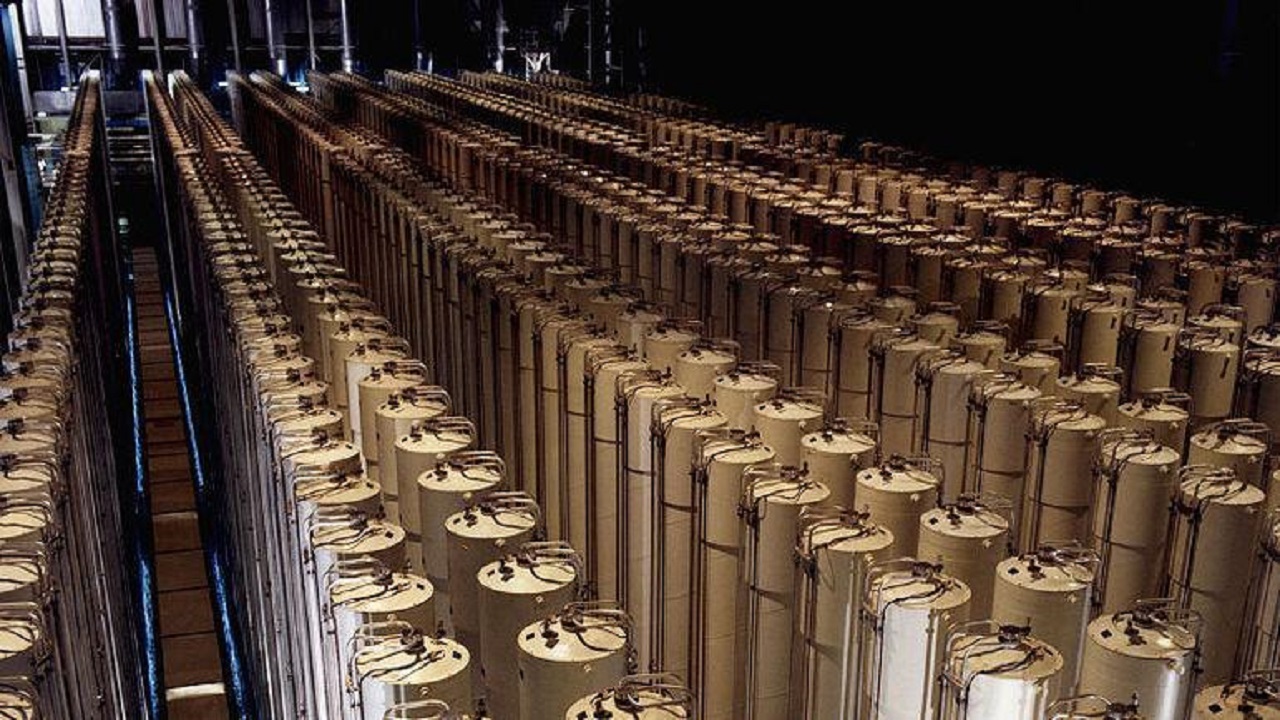
The expansion of the world population requires increasingly better investment in terms of clean energy sources and affordable costs, such as nuclear technology. Brazil is one of the global pioneers when it comes to uranium enrichment and, with the participation of the Brazilian Navy, it contributes to the mastery of the nuclear fuel cycle in the country. This initiative favors electricity generation at the Nuclear Plants in Angra dos Reis, in the state of RJ, generating benefits for society in various sectors.
Uranium Enrichment Plant Is Inaugurated

Data from the World Nuclear Association states that Brazil is part of a group of 13 countries recognized internationally by the nuclear energy sector as holders of facilities for uranium enrichment with various industrial production capacities.
The completion of the first phase of the Enrichment Plant on the 25th of last month in Resende (RJ) is seen as a milestone for the sector in the country, considering that the expansion of the project will reduce dependence on contracting isotopic enrichment services abroad for the production of fuel for Brazilian nuclear plants.
-
Nvidia Secures Billion-Dollar Deal to Supply Up to 170,000 AI Accelerators to a 360 MW Data Center in Indonesia, Aiming to Transform Batam into an Advanced Computing Hub

-
NuScale proposes revised plan for six VOYGR SMR reactors in Poland after ending U.S. project

-
Holtec and EDF Submit Joint Proposal to Install Four SMR-300 Reactors in England with Combined Capacity of 1.3 GW
-
Brazil’s Angra 3 Nuclear Plant Reaches 66% Completion; Government Faces 2026 Deadline to Decide on $24 Billion Project’s Future


At the event, the 10th cascade of centrifuges of the plant was also inaugurated by the Nuclear Industries of Brazil, which is the set of equipment that generates energy and increases the production capacity of the Angra 1 plant by 70%.
The Navy Technology Center in São Paulo (CTMSP), alongside the Institute of Energy and Nuclear Research (IPEN/CNEN), was responsible for developing the nuclear enrichment technology through the ultracentrifugation process.
According to the Director of CTMSP, Vice Admiral Naval Engineer Guilherme Dionizio Alves, over 22 years, four modules have been delivered, totaling 10 cascades in a project that benefits Brazil’s autonomy in the nuclear energy sector, as it implements, from a commercial perspective, a technology created by the Brazilian Navy.
Brazilian Navy Is Responsible for Nuclear Technology Production
According to Dionizio, Brazil is in a prominent position, considering that it has one of the largest uranium reserves in the world, in addition to being one of the few countries capable of mastering the complete nuclear fuel cycle technology.
The Brazilian Navy is responsible for the production, commissioning, and installation of the centrifuge cascades. The pursuit of mastery of this technology began in the late 1970s, with a partnership between the MB and IPEN, enabling the start of the development of ultracentrifugation technology.
In the 2000s, a contract for the supply of isotopic separation systems was signed between the MB and INB, which included the production and installation of ten cascades for uranium enrichment.
The new cascade will allow for an increase and contribute to greater independence for Brazil in fuel production at a time when the world has prioritized the resumption of global nuclear energy.
Navy Plans to Develop Submarine with Nuclear Technology
The technology developed by the Brazilian Navy for Uranium Enrichment will serve both for electricity generation and for the construction of a submarine that uses nuclear propulsion.
The Navy’s Nuclear Program began in 1979, due to Brazil’s strategic need to have submarines with nuclear propulsion. Designed to utilize fully Brazilian and independent nuclear technology, the Program has been divided into two strands: mastering the nuclear fuel cycle and developing a nuclear plant on board. Currently, thanks to the PNM, Brazil has mastered the complete fuel enrichment cycle and is building a Nuclear Energy Generation Laboratory (LABGENE) at the Nuclear Industrial Center of Aramar, in the municipality of Iperó (SP).







