Portuguese
  Spanish


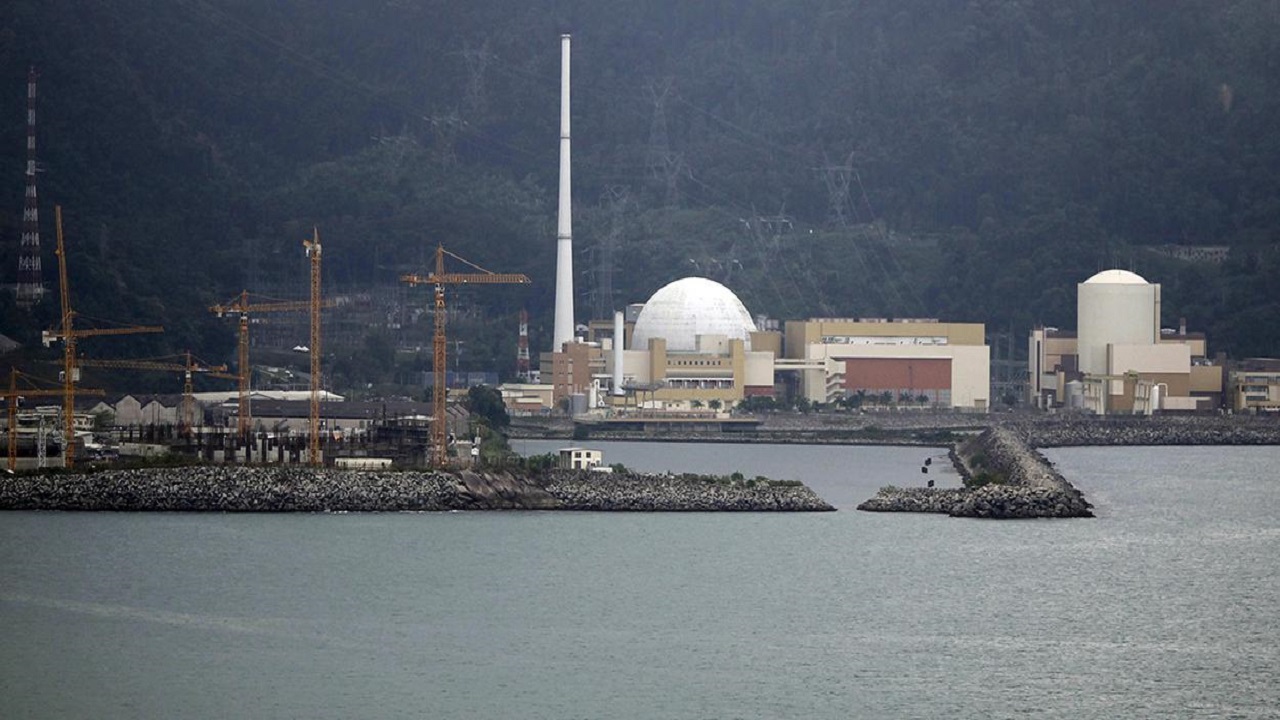

The Country Is Going Through One of the Worst Water Crises in History, In Thought, the Government Is Investing in a New Uranium Plant at the Nuclear Fuel Factory (FCN) in RJ. The Promise Is That the Production of Angra 1 Will Double and Can Successfully Meet Energy Demand
The Brazilian Nuclear Industries (INB), an agency linked to the Federal Government, inaugurated the ninth cascade of ultracentrifuges at the Uranium Isotopic Enrichment Plant, located at the Nuclear Fuel Factory (FCN) in Resende (RJ) last Friday (26). With the start of the operation of the cascade, it will be possible to produce 65% of the annual demand for Angra 1, which represents a 5% increase over the current capacity.
Read Also
Uranium Plant Will Help End Water Crisis
The inauguration ceremony of the new uranium plant at the Nuclear Fuel Factory (FCN) in RJ was attended by Bento Albuquerque, Minister of Mines and Energy, who highlighted the evolution of the Brazilian Nuclear Program to diversify and expand the country’s energy matrix, being considered one of the most sustainable sources in the world.
According to the minister, the source was an example presented to several countries during the Climate Change Conference that took place in Scotland. The minister also emphasized the necessity of investments to expand diversification and face situations like the recent water crisis that plagues Brazil, for example.
-
China’s Engineered Bamboo: The “Material of the Future” Stronger Than Steel and a Sustainable Wood Alternative

-
Egypt’s “New Nile”: 170 km Artificial River Aims to Turn Desert into Farmland, but Water Supply Concerns Loom
-
Eni Acquires 25% Stake in Chilean Lithium Project, Plans to Invest Up to $225 Million in Eco-Friendly Extraction Method
-
Unable to secure a mortgage as a self-employed single mother, she designed her own floating home from a 20-meter boat and now lives “off-grid” with her two children and solar panels on an English canal.



Bento Albuquerque emphasized that the worst water crisis ever seen in the country has been overcome and this was only possible due to competence, the establishment of correct governance, and the continuity of all these programs. If Brazil did not have nuclear energy, like Angra 1 and other plants, and if the matrix was not diversified, counting with basically 9 sources, it would not have overcome such a challenge.
R$ 54 Million Invested by the Federal Government in RJ
The Federal Government invested about R$ 54 million in the construction of the ninth cascade at the uranium plant at the Nuclear Fuel Factory (FCN) in RJ and intends to deliver the tenth by 2023. The inauguration is part of the first phase of construction of the Uranium Isotopic Enrichment Plant, a project carried out in partnership with the Brazilian Navy.
According to Carlos Freire Moreira, president of the Brazilian Nuclear Industries, the expectation is that the Nuclear Fuel Factory (FCN) in RJ will eventually meet all uranium demand for Angra 1, Angra 2, and, in the future, Angra 3, which is still under development, making Brazil independent.
Afterward, the next step will be the installation of the Commercial Uranium Enrichment Plant, which is expected to install 30 cascades of ultracentrifuges. When everything is fully operational, the estimate is that Brazil will reach the level to meet the demand for Angra 1, 2, and 3. The Angra 1 and 2 plants are capable of generating enough energy to supply a city with 3 million inhabitants.
Nuclear Fuel Factory
The FCN is a factory that produces nuclear fuels in RJ composed of three units, having the capacity to produce 280 tons of uranium per year. The factory has been operating since 1999 with a capacity of 160 tons of UO2 pellets per year.
Additionally, the factory produces other components of fuel elements such as grids, lower and upper nozzles, and plugs for export demands. The unit has a nuclear safety program both external and internal, so that the environment is monitored.