






 Portuguese
  Spanish


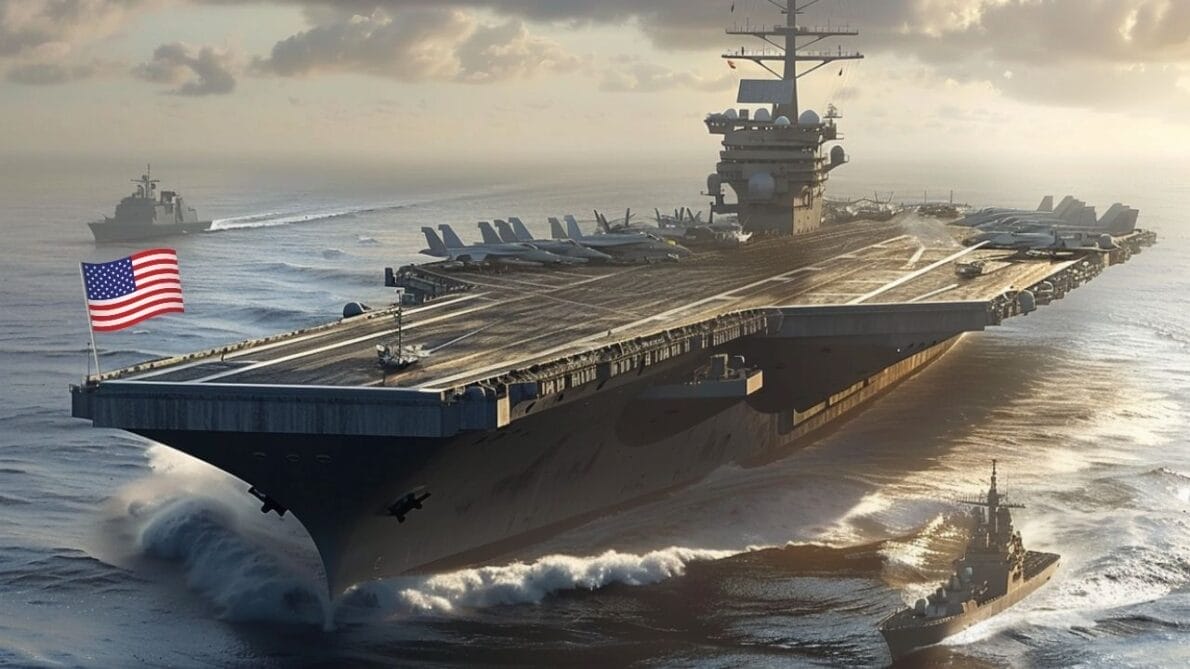

The United States Navy Operates Two Distinct Types of Aircraft Carriers: The Super Carriers, Large and Equipped for Long Air Superiority Missions with the Capacity to Launch Heavy Aircraft, and the Amphibious Assault Ships, Smaller and Adapted for Rapid Terrestrial Support Operations with Vertical Takeoff and Landing Capability, Guaranteeing Flexibility and Effectiveness in a Variety of Military Operations.
The United States Navy operates not only traditional super carriers but also has a fleet of amphibious assault ships. Both are essential, but serve distinct functions. With a total of 11 super carriers and nine amphibious assault ships, American naval power maintains critical versatility in its military operations.
The super carriers, with their imposing length of 332 meters, are true floating airports, equipped to launch large aircraft like the F/A-18 Hornet and the E-2 Hawkeye. These ships are fundamental for long-term operations and air superiority, thanks to their vast deck that facilitates intensive and continuous air operations.
The Decks of Amphibious Assault Ships Primarily Serve for Vertical Takeoff and Landing Aircraft
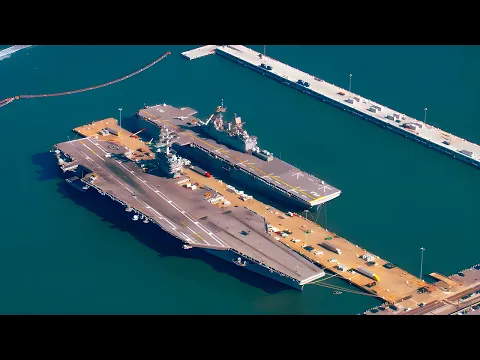

On the other hand, the amphibious assault ships, slightly smaller at around 259 meters, are adapted for operations involving landings and immediate terrestrial support. Their decks primarily serve for vertical takeoff and landing aircraft, such as the F-35B and the V-22 Osprey, making them ideal for rapid and direct support to ground forces and rescue operations.
-
Eni Acquires 25% Stake in Chilean Lithium Project, Plans to Invest Up to $225 Million in Eco-Friendly Extraction Method

-
French Brand Transforms 6 Million Brazilian PET Bottles into Sustainable Sneakers for Global Fashion Market
-
Abandoned Factory in Rio’s North Zone Becomes Urban Hazard with Standing Water and Debris

-
The U.S. Navy Conducts Submarine Tests in Idaho Lake to Detect Underwater Noises Hidden by the Ocean


Size directly influences the volume and, consequently, the operational efficiency of the ships. The square-cube law explains that as the dimensions of an object increase, its volume increases proportionally more than its surface area. This means that a super carrier, despite being only 76 meters longer than an amphibious assault ship, has a significantly greater volumetric capacity. This greater volume allows super carriers to operate more efficiently and sustain prolonged operations without the need for frequent refueling.
Super Carriers Can Carry Up to 375,000 Cubic Feet of Armament, Providing Autonomy for Up to Two Weeks of Continuous Operations
In terms of load capacity, super carriers can carry up to 375,000 cubic feet of armament, providing autonomy for up to two weeks of continuous operations. In contrast, an amphibious assault ship, with significantly lower storage capacity, would be able to sustain intensive combat for approximately one week without refueling.
Amphibious assault ships, in addition to their aerial functions, are equipped with internal docks that transport landing vehicles and support equipment, allowing for the rapid deployment of Marine forces. These ships are ideal for missions that require quick response and operational flexibility, unlike the super carriers, which are designed for air power projection and command of extensive naval operations.
The Existence of Two Types of Aircraft Carriers in the United States Navy Reflects an Adaptive Strategy
The existence of two types of aircraft carriers in the United States Navy reflects an adaptive strategy that seeks to maximize operational effectiveness in different combat scenarios. While super carriers are essential for maintaining air superiority and continuous large-scale support, amphibious assault ships offer agility and immediate support in situations requiring rapid and effective ground intervention. The diversity of carriers, therefore, not only enhances the Navy’s responsiveness but also ensures that the force can operate efficiently across a wide range of military missions.







