






 Portuguese
  Spanish


The Ford Halewood plant in the United Kingdom has ceased traditional transmission production to assemble electric propulsion units. With 420,000 sets per year, the plant can equip 70% of Ford’s electric cars sold in Europe. The change involves investment, jobs, and a production chain spread across other countries.
On December 3, 2024, the Ford Halewood plant in the United Kingdom began producing electric propulsion units and gained the capacity to assemble 420,000 sets per year. The volume can equip 70% of Ford’s electric cars sold in Europe.
The information was released by Ford, an American automaker with industrial operations in Europe. The British unit previously manufactured traditional transmissions and was adapted to produce components for the brand’s electric vehicles.
The number does not represent 420,000 complete cars leaving the factory. Halewood produces a central piece of the electric vehicle, which then goes to other units responsible for final assembly.
-
France Launches Network to Recycle 20 Million Cookware Pieces by 2027, Accepting All Brands for Aluminum and Coating Separation

-
Toyota Shifts from Hybrid Cars to Electric Air Taxis with Joby’s 6-Rotor Aircraft, Capable of 322 km/h, Aiming for Mass Production to Electrify Urban Skies

-
Ferrari Unveils Limited Edition 12Cilindri Manuale: 6.5-Liter V12, 830 HP, 0-100 km/h in 2.9 Seconds, Top Speed Over 340 km/h, Only 1,499 Units Available

-
Discover the 2021 Fiat Cronos 1.3: Affordable Maintenance, Reliable Mechanics, and Fuel Efficiency of Up to 15.6 km/l


Electric propulsion unit is the part that helps the car move
The electric propulsion unit is a set of parts that uses electricity to put the vehicle in motion. In simple terms, it performs a function similar to the set formed by the engine and transmission in fuel-powered cars.
This does not mean that the factory produces the battery, the body, or all the car’s items. The plant manufactures an important part of the system that makes the electric car run.
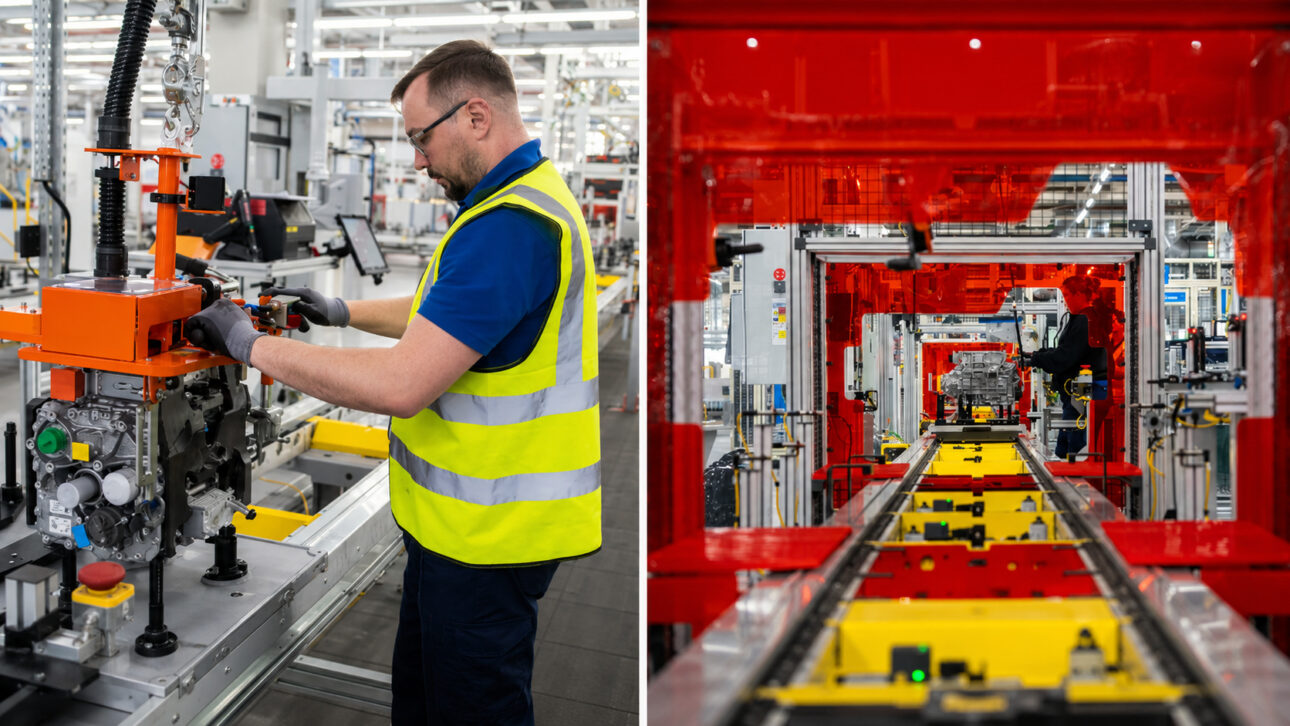
The change helps explain why the automotive industry is altering existing factories. Instead of assembling only mechanical parts, some units are starting to produce components made for vehicles powered by electricity.
Capacity of 420,000 sets per year
The announced capacity represents the number of electric propulsion units that Halewood can assemble in a year. Each set is sent to be installed in vehicles produced at other factories.
The 420 thousand annual sets can meet a significant portion of Ford’s electric lineup in Europe. The disclosed calculation indicates that the production can equip 70% of the brand’s electric vehicles sold on the continent.
This percentage does not apply to Ford’s fuel-powered cars. It refers to the portion of electric vehicles that can receive the technology manufactured in the United Kingdom.
£380 million investment changed the function of the Ford Halewood factory
Ford, an American automaker with industrial operations in Europe, reported that the transformation of the factory received £380 million in investments. The amount was allocated to the change from a unit focused on traditional transmissions to a factory for electric vehicle components.
The Halewood factory became Ford’s first own unit in Europe dedicated to producing components for electric vehicles. The change marks a new role for a facility that was already operating in the automotive sector.
In practice, the transformation shows that an old factory does not need to be abandoned when technology changes. It can adopt new processes and start serving another type of vehicle.
Hundreds of jobs and training accompany the new electric production
The change in Halewood secured hundreds of jobs at the British factory. Workers underwent training to work with technologies related to electric vehicles and the assembly of propulsion units.
Ford also allocated £24 million for training in Dunton, England. Apprentices and engineers participated in prototype development and received preparation to work with the assembly of these electric sets.
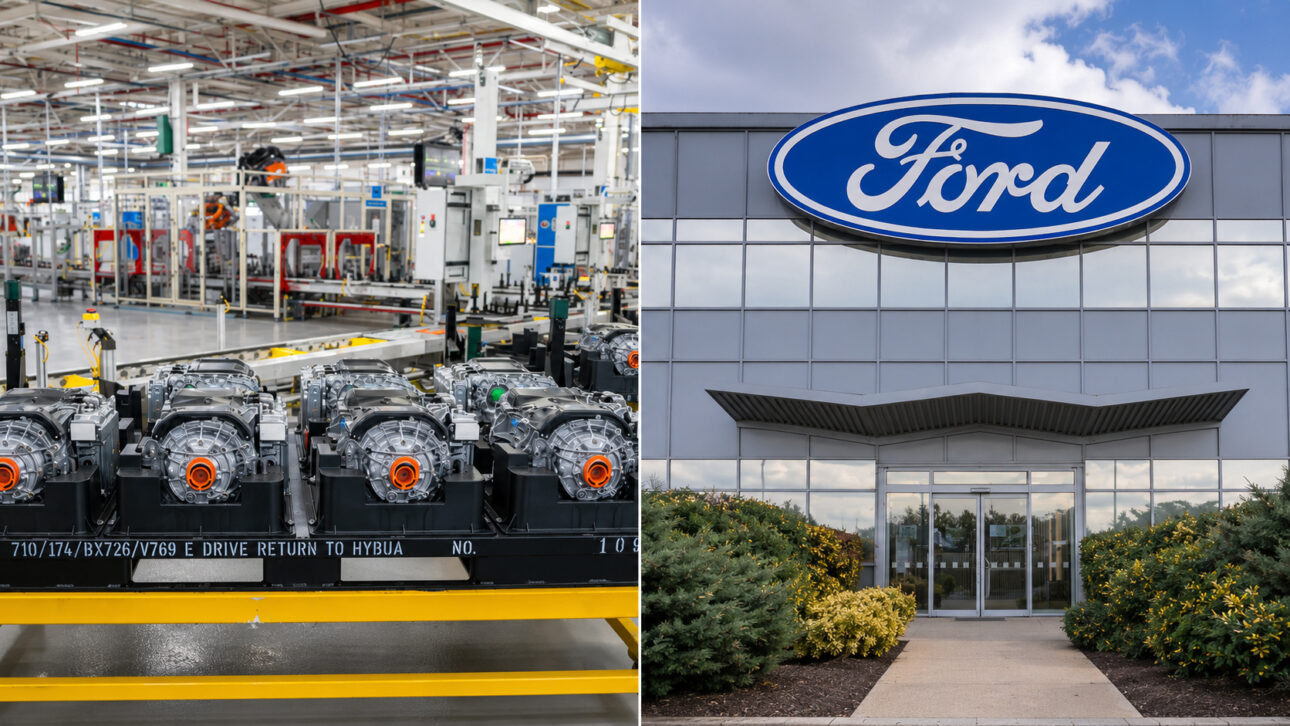
The adaptation does not depend solely on new machines. It requires professionals capable of handling parts, tests, and processes different from those used in fuel-powered cars.
Part produced in the United Kingdom proceeds to assembly in other countries
In the announcement on December 3, 2024, the units produced in Halewood were destined for assembly plants in Romania and Turkey. British production would be part of a chain distributed across different European countries.
This division helps to understand how the automotive industry works. One factory can produce an important part, while another receives this component and assembles the complete vehicle.
The example shows that manufacturing a central piece is not the same as assembling an entire car. Each step can take place in different locations, but all are part of the same industrial chain.
The Ford Halewood plant transitioned from producing mechanical transmissions to manufacturing electric propulsion units, with a capacity of 420,000 sets per year. The structure can help equip 70% of Ford’s electric cars sold in Europe.
Do you believe that adapting existing factories can accelerate the production of electric cars in Brazil without requiring the construction of new units from scratch? Leave your opinion in the comments and share this post.


