






 Portuguese
  Spanish
  5 min of reading
  0 comments


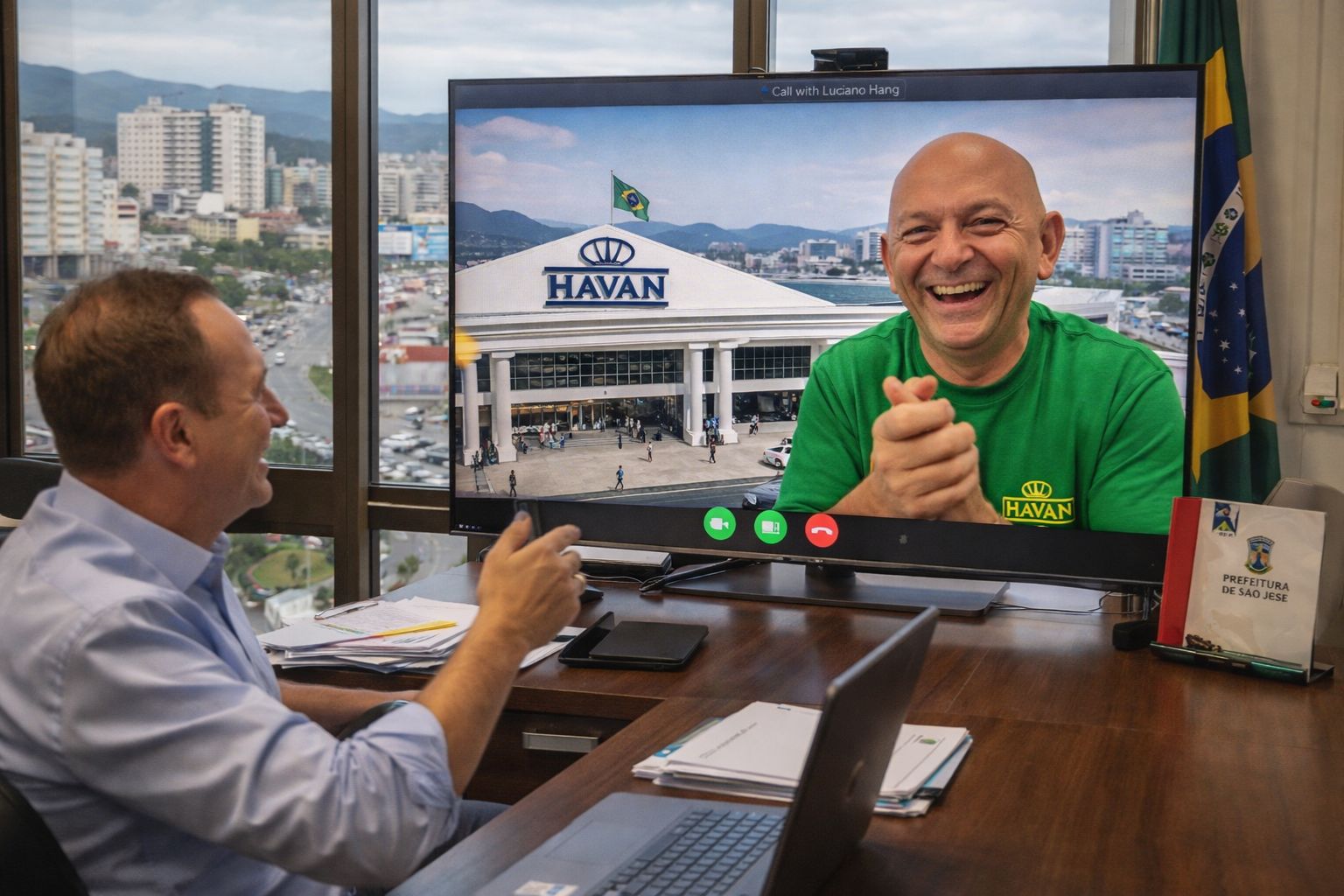
The mayor of Cocal do Sul, Ademir Magagnin, invited Luciano Hang via video call to install a Havan store in the municipality of south Santa Catarina. Magagnin presented economic data and argued that the city is a corridor between mountains and sea with three interconnected municipalities. Hang praised the initiative and requested data for technical analysis.
The mayor of Cocal do Sul, Ademir Magagnin, decided to do something that few public managers would have the courage to attempt: directly call Luciano Hang and request a Havan store for his city. The virtual meeting took place during a schedule of representatives from the City Council and the municipal administration in Brusque, the birthplace of the store chain, and Magagnin did not waste the opportunity. In a humorous tone, the mayor stated that he was there to “sell the municipality” to the businessman, presenting economic and geographical justifications to convince him that Cocal do Sul deserves a Havan unit among its streets.
Magagnin’s arguments were straightforward. “It is a corridor between the mountains and the sea. We have three interconnected municipalities. It is a city that is growing, developing, and has the largest industrial park in Amrec,” said the mayor during the video call. Luciano Hang responded by praising the mayor’s stance and stated that he would request the municipality’s data for a technical analysis, indicating that the possibility of a new Havan store in the region was not ruled out. With 51 stores in Santa Catarina and four already operating in the South region, the chain founded by Hang could find in Cocal do Sul a market that no competitor has occupied yet.
What led the mayor to request a Havan store for Cocal do Sul
Cocal do Sul is a small municipality in southern Santa Catarina, but with economic indicators that draw attention. The city houses the largest industrial park in Amrec (Association of Municipalities of the Carboniferous Region), a region that includes cities like Criciúma, Içara, Morro da Fumaça, and Urussanga. Its geographical location, which Magagnin described as “a corridor between the mountains and the sea,” places the municipality on a transit route that connects different economic and tourist hubs in southern Santa Catarina.
-
Better than in Brazil? Havan’s owner wants to take the chain to Paraguay and Uruguay: “I confess I had never thought about it.”

-
How much does a gas station owner earn? A business that seems like a money-making machine can generate R$ 1.5 million per month and still profit only R$ 40,000, while the real earnings come from convenience, car wash, and extra services.

-
Elderly individuals may obtain essential documents without paying fees: a project that includes CIN, CNH, CPF, and work card advances in the Chamber, eliminates issuance and renewal charges, and leaves Brazilians waiting for decisive steps to see if the benefit will actually be implemented.
-
Paper money is disappearing from Brazilians’ pockets, with the issuance of new banknotes dropping by 31% from 2020 to 2025, amid the explosion of Pix, which became the most frequent payment method for 46% of the population, while cash plummeted from 42% to 22%.

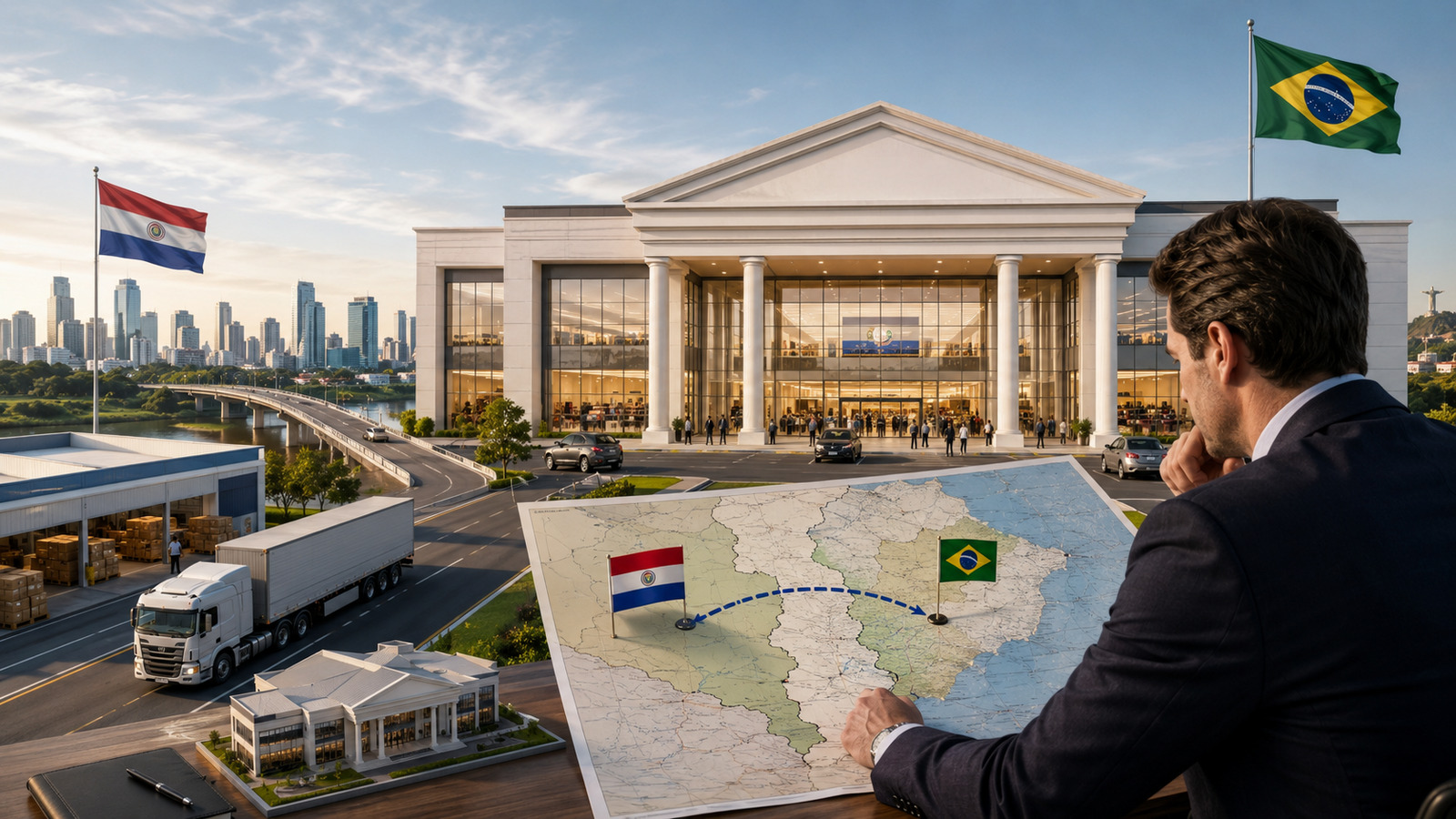



The mayor’s strategy was not improvised. By bringing representatives from the City Council and the municipal administration to Brusque, the headquarters of Havan, Magagnin demonstrated that the request had institutional backing and was not just a personal initiative. The presence of council members in the agenda reinforces the message that the arrival of the chain would be a priority for the entire administration, and not just a desire of the mayor. For Havan, this type of political signaling reduces bureaucratic risks and facilitates any licensing and installation processes.
Luciano Hang’s reaction to the request for the Havan store
According to information from the portal ndmais, Luciano Hang did not reject the proposal. On the contrary, the businessman praised and congratulated the mayor for the initiative, a stance that indicates that Havan values public managers who actively seek the establishment of new enterprises instead of passively waiting for companies to come on their own. The statement that he would request data from the municipality for technical analysis is the standard procedure that Havan adopts before deciding to open a new store.
This technical analysis generally takes into account factors such as the population of the area of influence, average income, vehicle flow, presence of competitors, and availability of suitable land. For Cocal do Sul, the challenge is to demonstrate that local demand, combined with demand from interconnected neighboring municipalities, justifies the investment in a Havan unit in a city smaller than Criciúma, which is only 12 kilometers away and already has two stores of the chain. Proximity can be an obstacle or an opportunity, depending on how the market data presents itself.
The scenario of Havan in the southern region of Santa Catarina
Havan already has four stores in the southern region of Santa Catarina, distributed among Criciúma, which has two units in strategic locations, Tubarão, and Araranguá. With 51 stores throughout the state, Santa Catarina is the most consolidated market of the network founded by Luciano Hang, and the density of units in the region indicates that the company considers southern Santa Catarina a territory with significant consumption potential.
The question for Cocal do Sul is whether the municipality can generate enough demand to justify a fifth Havan store in a relatively concentrated geographical area. The presence of two units in Criciúma, just 12 kilometers away, means that residents of Cocal do Sul already have relatively easy access to the chain, which may reduce the argument for necessity. On the other hand, if the data shows that the flow of consumers between the interconnected municipalities is large enough and that there is an audience that would prefer to shop locally instead of traveling to Criciúma, the scenario changes in favor of the installation.
What the mayor’s initiative says about the competition between cities for investments
The scene of a mayor making a video call to “sell” his municipality to a businessman may seem unusual, but it reflects an increasingly present reality in Brazilian public administration. Cities competing for private investments need to go beyond passive waiting and actively present their advantages, especially when competing with larger neighboring municipalities that already attract the attention of major chains. Magagnin did exactly that by bringing data, arguments, and political representatives to Havan’s headquarters.
For other mayors of small and medium-sized cities, Magagnin’s attitude serves as an example that proactivity in attracting investments can open doors that bureaucracy alone would never open. Luciano Hang did not promise a Havan store in Cocal do Sul, but he also did not close the door. He asked for data, praised the attitude, and let the technical analysis decide. For a municipality that “does not stop growing,” as the mayor himself defined, the first step has already been taken, and now we must wait to see if the numbers will confirm what the enthusiasm anticipated.
The mayor of Cocal do Sul called Luciano Hang directly and requested a Havan store for the municipality. Do you think this type of initiative from mayors works? Does your city need more investments like this? Leave your opinion in the comments.






Be the first to react!