Portuguese
  Spanish


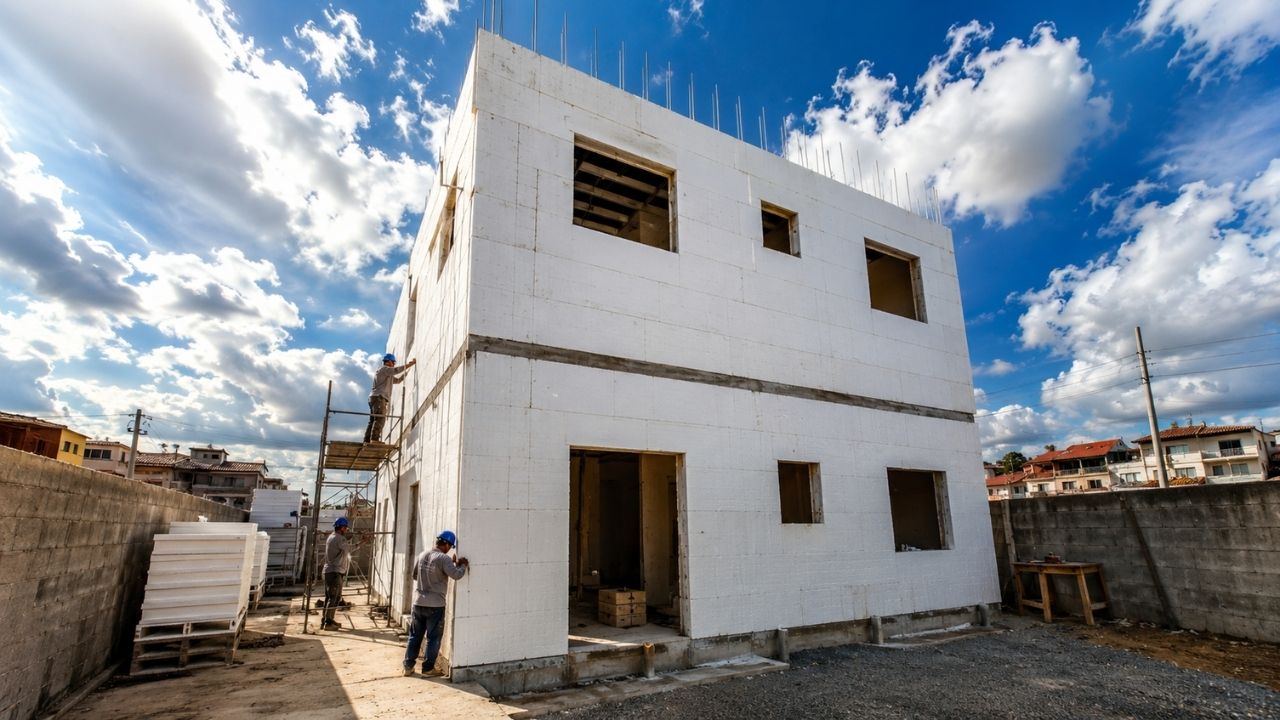

The 3-story building under construction in Taubaté draws attention in civil construction for using styrofoam forms, 15 cm radier, and a reduced team. With 305 m², six apartments, and five months of execution, the project was presented without stakes, drills, footings, or debris dumpsters so far.
The 3-story building is located in Taubaté, in the interior of São Paulo, and was presented in a video published on June 12, 2026 as a project led by Mateus de Paula, with the participation of civil engineer João Felipe da Rocha. The construction drew attention in civil construction for using styrofoam forms, radier, and a foundation described without stakes, drills, or footings.
In a video released by the GRUPO ICF channel, the case was shown when the project was nearing completion of five months, with two floors already underway and the second slab in the preparation phase. The development has 305 m² of built area, three floors, and six apartments, in a proposal that mixes civil construction, ICF system, and strict site control.
Project in Taubaté draws attention even before being completed
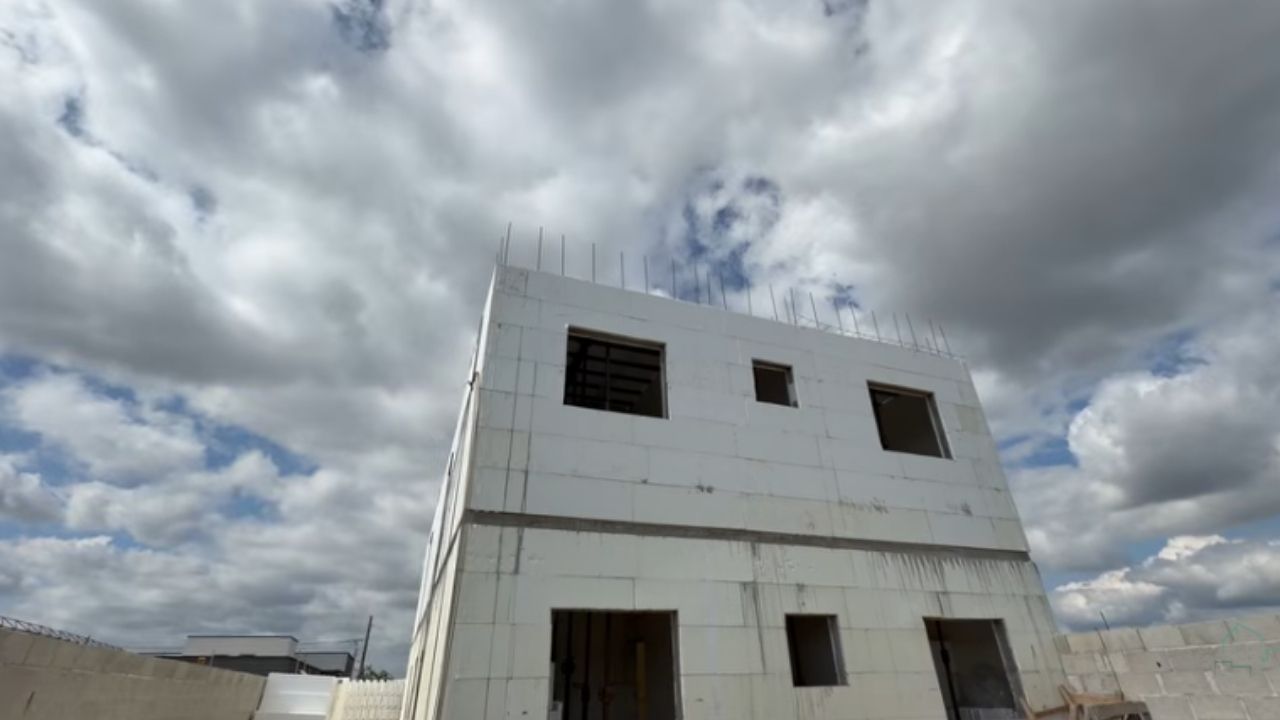
The 3-story building became a point of curiosity because it deviates from the traditional image of conventional construction. Instead of piles of debris, scattered blocks, and a large circulation of workers, the project was presented with organization, few residues, and a lean team.
-
Denmark Constructs World’s Largest Immersed Tunnel to Connect with Germany, Sinking 217-Meter Concrete Sections in the Baltic Sea

-
Low-Cost Concrete Panel House Goes Viral: Investor Reveals Prefabricated Kit Structure for Around $1,500, Assembled in 30 Days, with Plans for Rental and Resale Income

-
Polymeric Mortar Revolutionizes Brazilian Construction with Efficient, Clean Application and Uniform Finish

-
Biologist Builds 160m² Dream Home in Brazil for $32,000 Using Eco-Friendly Bricks, Achieving 67% Savings Through Smart Planning and Simple Solutions


According to the report made on-site, people passing through the region show curiosity when seeing the so-called “white elephant,” a nickname used in conversation to describe the visual impact of the styrofoam forms on the structure. The unusual appearance of the project helps explain why the building became a topic in the neighborhood.
The development was not shown as a simple house but as a residential building with six units. Each apartment is about 44 m², with a living room, bedrooms, bathroom, compact laundry, and areas organized according to the repetition of the floor plan.
Shallow foundation replaces piles, drills, and footings
One of the most striking features of the 3-story building is the foundation. According to the explanation presented at the site, the project was executed on a 15 cm raft foundation supported by an edge beam, without the use of drills for stability.
Before execution, the land was prepared. The moist soil underwent removal of the surface layer, base replacement, and compaction with mechanical equipment. Technical tests such as Proctor and CBR were also mentioned, along with documentation with technical responsibility.
The absence of piles, drills, and footings does not mean the absence of engineering. On the contrary, the report reinforces that the foundation depended on study, compaction, soil control, and technical decision compatible with the type of system used.
Styrofoam forms support the construction logic
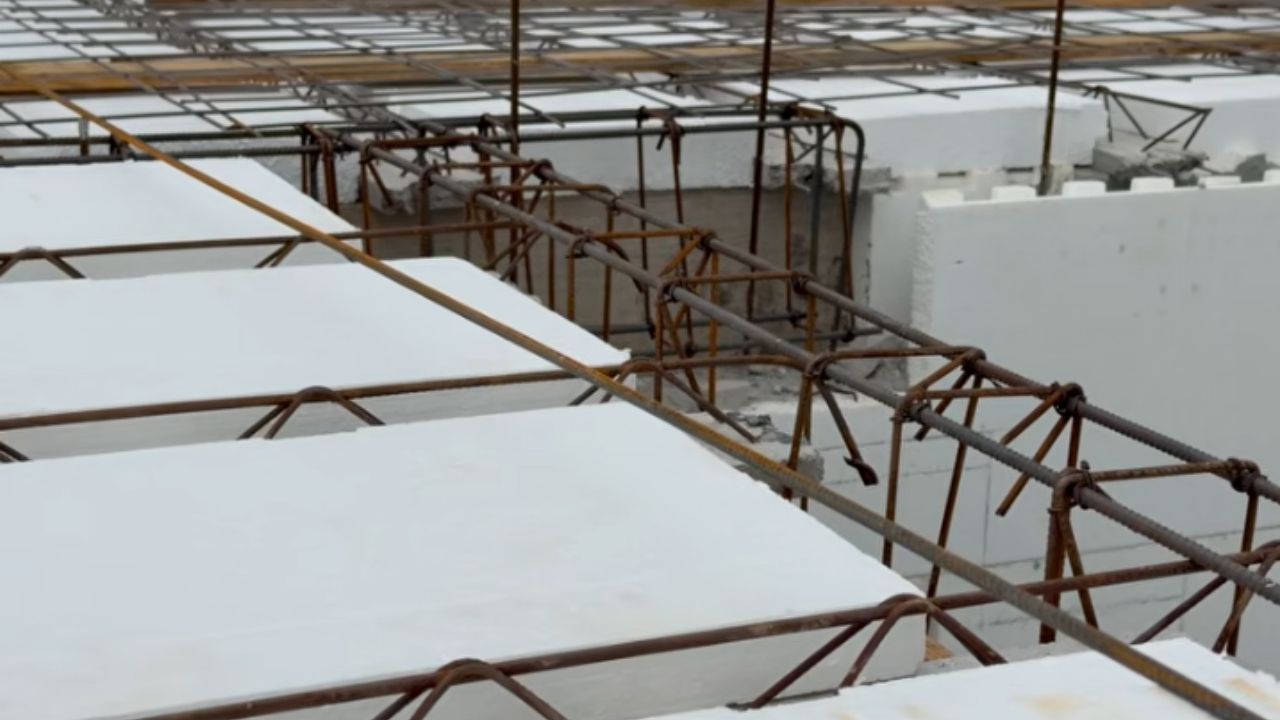
The system used in the 3-story building was described as a construction with styrofoam forms in the ICF model. In this method, the walls are assembled with modules that receive concrete, creating a structure with sealing and resistance functions.
The project uses a standard floor plan, meaning repetition of the layout of the rooms on the floors. This repetition allows the wall to be over the wall, reducing the need for more complex structural solutions in the presented design.
Even so, there are specific reinforcement elements. During the explanation, beams associated with the staircase and the area planned to receive the 5,000-liter water tank were shown. The building is not a heap of styrofoam; it is a project with calculation, concrete, steel, and defined structural points.
Reduced team became one of the site’s trademarks
Another notable fact about the 3-story building is the size of the team. The foundation started with two people, according to the presentation. Later, with the introduction of the forms, the project began to work with three people at different stages.
This number is significant because the person in charge compares the pace with that of a conventional project of the same size, which could require four to six people to advance similarly. In the presented case, part of the steel was also bent on-site.
Fewer people on the construction site does not mean automatic improvisation. The statement from those responsible highlights planning, process repetition, space organization, and cost predictability as factors that allowed maintaining execution with a smaller team.
Six apartments on three floors
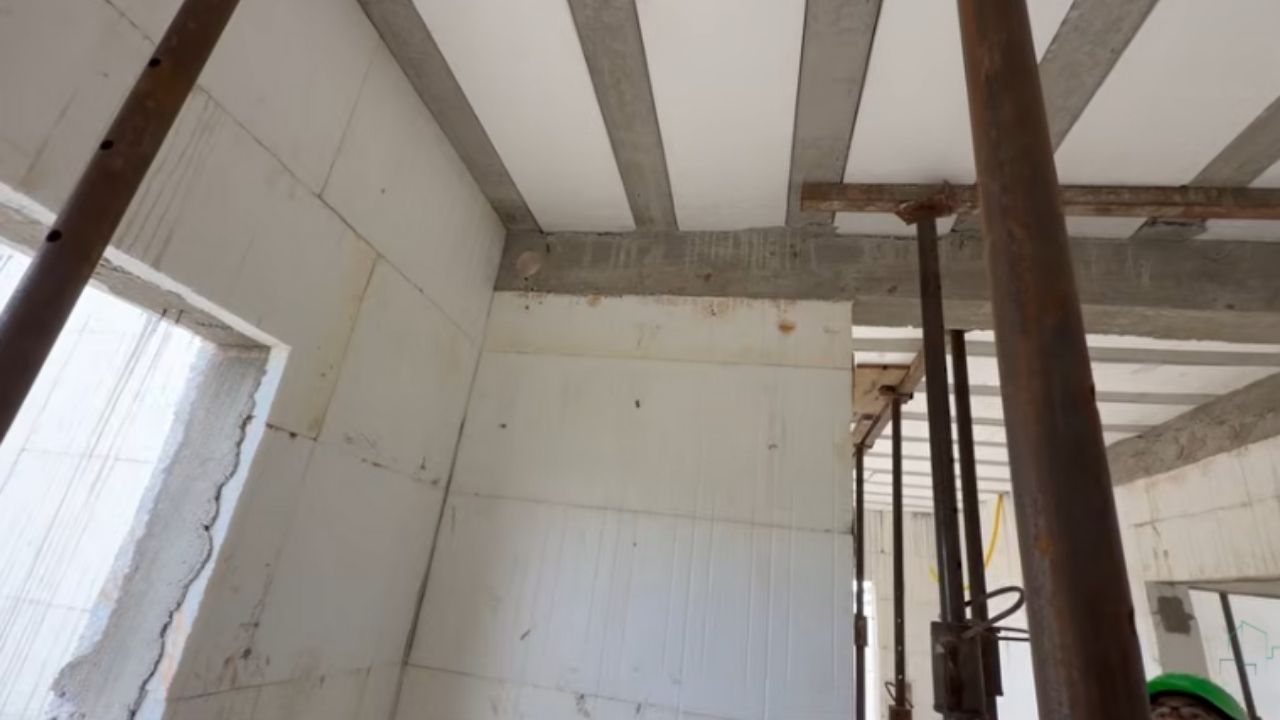
The development in Taubaté has three floors and six apartments. The floor plan logic repeats two units per floor, creating a simpler distribution for executing walls, installations, and slabs.
During the visit, compact rooms were shown, such as living room, bedrooms, bathroom, and service area. In one of the ground floor units, there is also a small backyard, which differentiates the apartment from the upper floors.
The 3-story building was presented as a development for sale. The project owner, cited as Darcy, appears in the narrative as the investor of the construction, while Mateus de Paula is involved in the execution and development of the construction.
Clean construction site and almost no debris dumpster
One of the strongest points of the account is the cleanliness of the construction site. The construction was nearing completion of five months and, according to the statement presented, there was still no need for a debris dumpster at that stage.
This is noteworthy because conventional constructions usually generate a large volume of waste, especially with cuts, breaks, block leftovers, and material disposal. In the case shown, the waste appears concentrated in small volumes, and part of the material is separated for recycling.
The absence of a dumpster, however, should be read within the stage of the construction. The building was still under execution, with slabs, installations, and finishes yet to advance. Even so, the initial organization shows a significant difference compared to the standard of many urban construction sites.
Five months of construction and second slab in progress
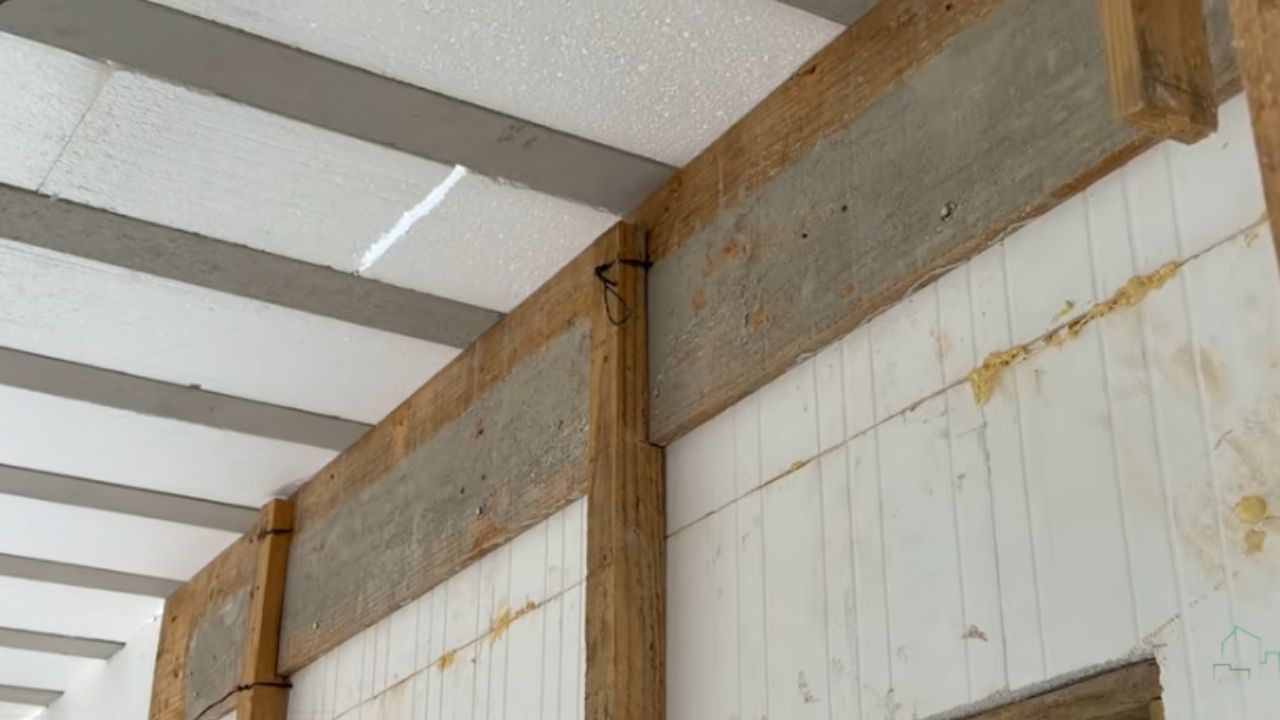
The timeline also became a focal point of the explanation. The building was nearing five months of construction, with two floors completed and the second slab in the assembly or preparation phase for concreting.
The foundation, including activities related to the raft foundation and buried installations, was described as a stage completed in about 28 consecutive days. Before that, there was soil movement and compaction, with technical tests to validate the base.
The schedule was not presented as a magical promise, but as a result of method and repetition. The team tested different concreting forms, reused formwork, and adjusted stages as experience advanced in the building itself.
System draws attention for breaking the conventional construction pattern
The case of the 3-story building also stands out for showing a contrast with traditional block construction. According to the responsible parties, the technology appears as an alternative to reduce physical effort, improve predictability, and differentiate builders in the market.
During the visit, the person in charge of the construction states that the system changed his operation in Taubaté and attracted others interested in learning about the technology. The construction, therefore, also became a technical showcase for those seeking different construction methods.
Even so, journalistic reading needs to be balanced. The model may draw attention, but it depends on design, calculation, trained labor, compatibility with standards, and technical evaluation of the terrain. It is not a solution that should be copied without responsible engineering.
Why this building provokes so much curiosity


The curiosity surrounding the building arises from the combination of factors uncommon to the general public: three stories, absence of deep foundation, styrofoam forms, few workers, six apartments, and low visible debris volume.
For those passing by on the street, the white appearance of the forms already differentiates the construction. For those following civil construction, the attention is on the technical details: raft foundation, wall over wall, planned installations, conventional staircase, specific beams, and sequential slabs.
It is precisely this mixture of simple appearance with specific engineering that makes the case striking. The building seems to defy the expectation that a vertical construction always requires a more complex foundation, a large team, and a lot of scattered debris.
Innovation or calculated risk?
The 3-story building in Taubaté shows how civil construction is beginning to make room for alternative methods, especially when there is pressure for deadlines, organization, and cost control. The case does not eliminate the importance of traditional engineering, but shows that there are different paths for small residential projects.
With 305 m², six apartments, styrofoam forms, a 15 cm raft foundation, and a reduced team, the project draws attention precisely because it seems unlikely at first glance. The construction further reinforces an important discussion: to what extent is the Brazilian sector willing to abandon the “it’s always been this way” mentality?
Would you trust living in a building constructed with styrofoam forms and without piles, drills, or footings? Do you think this type of system could gain traction in Brazil or does it still cause distrust? Share your opinion and say if you would bet on this technology in your own project.