






 Portuguese
  Spanish


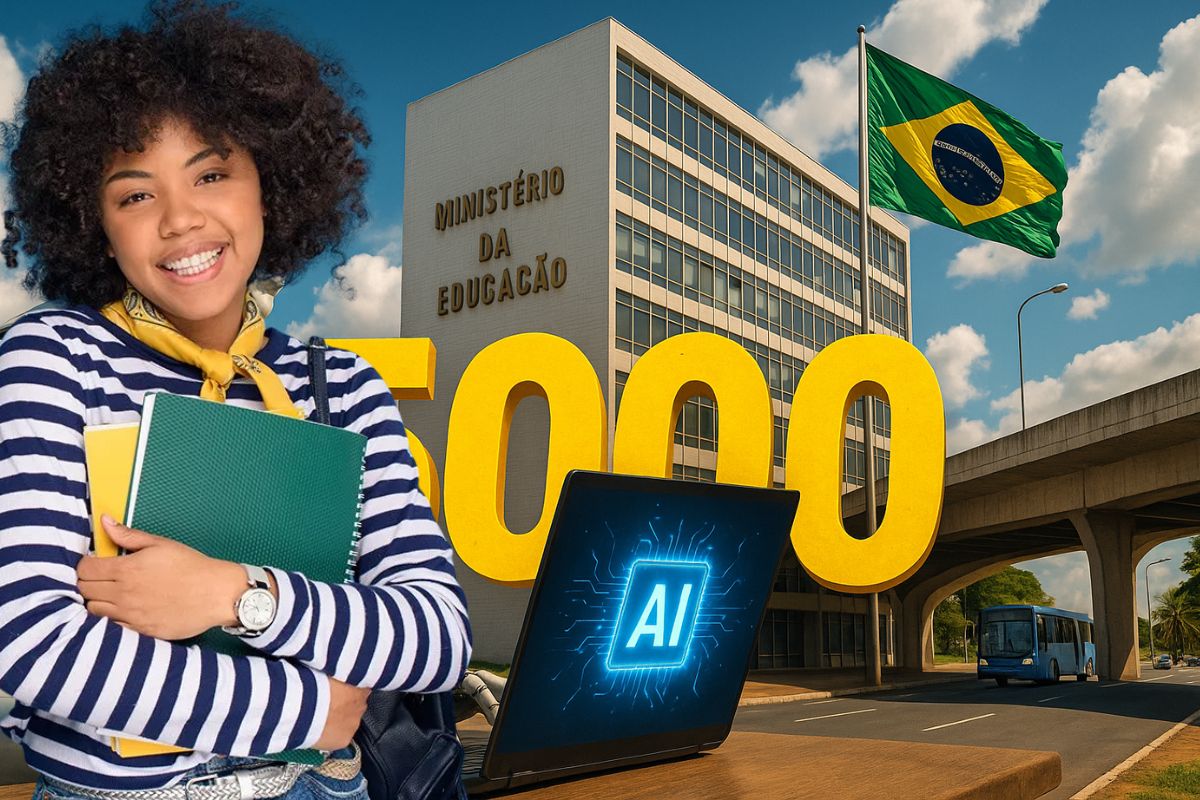


Announcement Predicts Openings in Higher Education Courses in Biotechnology, Engineering, Robotics, and Artificial Intelligence at Universities and Federal Institutes.
The Ministry of Education confirmed the creation of 5 thousand openings in courses in the technology areas starting in 2026. According to the agênciabrasil portal, the offer includes biotechnology, engineering, robotics, and artificial intelligence, with a curriculum design aligned with market demands and the country’s science and innovation agenda.
According to Minister Camilo Santana, each university and each Federal Institute will define the new courses, while the MEC authorizes new teacher positions to facilitate the expansion. The expectation is that the opportunities will enter the Sisu at the beginning of 2026, already based on the grades from the Enem in 2025.
What Changes: Policy Design and Technological Priority
The announcement marks a shift towards STEM-related training (science, technology, engineering, and mathematics).
-
Surprising opportunity in the railway sector: MRS offers a free course for assistant train driver and shunter in Juiz de Fora with a R$ 1,600 scholarship, specialized training, and the chance to join one of the largest railway operators in Brazil.

-
It’s official: IFMS opens spots in free courses on artificial intelligence, drones, and app creation, expanding technological education in 2026 and preparing students for areas with high professional demand and accelerated digital transformation.
-
Senai launches an unprecedented program with Petrobras and opens 2,000 spots in free courses with recognized certification, a monthly allowance of R$ 600, and training for industrial professions that continue hiring across the country.

-
Petrobras and SENAI open 480 spots in free technical courses with a scholarship of up to R$ 858, meal allowance, and training in Mechanics, Welding, Metallurgy, and Industrial Automation to meet the growing demand of the industry and the oil and gas sector.


The guideline is clear: to bring the classroom closer to the “current world of work”, incorporating robotics, artificial intelligence, and new energy matrices into pedagogical projects.
In practice, this means more applied curricula, with laboratories, projects, and partnerships with productive sectors.
The emphasis on digital and analytical skills should not only traverse engineering but also management courses and hybrid areas such as biotechnology.
Where the New Classes Will Be and Who Can Compete
The openings in courses will be distributed among public universities and Federal Institutes.
Each institution will define its pathway, for example, opening a new undergraduate program in AI or expanding admissions in engineering with an emphasis on automation.
Students who take the Enem 2025 and participate in Sisu at the beginning of 2026 will be able to compete.
The forecast is to include the openings in the first cycle of Sisu, allowing for admission throughout the academic year of 2026.
How Access Will Work: Enem, Sisu, and Calendar
The Enem 2025 will take place on November 9 and 16. With the result, the candidate uses the score for Sisu 2026, a phase in which they choose the institutions and the available technology courses.
The admission window will follow the Sisu calendar, with regular calls and occasional waiting lists.
Stay alert for each institution’s announcement, which will detail shifts, campuses, documentation, and any additional steps.
What to Study: Pathways and In-Demand Skills
In addition to foundational concepts in calculus, programming, and statistics, the new programs should prioritize laboratory practices, data science, and automation.
Integrative projects and real business challenges are expected to emerge from the early stages.
To prepare, candidates can strengthen logic, mathematics, and data reading, as well as explore AI tools and understand ethics, security, and privacy.
Building a portfolio with projects (code repositories, prototypes, technical articles) can be a differential in the selection process and the first internship interviews.
Expected Impact: Qualification and Job Market
The opening of 5 thousand slots in cutting-edge courses signals a long-term policy to reduce bottlenecks in technology, accelerate innovation, and train professionals for strategic sectors from precision agribusiness to energy transition.
For the regions, new classes mean laboratories, scholarships, and local partnerships, stimulating startup ecosystems and technological extension projects alongside businesses and public agencies.
Challenges: Infrastructure, Faculty, and Continuous Updating
The expansion requires equipped laboratories, robust connectivity, and specialized faculty.
The MEC announced authorizations for positions for new teachers, but ongoing training and curriculum updates will be permanent, especially in AI, a rapidly evolving area.
Another point is regional equity: distributing course openings while considering rural outreach and student access (housing, assistance, equipment) is essential to avoid concentration only in large centers.
Step by Step Not to Miss the Opportunity
First, ensure your attendance at Enem 2025. Then, follow the official channels of Sisu and the institutions where you wish to study.
Map out which courses will be opened at each campus and check prerequisites, curriculum, laboratories, and research lines.
Create a study schedule until November, with weekly reviews and practice tests.
After the Enem, assess your performance by area to adjust your strategy for choosing in Sisu and maximize your chances of being called for your first choice.
Do you see this expansion as the push needed for technology training in Brazil? Which “course openings” and areas would you prioritize in your state—AI applied to health, industrial robotics, biotechnology, clean energy? If you will take the Enem 2025, which course would you include in your Sisu list and why? Share in the comments we want to hear from those preparing to fill these openings and those already working in the sector.


