






 Portuguese
  Spanish


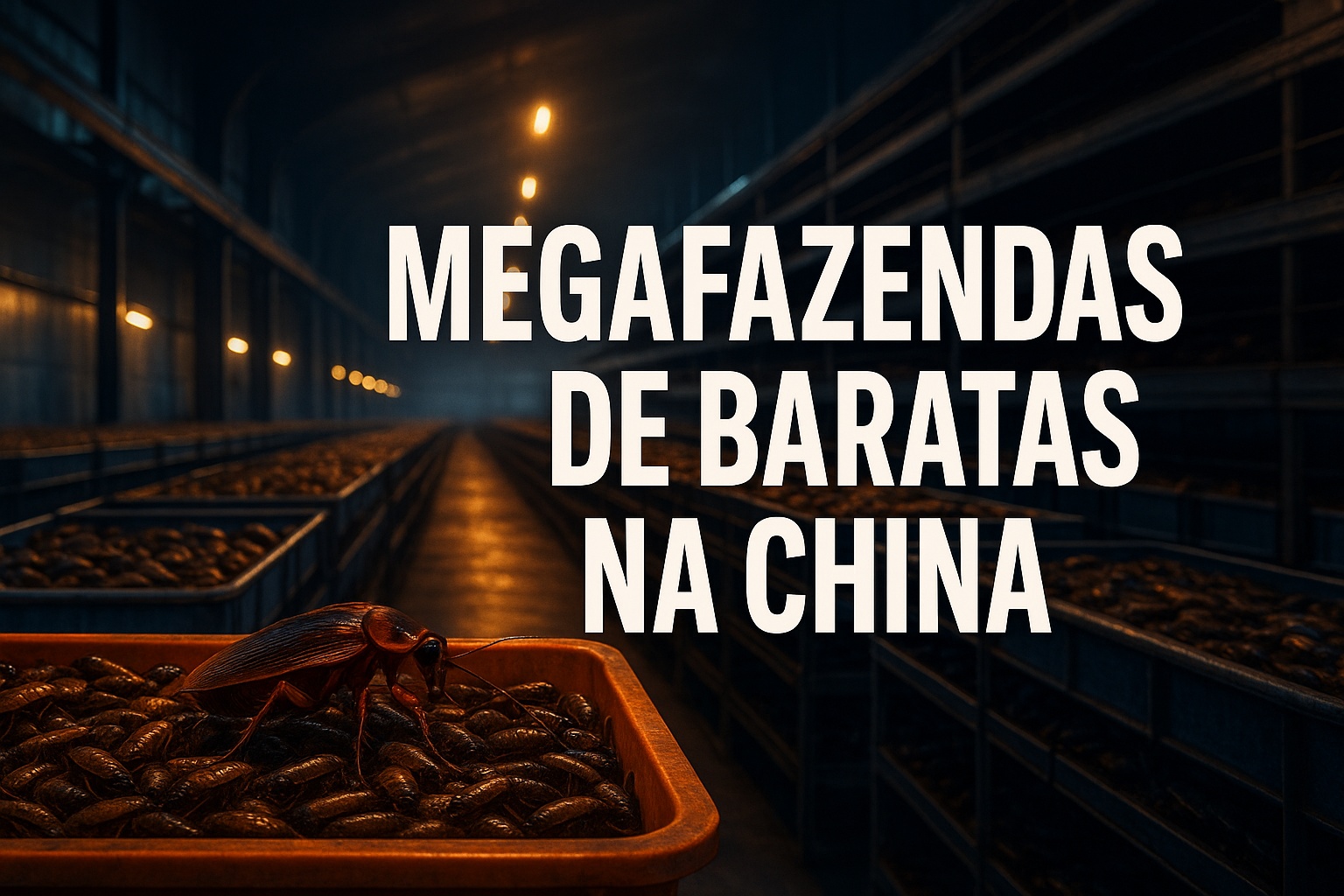


Chinese Mega Farms Create More Than 6 Billion Cockroaches in Climate-Controlled Sheds, Recycle 50 Tons of Waste Per Day and Transform the Insect into a Giant Business.
Few imagine that, behind the scenes of the Asian industry, far from skyscrapers and traditional production chains, one of the most impressive businesses of the 21st century involves an animal that most people fear or reject. They are cockroaches and they are at the center of an industrial chain that reaches numbers never seen before in the history of insect farming. In large industrial complexes in inland China, colonies exceeding 6 billion individuals are kept in climate-controlled structures, fed with tons of organic waste, and monitored by automatic systems that track temperature, humidity, population density, and even breeding patterns.
This industry, which has quietly grown over the last decade, has been documented by reports from Reuters, ABC News Australia, South China Morning Post, and scientific publications linked to Chinese universities and the Rural Development Bank. The reason for such interest is simple: cockroaches have become a fundamental part of a market that involves biotechnology, animal feed, urban waste recycling, traditional medicine, and the production of alternative proteins.
How Mega Farms with More Than 6 Billion Cockroaches Work
The facilities are enormous. In some of them, described by Reuters, entire sheds are built with heated walls and automatic systems that maintain a constant temperature between 28°C and 30°C, the ideal range for accelerated breeding. The dark and humid environment replicates the insect’s natural habitat, allowing giant populations to multiply without interruption.
-
Unfinished 150-Year-Old Church in Brazil’s Bahia Stands Without a Roof After Railway Shifted Alagoinhas’ Center

-
Viking Textile Factory Unearthed in Denmark Reveals Ancient International Trade Links

-
Bruno Guimarães, 28, Misses Crucial Penalty Against Norway in World Cup After Replacing Vinicius Jr.
-
Inspired by a school lesson on Africa’s water crisis, a young boy raised money through chores to fund a well that transformed a Ugandan community.




One of the best-known farms, located in Shandong Province, is controlled by a complex of computers that analyses the behavior of the cockroaches in real time. The system uses audio and vibration sensors to interpret the insects’ movement and predict breeding periods, population density, and even potential internal outbreaks.
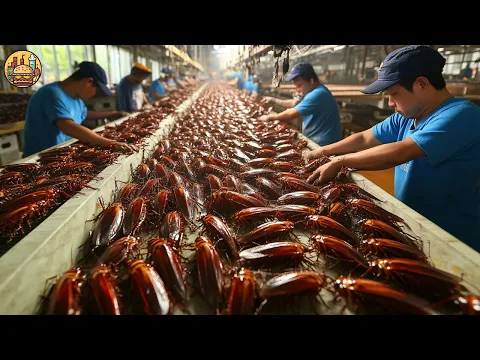

According to the manager of the facility interviewed by Reuters, the location houses 1 billion cockroaches at the same time — a quantity that, if laid out in line, could stretch for dozens of kilometers. The scale is so large that no staff enters the sheds: maintenance is carried out externally, and human work is limited to monitoring and feeding.
Cockroaches as Urban Waste Recyclers
One of the most surprising aspects of the operation is the destination of the waste. Instead of sending tons of food scraps to landfills, some Chinese cities have started selling or donating these wastes to cockroach farms.
In just one facility, approximately 50 tons of kitchen scraps are processed daily — all consumed by the colonies, which transform organic waste into protein-rich biomass.
This system has proven efficient for cities facing disposal and waste accumulation problems, as the cycle is short, clean, and controlled in a closed environment. The cockroaches can consume almost everything: vegetables, fruits, food scraps, and even leftovers unsuitable for conventional animal consumption.
This model has attracted the attention of international researchers, who are analyzing the possibility of expanding the technique to cities with high waste volumes and limited landfill space.
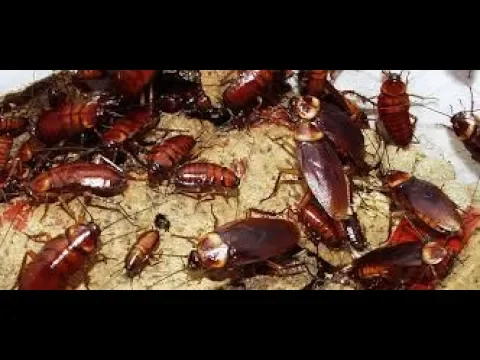
The Destination of Cockroaches: From Biotechnology to Agriculture
Unlike the image that many have, the cockroaches raised in these structures are not used for direct human consumption. The most common destination is:
- Fish feed
- Poultry and swine feed,
- Production of hydrolyzed proteins,
- Extracts for traditional Chinese medicine,
- Raw materials for biomedical research,
- Ingredients for cosmetics.
In Traditional Chinese Medicine (TCM), for example, extracts from cockroaches are used in healing medications, burn creams, and formulas that accelerate tissue recovery. These products are legally sold in pharmacies in China and are part of an expanding billion-dollar market.
Additionally, biotechnology studies cockroaches as a source of antimicrobial molecules. Research indicates that they carry substances capable of combating resistant microorganisms, a field of study of high global interest.
Why Raising Cockroaches Has Become a Giant Business
The model offers economic advantages that few species can replicate:
- They reproduce explosively: a single female can produce dozens of nymphs per cycle.
- They require little physical space, allowing for extremely high population density.
- They primarily consume waste, which reduces operational costs.
- They transform organic waste into protein at a rate unmatched by birds or fish.
- They can be processed without chemical risk, as they are raised in a controlled environment.
These factors have transformed the cockroach from a rejected insect into a strategic economic asset, especially in sectors seeking substitutes for soy, fish, and other expensive proteins.
The Controversial Side of This Industry
Despite the economic and environmental benefits, industrial raising of cockroaches also generates debates. Environmentalists question:
- the risk of mass colony escape,
- the possibility of ecological imbalances,
- and the safety of facilities operating with billion-strong populations.
The Chinese authorities impose strict security controls, and many farms are built in isolated locations to minimize risks. Nonetheless, the unprecedented scale raises ethical and environmental questions, especially in a country seeking quick solutions for urban waste.
A Market That Grows Silently and Impacts Multiple Sectors
Today, China leads the global cockroach farming sector. It is estimated that more than 100 companies are involved in large-scale insect production, moving a market encompassing agriculture, traditional medicine, animal feed, and scientific research.
Experts believe that the trend will continue to grow as the world discusses alternative sources of protein and sustainable waste solutions.
Honey, pigeons, frogs, and now cockroaches are part of a global movement: transforming simple farming practices into giant industrial chains, leveraging scale, automation, and growing demand. The case of cockroaches shows how an insect considered repulsive can, under the right conditions, become a driver of innovation and an essential part of an increasingly diverse economy.







Tome cuidado com a sandália de burracha!