






 Portuguese
  Spanish
  3 min of reading
  0 comments


Lázaro Cárdenas Port Challenges US Tariffs, Expands Rail Connections with North America and Strengthens Surveillance against Drug Trafficking Amid Increasing Exports
At dawn, two ships from Singapore and Hong Kong unload their containers at the Lázaro Cárdenas port in Mexico. The scene repeats frequently, even with the 25% tariff policy imposed by American President Donald Trump on automotive parts.
The port structure, located in the state of Michoacán on the Pacific coast, remains strong. The terminal occupies an area comparable to more than 3,000 soccer fields.
Economic Integration and Logistical Challenge
Lázaro Cárdenas receives and ships millions of products, especially from Asia, in addition to exporting vehicles to the United States.
-
North Korean Fiasco: Launch of the Largest Warship Ends in Sinking

-
While giant ships still burn heavy fuel and the maritime sector races against climate targets, Maersk and Vale are starting to bet on ethanol as a new route to reduce emissions at sea.

-
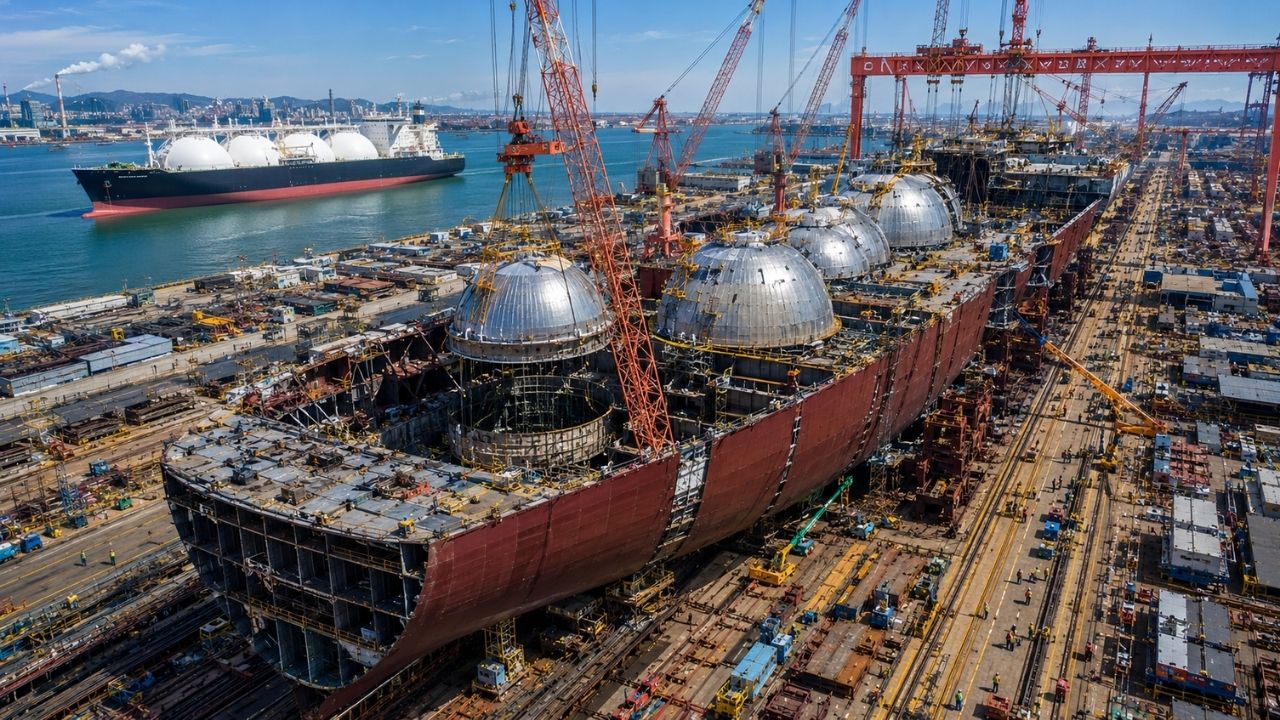
China begins construction of the world’s largest LNG ship, a 344-meter giant capable of supplying 4.7 million homes for a month, carrying 271,000 m³ of gas, and placing QatarEnergy in the largest naval order ever recorded in world history.
-
China is designing a container ship with a thorium nuclear reactor that will operate for 40 years without refueling, and the 25,000-container giant from Jiangnan Shipyard will cross oceans without emitting carbon in an industry that burns 300 million tons of fuel per year.



With a railway connecting the port directly to the US and Canada, a container can reach Chicago in just seven days. The location has consolidated itself as a strategic link in the continental logistics chain.
Joel Méndez, the port’s operations manager, explains that the site has become an essential point for the distribution of goods. Container movement grew by 11% between January and March, the same period during which Mexico was targeted by the new round of US tariffs.
Automobiles and Steel Under Pressure
The automotive industry is vital for Mexico. Automakers like Ford, GM, Volkswagen, Audi, and BMW have factories in the country. The Lázaro Cárdenas terminal leads vehicle loading in the country, accounting for 35% of the national total. The sector represents 3.6% of the Mexican GDP.
From the port, dozens of vehicles from various brands are transported daily, by sea or by land. Additionally, the site receives supplies for the steel industry, exporting finished material. ArcelorMittal, one of the largest steel manufacturers in the world, is located at the terminal.
Despite the tariffs imposed on steel and aluminum, Mexico was excluded from some stricter measures that affected countries like China. Trump also promised actions to mitigate the negative impacts on the automotive sector.
Surveillance Against Drug Trafficking
Another challenge is security. Military personnel inspect containers to combat drug trafficking. In a specific area, bags of fish meal are examined by a machine that detects illegal substances. The Navy seized nearly 2,800 kg of cocaine last year.
Furthermore, surveillance over “dual-use” substances is increasing, chemical products that can be legally used but also serve to produce synthetic drugs. Loads are only released after thorough verification of legal data.
Port Expansion in Sight
Even in the face of commercial and security obstacles, Lázaro Cárdenas is becoming stronger. It is already considered a direct competitor to the port of Long Beach in California. Plans are in place to expand its area by 1,100 hectares, equivalent to more than 916 soccer fields.
With the approach of the high season between May and June, a period of intense export and import for the year-end holidays, the expectation is for even greater growth.
With information from Istoé.






Be the first to react!