Portuguese
  Spanish



Collaboration for Autonomous Technology for Ships. This was the goal of the union between ABS and HD Hyundai. During the world’s largest technology fair, held in Las Vegas from January 5 to 8, the Consumer Electronics Show (CES), they announced the end of understandings regarding the following topics that favor the maritime industry. They are Autonomous Machinery Health Management, Autonomous Safety, Autonomous Gas Fuel Supply System, and Smart Boil-off Gas Management. All agreements for these areas were based on artificial intelligence.
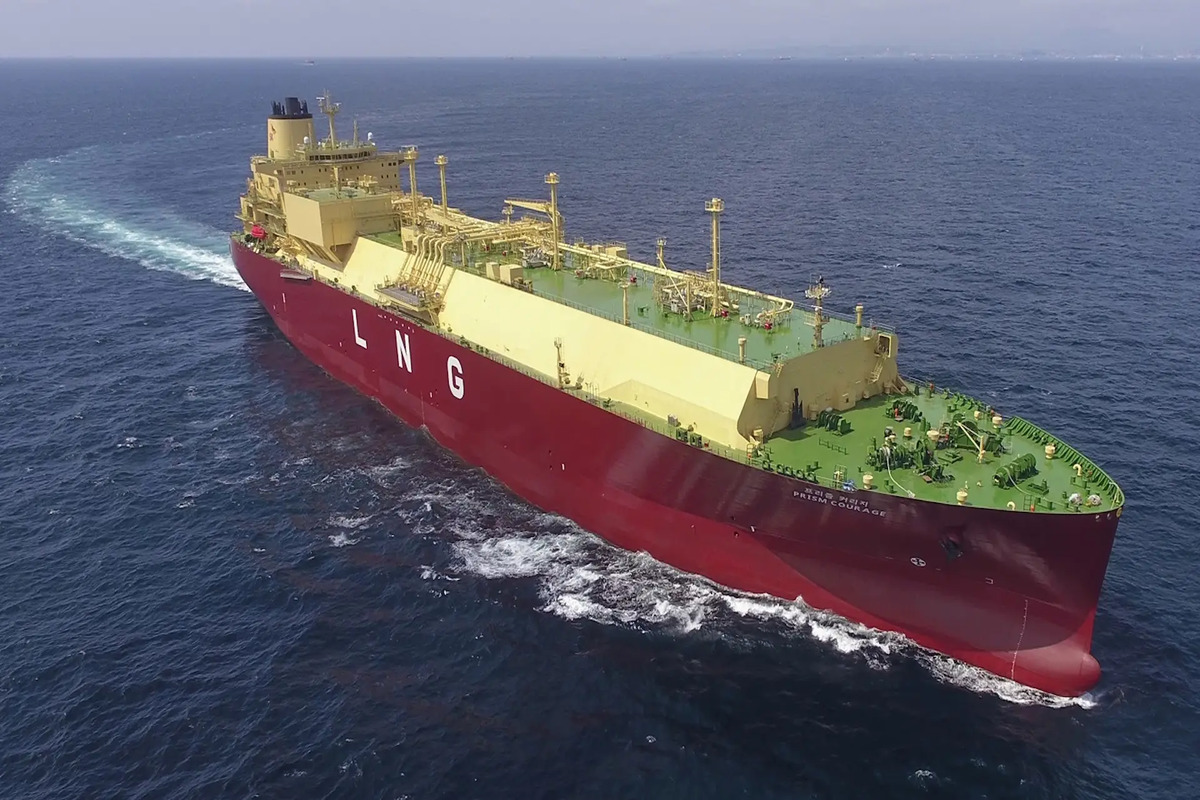
The agreement is being guided by the experience with the Prisma Courage. The ship is a carrier of liquefied natural gas (LNG) with a capacity of 180,000 m3. Departing from Freeport on the Gulf Coast of Mexico, the traveled route had 20,000 kilometers of autonomous navigation, passing through the Panama Canal and destined for the Boryeong LNG Terminal located in Korea.
The journey was controlled by the HiNAS 2.0 system from Avikus, a subsidiary of HD Hyundai. The system operates with artificial intelligence technology that utilizes autonomous driving through big data and IoT (Internet of Things), taking into account the presence of other vessels on the route, as well as maritime and weather conditions. The event was a milestone for the entire maritime industry, as assessed by one of the signatories of the agreement.
The idea is to carry out joint development projects (JDPs) starting from the first quarter of this year. For this purpose, in addition to Avikus, the memorandum includes Korea Shipbuilding and Offshore Engineering (KSOE), another subsidiary of HD Hyundai. The model follows the strategic guidelines outlined in the agreement signed in 2022.
-
The Port of Itaqui closes the best first semester in history with over 17 million tons and takes off as the locomotive of the Northern Arc.

-
Brazil’s North-South Railway to Auction Two Grain Terminals in Central Tocantins

-
AI-powered traffic cameras in São Paulo now issue fines for cellphone use and seatbelt violations around the clock

-
Free Upgrade to Professional Driver’s License Categories in Over 130 Locations in Brazil, Including Exams and Courses



Resolution of Operational Challenges and Certifications
The ABS is a Global Certifications, Audits, Inspections, and Training company for Quality, Environmental, Occupational Health and Safety, Social Responsibility, Energy Management, Asset Management, Information Security, Data Privacy, and other topics. With operations in the oil, nuclear, government, maritime, wind energy and renewable, and mining industries, it currently operates in more than thirty countries.
In these operations, the goal is to provide safety management, risk management, and integrity management, undertaking significant challenges with major players in the related industries, such as HD Hyundai for the maritime industry.
For this industry, the control of ships through artificial intelligence is an achievement for hardware and software technologies, since the maintenance cost of this equipment is much higher than that of human labor. They are challenges because they also have low economic viability, not to mention that ports need to have technology and be designed to accommodate these vessels. There is also the need to circumvent those who, instead of facing the challenges, prefer to view the issue as merely a marketing ploy. However, this does not seem to be the belief of the JDPs, and whether this horizon is near is what they promise.