






 Portuguese
  Spanish
  3 min of reading
  0 comments


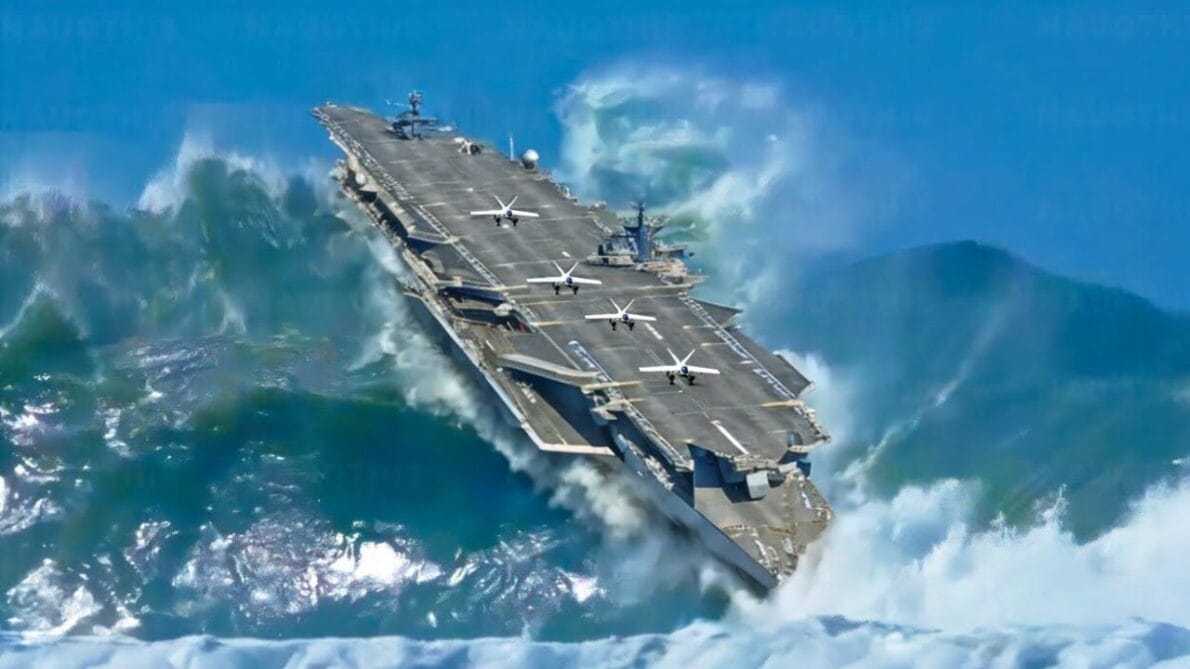
How The Largest Aircraft Carriers In The World Withstand Giant Waves And Continue To Operate Safely Even In The Severest Storms?
The largest aircraft carriers in the world are true sea colossi, designed to withstand extreme conditions. Thanks to a combination of advanced design, cutting-edge technology, and rigorous safety procedures, these vessels remain stable and operational even when facing giant waves of up to 30 meters high.
Since the early 20th century, aircraft carriers have been developed to endure the most violent storms. The key to this resilience lies in various design factors. First, the deck of the aircraft carrier is significantly elevated above sea level, preventing the largest waves from hitting it directly. The sloped and aerodynamic design of the deck diverts water, preventing accumulation.
Aircraft Carrier Design Is Not Only Functional But Also Strategic
Inside the aircraft carrier, watertight compartments act as safes, preventing water from spreading in the event of flooding. These compartments are crucial for the vessel’s stability. Sophisticated drainage systems also play a vital role, ensuring that any water that reaches the deck is quickly removed.
-
Long before sustainable construction became a trend, China built earthen fortresses with multiple floors, a central courtyard, and the capacity to house up to 800 people living in a community.

-
He got tired of renting, bought an old school bus, removed the seats, modified the roof, reinforced everything with steel, and created a two-story mobile home that looks small on the outside but houses two bedrooms inside.
-
A mother of four sought a safer family environment, watched tutorials on the internet, built a 325 m² house with her family, and learned foundation, walls, plumbing, and electrical work without any professional experience.
-
Iron ore falls to 762 yuan in China as real estate sales decline and steel production hits lowest level since 2018




The design of the aircraft carriers is not only functional but also strategic. The aerodynamic structure of the deck diverts waves, while the elevation of the deck prevents even the highest waves from reaching critical areas of the vessel. The bulbous hull shape helps reduce water resistance, saving fuel and allowing for smoother navigation.
Safety Nets Around The Deck Protect The Crew From Being Dragged Into The Sea
Inside, watertight compartments divide the aircraft carrier into isolated sections, preventing water from spreading in case of damage. These compartments, along with an efficient drainage system, ensure that the deck remains dry. Drainage nets and strategically placed gutters help quickly remove accumulated water.
The aircraft carriers are also equipped with advanced safety systems. Safety nets around the deck protect the crew from being dragged into the sea, while safety harnesses limit the movement of crew members in adverse conditions. The crew receives rigorous training to handle storms, ensuring that everyone knows exactly how to act in emergency situations.
Combination Of Advanced Design, Robust Technology, And Rigorous Procedures Ensures That The Largest Aircraft Carriers In The World Can Withstand The Severest Storms
The robustness of aircraft carriers has been proven on numerous occasions. During Typhoon Cobra in 1944, the aircraft carriers of Admiral William Halsey’s Third Fleet withstood devastating winds and giant waves, maintaining their structure and buoyancy intact. This history of resilience continues today, with aircraft carriers facing and surviving cyclones, violent storms, and unpredictable weather conditions around the world.
The combination of advanced design, robust technology, and rigorous procedures ensures that the largest aircraft carriers in the world can withstand the severest storms. These sea giants are not only mobile platforms for combat aircraft but also impressive examples of modern naval engineering. Every element, from the height of the deck to the drainage systems, works in harmony to ensure the safety and operability of the vessel in any maritime condition.





Be the first to react!