Portuguese
  Spanish


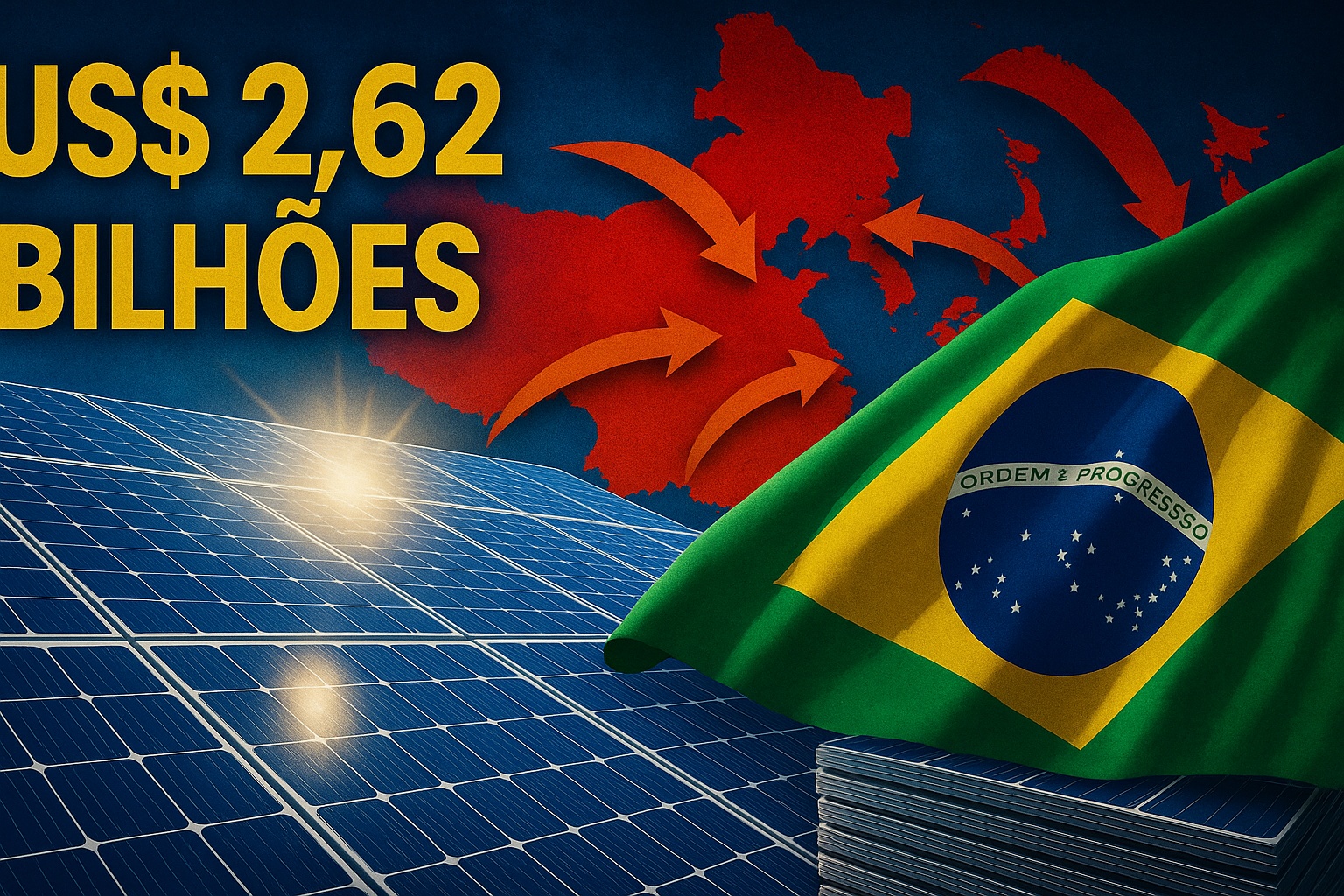

Brazil Is A Power In Renewable Energy, But Spent US$ 2.62 Billion On Solar Panels Imported From Asia In 2024, According To PV Magazine — Dependency Exposes Industrial Gap.
Brazil is pointed out as a global reference in clean energy. With over 80% of its electricity matrix coming from renewable sources, the country is a global showcase in hydropower, biomass, wind, and, more recently, solar energy. This position places Brazil among the leaders of the energy transition on the planet at a time when reducing carbon emissions is a priority for governments and companies.
But behind the image of a sustainable power, there is a concerning dependency. According to PV Magazine, in 2024 Brazil imported US$ 2.62 billion in solar panels and photovoltaic cells, almost entirely from Asia — especially China, which dominates over 80% of the global supply chain. This data exposes a gap between Brazil’s renewable potential and its industrial capacity: the country leads in solar plant installations but does not produce the equipment on a significant scale.
Brazil As A Showcase For Renewable Energies
The Brazilian electricity matrix is one of the cleanest in the world. While advanced economies still struggle to reduce the share of coal and natural gas, Brazil already has over 190 gigawatts of installed capacity from renewable sources, according to ANEEL.
-
Brazil Aims to Become a Global Exporter of Green Hydrogen, the Clean Fuel Set to Generate Billions

-
Brazil to Hold First Offshore Wind Energy Auction, Aiming to Become the Country’s New Hydropower
-
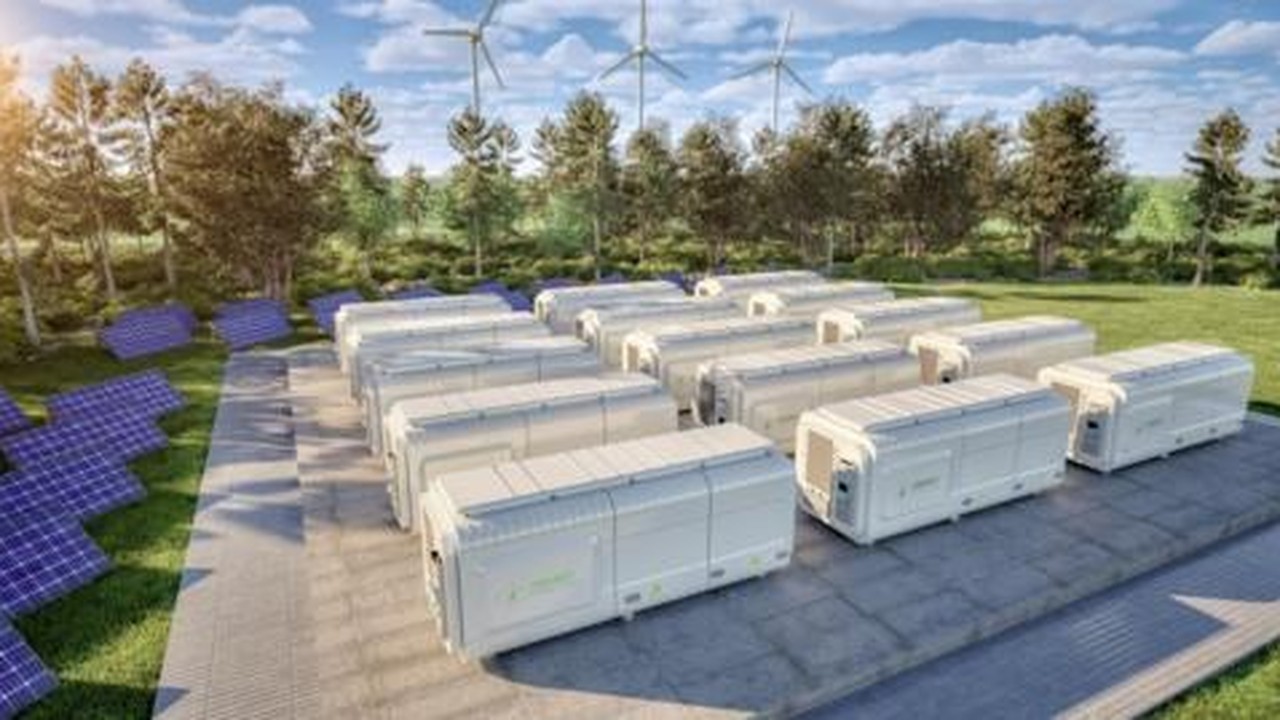
Brazil to Hold First Auction for Batteries to Store Solar and Wind Energy from the Northeast
-
Brazilian scientists are simultaneously advancing two research projects on clean hydrogen and driving solutions that could transform the energy matrix, enhance industrial competitiveness, and accelerate large-scale emission reduction targets.



- Hydropower: represents the largest share of the matrix.
- Wind: has grown exponentially in the Northeast and now exceeds 30 GW installed.
- Solar: is the fastest-growing sector, with over 60% expansion in installed capacity from 2021 to 2024.
This diversity gives the country a positive image in the international arena, reinforcing its position as an energy showcase.
The Solar Energy Boom In Brazil
In recent years, solar photovoltaic energy has established itself as the fastest-growing source in Brazil. By 2024, the country had already surpassed 40 GW of installed solar capacity, including large-scale plants and distributed systems on rooftops and solar farms.
This growth was driven by regulatory incentives, the drop in international panel prices, and consumers’ quest for energy independence.
Entire cities began to invest in photovoltaic generation as an alternative to reduce costs and emissions.
But along with this progress, the dependency on imported equipment has also grown.
The Billion-Dollar Import Bill
According to a survey by PV Magazine, in 2024 Brazil spent US$ 2.62 billion on imported photovoltaic modules.
The figure is striking not only for its value but also for its concentration: 99.7% of the amount was for already assembled modules, ready for installation, almost all produced in Asia.
In practice, Brazil has become a consumer of Chinese equipment on a massive scale, without consolidating a robust national industry to keep pace with solar expansion. This dependency means that, although the country installs record amounts of renewable energy, the wealth and added value remain outside its borders.
Chinese Dominance And Its Risks
China accounts for over 80% of the world’s solar panel production, controlling the entire supply chain, from silicon extraction to module assembly.
For Brazil, this means that any variation in the Chinese market — whether due to price increases, scarcity of inputs, or trade restrictions — directly impacts the cost of solar energy in the country.
This scenario creates vulnerabilities:
- Currency Risk – as purchases are made in dollars, the appreciation of the American currency increases the cost of equipment.
- Logistical Risk – maritime transport crises can delay projects and raise freight costs.
- Geopolitical Risk – international tensions involving China may compromise supply.
Missed Opportunity For National Industry
Experts argue that Brazil is wasting the chance to create a national production chain for solar panels. The demand exists and is growing consistently, but the lack of clear industrial policies, tax incentives, and investments in technology keeps the country dependent on imports.
Meanwhile, the sector could create thousands of jobs in manufacturing modules, inverters, and components, in addition to stimulating local technological innovation. The absence of this industrial base means that Brazil remains a showcase of consumption, not of solar energy production.
Ways To Reduce Dependency
To change this picture, several measures are under discussion:
- Green Industrial Policy – programs to encourage the installation of panel and input factories in Brazil.
- Technological Partnerships – cooperation with countries like Germany and the USA for technology transfer.
- Investment In Research – support for universities and institutes in the search for new solutions, such as perovskite panels.
- Promotion Of Recycling – creating a market for the reuse of used panels, reducing costs and environmental impact.
The Brazilian Dilemma
Brazil has one of the cleanest energy matrices on the planet and stands as a global reference in renewables. But at the same time, it depends almost entirely on imported equipment to sustain its solar expansion.
This is a portrait of a country that showcases potential but has yet to translate that strength into local industry and innovation.
The data from PV Magazine serves as a warning: in 2024, US$ 2.62 billion left the country in the form of solar panel imports, while the wealth generated by the sector could be stimulating technology and local jobs.