Portuguese
  Spanish



New Research from CNI Reveals That Almost Half of the Electricity Bill Is Composed of Taxes and Charges, Impacting Industry Competitiveness.
A recent survey highlighted that almost half of the electricity bill is filled with taxes and charges, creating challenges for industrial competitiveness. This increase in costs directly impacts the final amount that consumers need to pay monthly.
The additional charges that make up the energy tariff significantly weigh on consumers’ wallets. These charges are responsible for the increase in the energy bill, raising the annual total to very high figures, such as R$ 102 billion. Companies need to deal with this delicate situation while trying to keep their operations viable.
Impacts of Subsidies on the Electricity Bill
The president of the National Confederation of Industry (CNI), Ricardo Alban, warns that the various subsidies and charges embedded in the consumer’s electricity bill are not sustainable. According to him, these additional components are one of the main factors that make Brazil a country with some of the highest electricity tariffs in the world.
-
Volvo’s New Loaders Feature Obstacle Detection, Automatic Braking, and 360-Degree Operator View

-
Chinese Manager Accused of Whipping Worker Sparks Protest by 1,200 Employees at Major Brazilian Factory

-
99Food Under Investigation by Brazilian Consumer Protection Agency for Lack of Price Transparency, Faces Potential $2.8 Million Fine

-
France Revamps 530 Social Housing Units with Large Balconies and Glass Facades Without Demolishing Existing Buildings



New Research from CNI
A new survey from the National Confederation of Industry (CNI) reveals that for 55% of Brazilian industrial entrepreneurs, the excess of subsidies in the electricity sector directly impacts the competitiveness of the industry. Furthermore, 47% point out that the benefits granted to certain sectors of the economy, such as the Fuel Consumption Account (CCC), incentivized sources, and subsidies for distributed generation, are responsible for the high cost of electricity bills in the country. See the INFOGRAPHIC on taxes and charges in the electricity sector <https://link.example.com>.
Charges and Taxes on the Electricity Bill
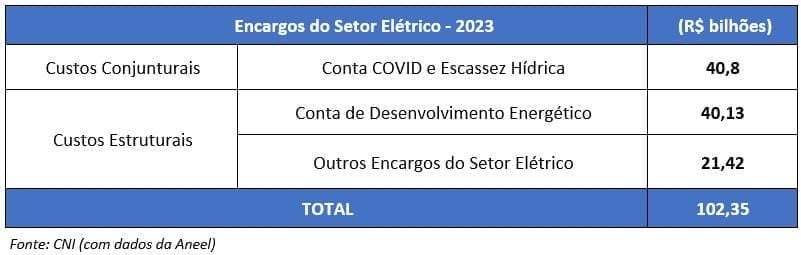
A CNI survey, based on data from the National Electric Energy Agency (Aneel), shows that charges and taxes account for 44.1% of the electricity bill. According to the data, conjunctural (Covid Account and Water Scarcity) and structural costs totaled R$ 102.35 billion in 2023. The structural costs include the Energy Development Account (CDE). Created in 2002, the CDE had an impact of R$ 40.1 billion on the electricity bill last year, rising from R$ 14.1 billion to the current value in a decade.
The Subsidies and Their Effects
The CDE is a sectoral fund that finances various public policies in the Brazilian electricity sector, such as subsidies for incentivized energy sources, for coal, and for distributed generation. According to Ricardo Alban, the cost of energy production in Brazil is relatively low, but the electricity bill is among the highest in the world. He emphasizes that the charges have become the main driver of the persistent increase in electricity tariffs. ‘These add-ons are not sustainable’, he emphasizes. For Alban, rationalizing sectoral charges should be a priority in the modernization of the electricity sector.
Transparency in the Electricity Sector
While there is consensus that electricity tariffs are heavily impacted by subsidies, CNI’s research reveals that many industrial consumers do not know exactly what they are paying for in their electricity bill. According to the data, 56% of these consumers are unaware of the embedded subsidies. In CNI’s assessment, the current model of the electricity sector is worn out and needs transformations to ensure economic and operational sustainability in the sector.
Impact on Industry Competitiveness
The executive president of the Brazilian Aluminum Association (Abal), Janaina Donas, points out that the costs associated with the CDE and other charges significantly affect aluminum production, reducing the sector’s competitiveness. From 2001 to 2019, the cost of energy in the sector increased from 27% to 72%. The implementation of policies with greater transparency, cost rationalization, and focus on incentivized energy are some of the proposed solutions.
Perspectives from Abrace and Abit
Paulo Pedrosa, president of the Brazilian Association of Large Industrial Energy Consumers (Abrace), states that the electricity tariff in Brazil is a major obstacle to the competitiveness of the national industry. ‘Almost half of the electricity bill is composed of charges and taxes, making it unaffordable’, he asserts. Fernando Pimentel, executive director of the Brazilian Textile and Clothing Industry Association (Abit), also warns about the new charges that increase the electricity bill, especially impacting small and medium industries.
Proposals and Solutions
CNI proposes several actions to modernize the electricity sector, such as the approval of PL 414/2021, which suggests a restructuring of the regulatory model, tariff reductions, encouragement of the free market, and changes in auctions. Other proposals include:
– Implementation of energy security policies, with rules for flexibility and supply guarantees;
– Separation of Distribution and Commercialization activities;
– Policies to address delinquency;
– New tariff modalities for low voltage;
– Improvement in price formation;
– Correct allocation of risks in the energy market.
Industry Media Bank
The Industry Media Bank <https://link.bancodemidia.com.br> offers free access to images, videos, and infographics on topics relevant to the sector, upon a brief registration. This aims to provide greater transparency and understanding of the electricity bill and its components.
Source: © Journalism – CNI