Portuguese
  Spanish




Microsoft Announces It Compensated For All Global Electricity Consumption With Renewables In 2025, Accumulates 40 GW Contracted And Reinforces Goal Of Becoming Carbon Negative By 2030.
The global race for renewable sources has taken a new chapter. Microsoft announced that, by 2025, it managed to offset 100% of its annual electricity consumption with clean energy. In addition, it reported that it will continue to acquire renewable capacity sufficient to fully supply its operations.
The milestone was reached after the company contracted about 40 gigawatts (GW) of capacity in renewable generation projects. This volume is enough to power millions of homes and places the company among the largest corporate buyers of clean energy in the world.
According to the company itself, more than 90% of these acquisitions occurred through PPAs, known as long-term power purchase agreements. The remaining 10% came from agreements tied to the electrical grid mix.
-
Brazilian scientists are simultaneously advancing two research projects on clean hydrogen and driving solutions that could transform the energy matrix, enhance industrial competitiveness, and accelerate large-scale emission reduction targets.

-
Advancement in renewable energy: A R$ 150 million project launched by Petrobras and Finep aims to create state-of-the-art electrolyzers for green hydrogen, strengthening national research and preparing Brazil to compete in a billion-dollar energy market.
-
Illiterate or semi-literate grandmothers were trained to repair solar systems, open rural workshops, and light up homes that still depended on kerosene.
-
The world has bet on green hydrogen as the fuel of the future, but now faces the side effect: producing 1 kilogram requires about 9 liters of ultrapure water, and the largest projects on the planet are precisely in the driest regions of the Earth, where water is already scarce for people.




The strategy prioritized direct supply contracts, without resorting to purchasing renewable energy credits from projects already in operation.
Global Expansion And Focus On Infrastructure
Of the total contracted, approximately 19 GW are already connected to the electrical grid. The rest is expected to come online in the next five years. The projects are distributed across 26 countries, which reinforces the global dimension of the strategy.
This movement occurs in parallel with the accelerated expansion of the company’s artificial intelligence infrastructure. Microsoft confirmed that it intends to invest US$ 50 billion by 2030 to expand its AI structure in countries of the so-called Global South, a group that includes emerging nations from Latin America, Africa, and Asia.
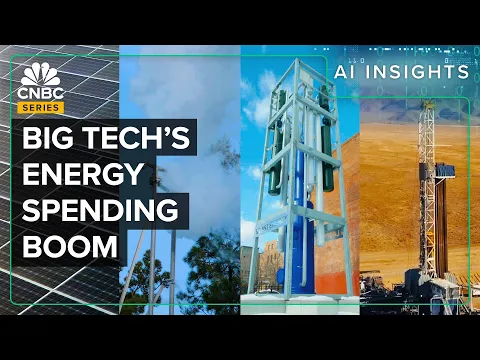

With the increase in energy consumption driven by data centers and AI systems, the pressure for renewable sources becomes even greater. Therefore, the company has sought to align technological growth and environmental responsibility.
Climate Goal Goes Beyond Renewables
The initiative is connected to a more ambitious plan. Microsoft’s goal is to become carbon negative by 2030. In practice, this means removing more greenhouse gases from the atmosphere than it emits.
The commitment was announced in 2020. It also foresees that, by 2050, the company eliminates all carbon emitted directly and indirectly since its foundation in 1975.
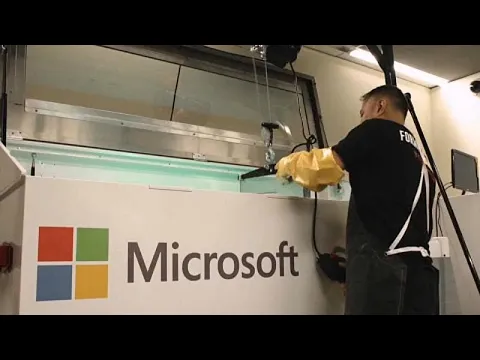
To achieve this goal, the strategy combines different fronts. Among them are increasing the use of renewables, investments in energy efficiency, electrification of operations, and carbon removal technologies. The company is also working to reduce emissions in its supply chain.
Do you believe that large companies can truly grow, invest billions in technology, and still fulfill environmental promises, or are these energy transition targets just a facade? Is there practical compensation?