





 Portuguese
  English
  Spanish
  5 min of reading
  0 comments


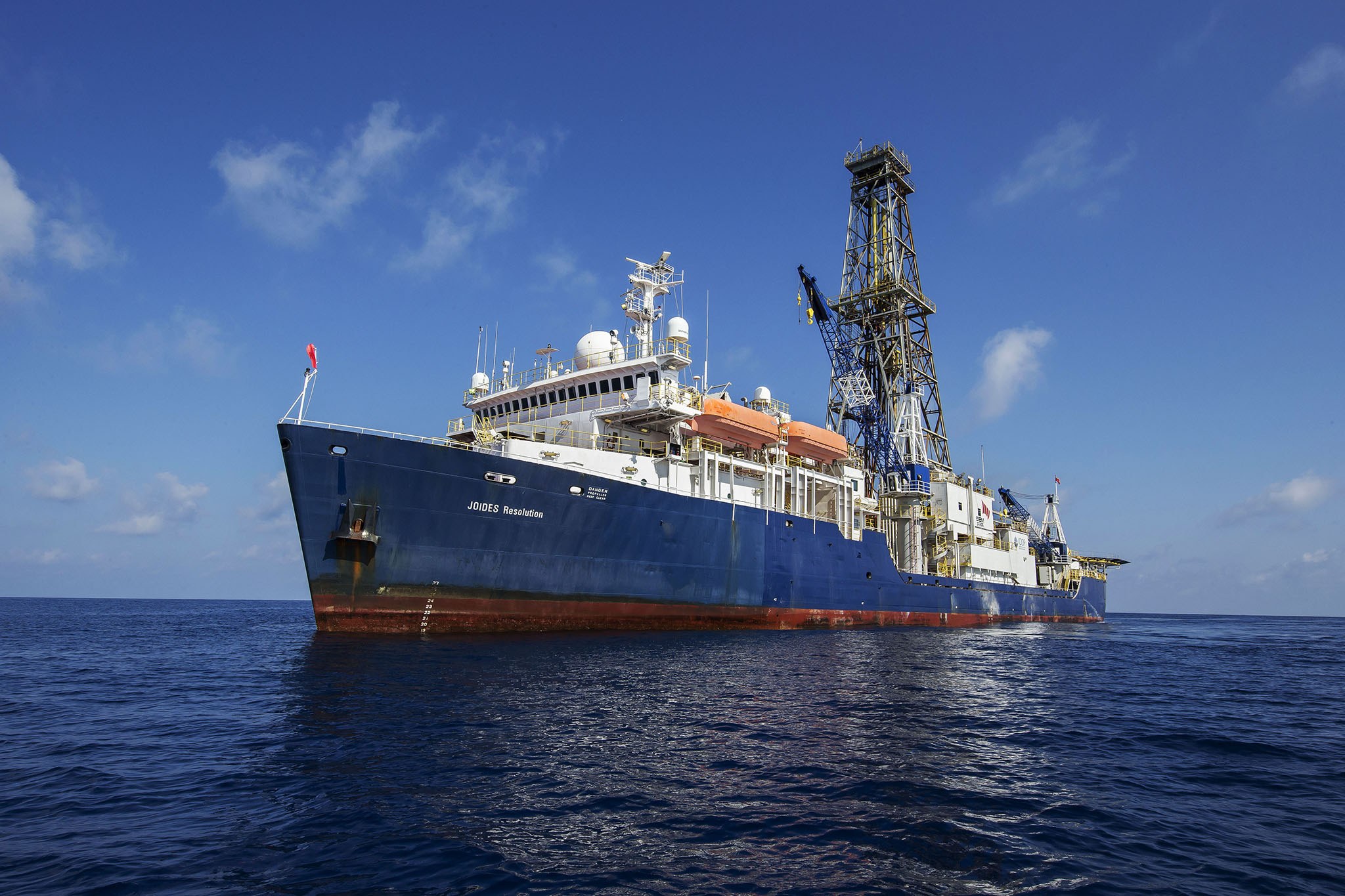
A scientific drilling ship did what seemed almost impossible at the ocean floor: it extracted a sequence of mantle samples from the Earth’s crust, the layer just below the solid surface that humanity almost never manages to touch, and brought to the surface some of the best pieces ever recovered from this interior of the planet.
The trick was not to drill straight down, where the crust is too thick and defeats any drill. It was to aim at a kind of tectonic window, a point on the seabed where the crust is unusually thin and the mantle rock, a greenish peridotite, has already been pushed close to the surface by geological forces. Once the right spot was found, the drilling reached material that is normally tens of kilometers deep.
I confess that few topics fascinate me as much as this one. We know the surface of Mars better than what exists a few kilometers below our feet, and each of these samples is literally a piece of a world that no one will ever visit in any other way.
Why reaching the mantle is so difficult
The Earth is made of layers. On top is the crust, the thin and rigid shell where we live. Just below is the mantle, a thick layer of hot rock that accounts for more than eighty percent of the planet’s volume and commands, from deep below, the movement of continents and earthquakes. The problem is the distance: on continents, the crust can be thirty, forty kilometers thick, far beyond what any drill can penetrate.
-
End of various surgical instruments? The surgical robot smaller than a fingernail performs 5 medical functions in a single body, requires no battery, and uses magnetism to cut tissues, release medications, collect samples, and navigate through narrow areas of the body.

-
Scientists want to deploy 6 spacecraft spraying barium, lithium, or sodium into Earth’s magnetic field to slow down solar storms.

-
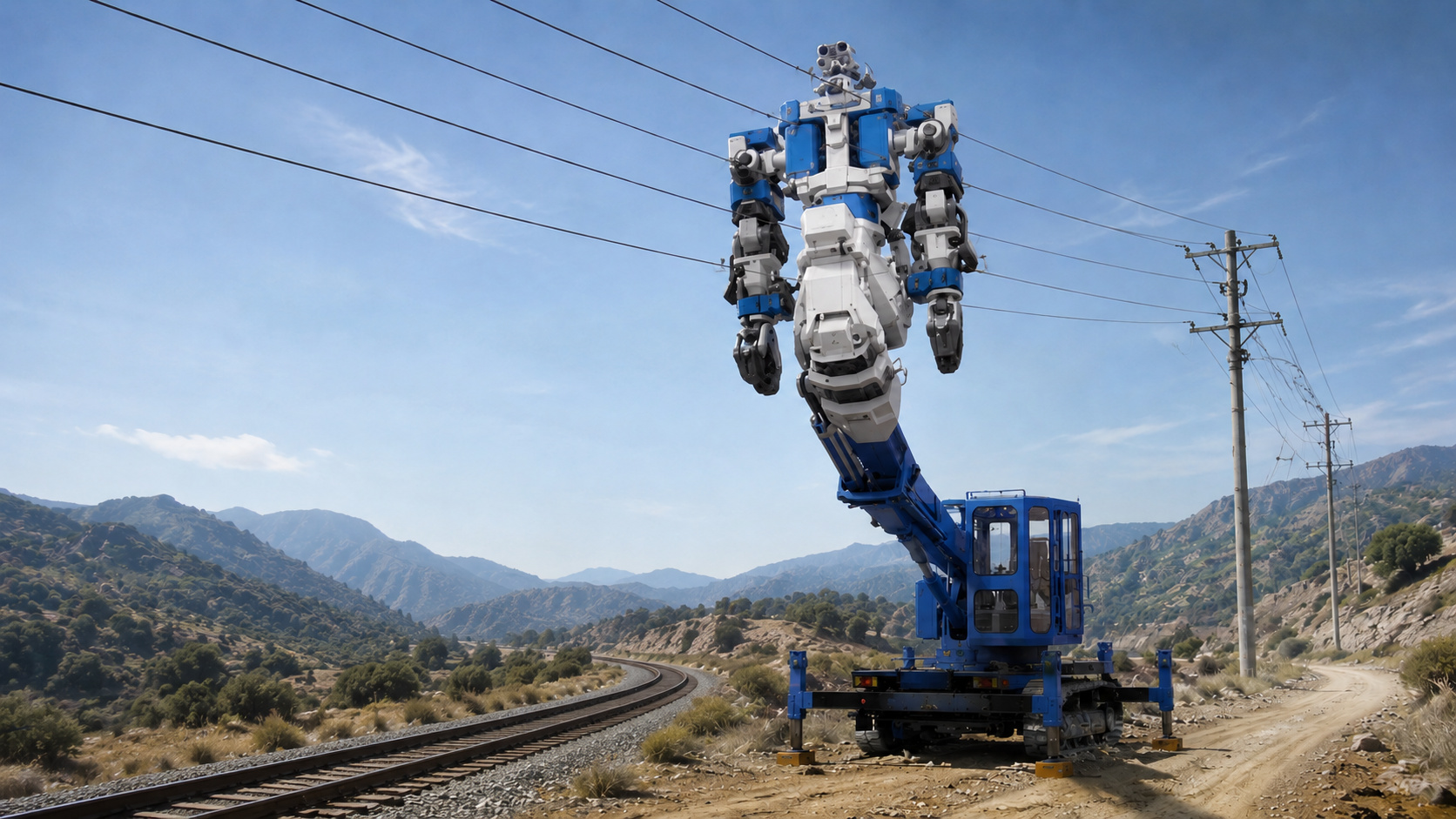
Japan places a giant humanoid up to 12 meters tall on a rail truck to replace dangerous high-altitude work: the robot uses colossal mechanical arms to cut branches, paint structures, and work alongside energized cables without exposing workers to risk.

-
Russian researchers found in a volcanic crater in Kamchatka a new mineral with a crystalline structure that had never been observed in a laboratory, and petrovite has a molecular architecture that battery scientists want to replicate synthetically to create more efficient electrodes.



That’s why the strategy changed location. At the ocean floor, the crust is much thinner, sometimes only a few kilometers, and at certain special points, the mantle rock is pushed upwards over millions of years. It is in these rare points that scientific drilling bets, trading brute force for intelligent geography.
This is exactly what happened on this expedition. Instead of attempting the impossible task of drilling through the thick crust, the scientists took the ship to the right window and lowered the drilling column through a thinned crust, recovering long and well-preserved cores of peridotite. For geology, it’s like gaining access to a pantry that used to be locked.
What these green stones can tell
Peridotite is not a pretty jewelry rock; it is something better for science: a chemical archive of the planet’s interior. By analyzing these samples, researchers can understand what the mantle is made of, how heat moves down there, and how this deep layer feeds volcanoes and pushes the plates that shape continents.
There is also a fascinating clue hidden in these rocks. When seawater penetrates peridotite, chemical reactions occur that release hydrogen and can sustain life forms without sunlight, in the depths. Studying this process helps answer one of the oldest questions that exist, how life could have begun, here or on another world with similar ocean and rock.
The engineering of drilling at the ocean floor
It’s worth understanding the technical feat behind the sample. The scientific drilling ship doesn’t drop an anchor and drill: it needs to stay stationary over the exact point in open sea, swaying with the waves, while lowering a column of tubes through kilometers of water to touch the bottom. For this, it uses a positioning system that activates propellers all the time, correcting drift centimeter by centimeter, in a balance that seems impossible at first glance.
Once at the seabed, the drill faces hard and hot rock, and with each meter, the risk of the hole collapsing or the tool jamming increases. Recovering an intact cylinder of peridotite, without it crumbling on the way up, is a trophy in itself, because the integrity of the sample is what allows reading the chemical history of the mantle. A broken piece tells less than a continuous core.
Each core brought to the surface is sliced, photographed, and analyzed in a laboratory on board, and then sent to research groups worldwide. A single stone cylinder can fuel years of study and dozens of articles because it carries information about composition, temperature, and movement of a layer that governs the planet from bottom to top. The high cost of the expedition is diluted in this long-term scientific return.
A scientific dream of more than half a century
Reaching the mantle is an old obsession of science. As early as the 1960s, there was a bold attempt to drill down to it that ended abandoned due to cost and technical limits. Since then, ocean drilling expeditions have been nibbling at the goal little by little, recovering increasingly better fragments without ever actually crossing the boundary between crust and mantle.
This campaign did not drill directly into the mantle, and it’s important to say this honestly. What it did was intelligently explore a window where the deep rock was already accessible and bring back samples of rare quality. It’s an advance in method as much as in result and paves the way for the old goal of drilling to the mantle to stop being fiction.
I imagine the geologist holding one of these green rock cylinders freshly brought up from the ocean floor, knowing they have in their hands a material that has been stored kilometers deep for a time that our minds can’t even properly measure. It’s the kind of gesture that seems small and actually shortens the distance between us and the heart of the planet.
If science could finally drill down to the Earth’s mantle, what would you most like these rocks to reveal about our planet?





Be the first to react!