Portuguese
  Spanish


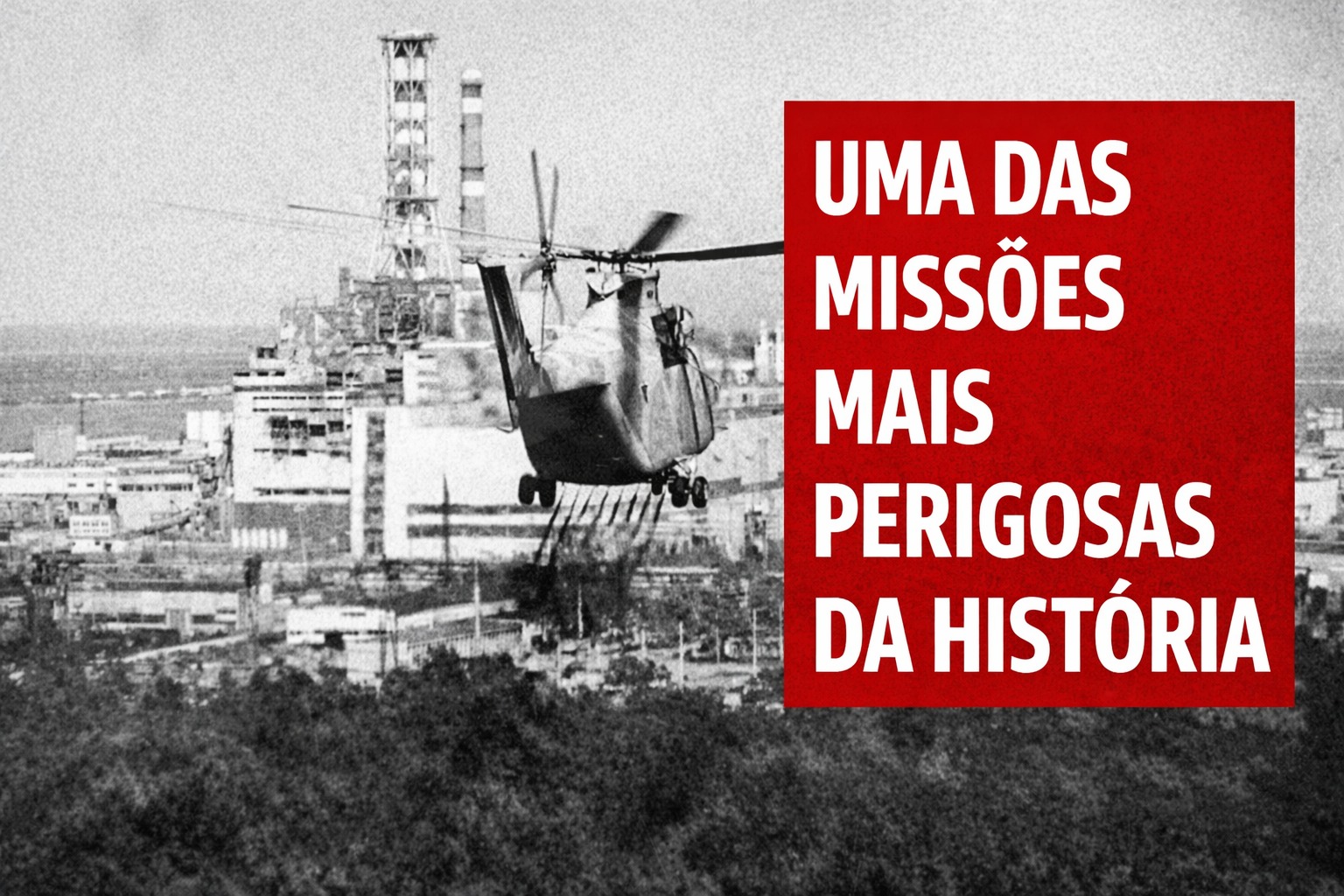


Failed Safety Test Led To The Explosion Of Reactor 4 In Chernobyl, Mobilized Pilots, Firefighters And Soviet Liquidators, Caused Permanent Evacuation And Exposed Europe To The Largest Civil Nuclear Accident In History
40 years ago, early in the morning of April 26, 1986, Reactor Number 4 of the Chernobyl Nuclear Power Plant exploded during a safety test, causing a fire, massive radiation release and an urgent scramble to prevent the collapse of the remaining reactors at the plant.
The accident occurred when a safety test went out of control, destroying Reactor 4 and exposing the core, creating a direct threat to the other three operational reactors.
The severity of the episode required rapid containment, as a new collapse could drastically increase the radioactive release, with unpredictable impacts for regions beyond the immediate surroundings.
-
Mother acts quickly and saves 6 children from fire in studio apartment on the coast of SC before firefighters arrive

-
A 21-year-old woman was carried in the arms to the platform and launched from about 40 meters in a bungee jump in Limeira while a rope appeared coiled on the ground behind the group; witnesses were shouting something that no one around managed to stop in time.

-
Truck breaks down in the middle of the Sahara, leaving Nigerians without water on a remote route and turning the journey back home into a tragedy with nearly 50 dead

-
Unusual incident: a taxi driver stopped at a corner because of a red light and his car with CNG caught fire in Argentina


Moments after the explosion, firefighters from the entire region were mobilized to combat the fire, operating without proper suits and unaware of the real intensity of the present radiation.
Even those who had some notion of the danger were ordered to remain silent or omit information, reflecting the strict state control of the then Soviet Union.
Aerial Decision In Light Of Initial Ineffectiveness
With the failure of initial attempts, about 36 hours later it was decided to deploy helicopters, a strategy suggested by Valery Legasov, deputy director of the Kurchatov Institute of Nuclear Energy.
The aircraft were to drop sand, clay, boron, and lead directly onto the exposed reactor, trying to extinguish the fire and reduce the release of radiation.
As helicopters were deployed, thousands of residents of Chernobyl and nearby cities were evacuated, giving rise to the so-called permanent exclusion zone.
Only the so-called liquidators, over 600,000 Soviets involved in containment, were permitted to access the highly contaminated area.
Beginning Of One Of The Most Dangerous Aerial Operations
For civilian and military pilots, one of the most dangerous missions in aviation began, with repeated flights over an open and unstable reactor.
The operation demanded extreme precision, physical endurance, and acceptance of risks that were poorly understood at that critical moment in the crisis.
Helicopters Employed And Technical Limits
During the emergency, several models were used, with emphasis on the Mi-8 and the Mi-26, the latter considered essential due to its payload capacity.
Each aircraft needed to operate in contaminated air, dumping material directly onto the still-active burning core.
The work was done slowly, almost drop by drop, to avoid compromising the remaining structure of the plant with the impact of the material.
The Mi-26 only dropped 3,000 kg per flight, despite being capable of carrying up to 20 tons, to avoid structural collapse of the other reactors.
Improvised Initial Procedures
In the first few days, containment bags were manually thrown from opened side doors, further exposing the crew to intense radiation.
Later, to reduce risks, the loads began to be transported in external supports, decreasing direct contact for the teams.
Operational Differences Between Mi-8 And Mi-26
The Mi-8 needed to launch loads while moving, as it could not hover heavily, which significantly reduced launch accuracy.
The Mi-26, on the other hand, could hover over the reactor, increasing precision, but dangerously extending the exposure of the crew.
Thousands Of Flights Until The Fire Was Controlled
More than 4,000 overflights were required before the fire was controlled, a result achieved only on May 10, 1986.
During this period, over 5,000 metric tons of the chemical mixture were directly dumped onto the destroyed reactor.
Recorded images show pilots wearing only simple masks, without specific radiation protection clothing, in conditions now considered disturbing.
The intense heat made some fly only in pants, while adaptations with lead sheets emerged only later.
The helicopters also dropped containment agents around Chernobyl, creating a barrier to limit the radioactive spread through the soil.
This phase increased contamination of the aircraft, which accumulated hazardous residues after each mission performed.
Extreme Contamination And Abandonment Of The Aircraft
Reports indicate that, upon landing, the grass around the helicopters quickly turned yellow due to the accumulated residual radiation.
The crews could only fly for three days, and the aircraft were ultimately abandoned due to excessive cleaning risks.
During the missions, a Mi-8 collided with steel cables from a crane near the reactor, crashing and killing its four crew members.
The accident underscored the extreme danger faced daily by the teams involved in aerial containment.
Removal Of The Helicopters: Transition To Ground Actions
By the end of May, radiation levels dropped to relatively safer levels, allowing the start of more intensive ground operations at the plant.
Nevertheless, the risks remained high for all involved in the subsequent work.
Without the efforts of these pilots and their risky operations, radiation could have spread across much of Europe and Asia.
The aerial effort was crucial in containing the disaster and preventing even broader consequences.
Human Sacrifice And Lasting Legacy
The courage and sacrifice of the pilots marked a critical chapter in nuclear history, with effects felt for decades.
The operation remains an extreme example of emergency response in the face of an unprecedented technological catastrophe.
With information from CNN.