






 Portuguese
  Spanish
  3 min of reading
  0 comments


Incomplete Marketing and Logistic Obstacles Reveal Unprecedented Bottleneck on the Eve of Planting Season 2025
The credit crisis in the Brazilian agribusiness has reached a new critical level in September 2025.
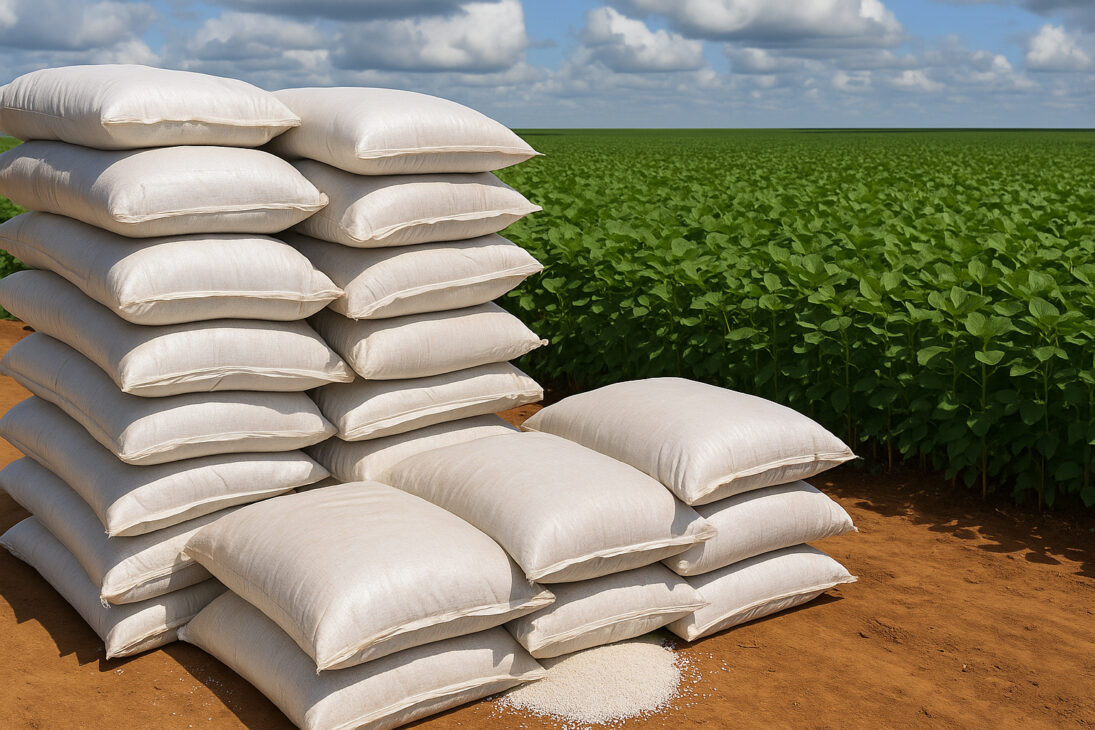
The impact directly affects the marketing and delivery of fertilizers.
According to Eduardo Monteiro, country manager of Mosaic and president of Anda (National Association for the Diffusion of Fertilizers), 10% of the fertilizers expected for the soybean harvest have still not been sold.
The planting of soybean has already begun in several regions of the country.
The main obstacle continues to be the unapproved credit for thousands of farmers.
-
The urgent need to implement a severe cut in public spending and a massive increase in taxes, in addition to drastically compromising the quality of basic services and the purchasing power of the population, could result in social unrest in the country, with the population leading protests, strikes, and frequent disturbances.

-
FIRJAN’s mega plan of R$ 526.3 billion for Rio de Janeiro aims to revive Brazil’s largest industry, with two-thirds of the investments going to oil and gas.

-
China signals an increase in beef imports, Brazil has already consumed 70% of the 1.106 million ton quota and seeks to renegotiate the tariff that jumps from 12% to 55%, while demand from the US also skyrockets.
-
Food inflation rose 302% in 20 years in Brazil, but the supermarket changed: purchasing power yielded 87% more mortadella and 31% less fruit, and ultra-processed foods took over the cart.




Many producers are trying to negotiate directly with banks and distributors.
A large portion of producers is having their credit denied.
This blockage stalls the financial cycle and harms transfers in the field.
Rio Grande do Sul Concentrates the Biggest Delays
The most concerning scenario is in Rio Grande do Sul.
There, producers still face the aftermath of renegotiations from past harvests.
Severe climatic problems exacerbate these delays.
Producers in the region have still not marketed between 30% and 35% of the fertilizers.
This percentage is completely off the standard for the month of September.
The initial estimate from Anda for 2025 was 49 million tons.
However, with the current pace of credit and logistics,
the projection has dropped to 47 to 48 million tons.
The risk, according to Monteiro, is that farmers will apply less technology due to a lack of inputs.
This could reduce the productivity of the crops.
Stocks in Ports and Warehouses Remain Blocked
Although the industrial sector has already organized to supply in September,
The company has still not released the accumulated cargo from August and July to the interior.
Mosaic warns that there is a risk of logistical bottlenecks.
This bottleneck may occur due to the concentration of deliveries in a short period of time.
Imported fertilizers continue to arrive at Brazilian ports.
However, stocks remain stuck in warehouses.
They are awaiting the formalization of guarantees and approval of credit for financing.
The industry, according to Monteiro, was already operating at its maximum capacity.
The rigidity of banks and distributors prevents the normal flow of product release.
The Second Crop of Corn May Also Suffer Impacts
The analyst Jefferson Souza from Agrinvest Commodities highlights a new problem. In addition, he reveals that 55% of the fertilizer sales for the second crop have yet to be closed.
This number exposes a significant risk. For this reason, banks’ aversion to rural risk is growing concerningly.
This fear, in fact, has been heightened by recent judicial recoveries in the agricultural sector. Additionally, the crisis in resellers has exerted further pressure on the credit available.
During the Anda congress held in São Paulo on September 2, 2025, Jefferson Souza presented a relevant alert about the restriction of rural financing.
At the event, he questioned whether the credit blockage would prevent sales. Still, he believes that farmers will only give up on technology if there is no accessible credit.
Despite these challenges, demand expectations remain positive. This is mainly due to the continuous expansion of corn ethanol in Brazil, which keeps the sector’s optimism alive.
Demand Expectations Remain, but Purchase Decisions Are Postponed
Monteiro confidently states that there are no signs of a retraction in total demand. However, on the other hand, producers have postponed important purchasing decisions.
This occurs because there is a concrete expectation of improvement in corn prices. However, these prices remain below the levels recorded in 2024.
In light of this, the current scenario directly impacts the planning of the next harvest. Still, the delay in credit release remains the main bottleneck faced.
Moreover, the problem simultaneously affects both soybean and corn. Meanwhile, distributors and trading companies continue to postpone deliveries, awaiting formalizations that may not occur in time.
With this deadlock, the risk of logistical bottlenecks and low application of technology in crops is rapidly increasing. Consequently, the results of the 2025 harvest may be significantly compromised.








-

1 person reacted to this.