






 Portuguese
  Spanish


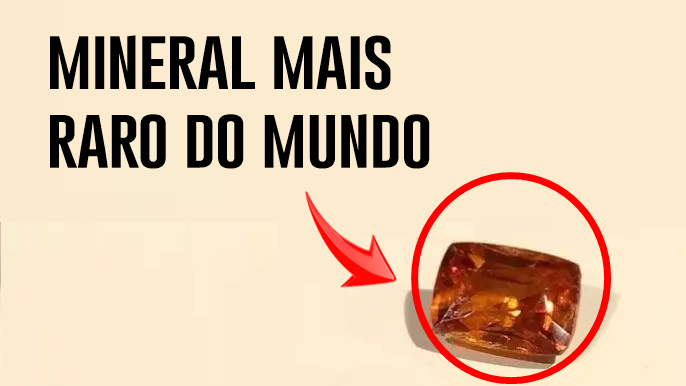


A Mineral More Rare Than Gold Was Found Only Once, Intriguing Scientists and Becoming One of the Most Valuable and Mysterious Materials Ever Recorded.
In the Mogok region of Myanmar, a small stone was discovered deep in the ground, apparently ordinary to the eyes of the miners, but it was the rarest mineral in the world.
This crystal, with a reddish-orange hue, did not initially attract attention, as it was among the stones that sapphire hunters rejected.
However, upon investigation, it revealed itself as one of the most extraordinary discoveries in the mineral world: kyawthuite, the rarest mineral on Earth.
-
U.S. Invests $75 Million in Projects to Extract Rare Earths, Gallium, Germanium, and Aluminum from Coal Waste

-
Eni Acquires 25% Stake in Chilean Lithium Project, Plans to Invest Up to $225 Million in Eco-Friendly Extraction Method
-
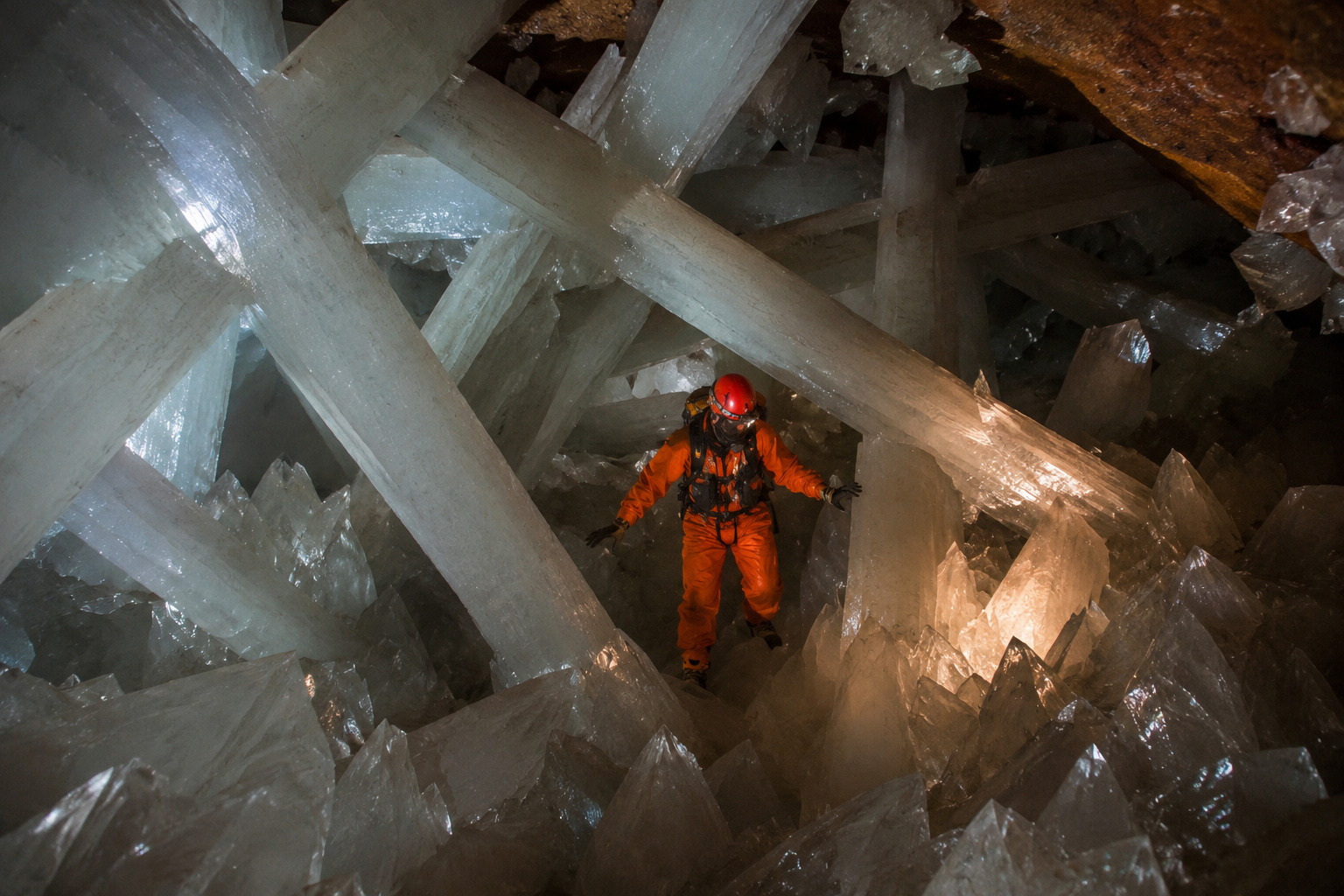
Mexico’s Giant Crystal Cave: A Deadly 58°C Underground Palace with 11-Meter Crystals Formed Over Nearly a Million Years

-
China Dominates Over 90% of Rare Earth Refining, Prompting Global Concerns: Canada and Japan Launch Billion-Dollar Plan to Reduce Dependency and Safeguard Batteries, Semiconductors, and Defense


The only sample of kyawthuite, weighing 1.61 carats (0.3 grams), was found in 2010 but only gained notoriety after the official identification in 2015.
The mineral was recognized by the International Mineralogical Association as a new species, being considered a geological treasure.
Currently, it is on display at the Natural History Museum of Los Angeles County, where it receives special protection due to its uniqueness.

Composition and Exclusive Characteristics of Kyawthuite
Kyawthuite is a bismuth-antimony oxide, with the chemical formula Bi₃⁺Sb₅⁺O₄, and it exhibits traces of tantalum.
Although the elements involved are not extremely rare, their unique combination and formation under specific geological conditions make the mineral special.
Its internal structure is fascinating, with layers of antimony and oxygen arranged like a chessboard, alongside bismuth atoms.
Surprisingly dense, kyawthuite has a density eight times greater than that of water, making it heavier than it appears at first glance.
Kyawthuite is believed to have formed from pegmatite, an igneous rock generated during the final phases of magma crystallization.
The intense pressure and heat caused by the Indian and Asian tectonic plates during the Paleocene-Eocene were crucial for the creation of this rare mineral, as well as other gemstones in the region, such as painite, the second rarest mineral in the world.
The rarity of kyawthuite is not due to the scarcity of its components—bismuth, antimony, and oxygen—but rather to the specific geological conditions required for its formation.
The Mogok region, where it was found, is known for housing a variety of rare minerals, possibly due to the pressures and temperatures resulting from the tectonic collision between India and Asia.
Ethical Implications of Mining in Myanmar
However, the geological beauty of Myanmar hides a troubling reality. Political instability and human rights abuses related to local mining generate criticism about labor conditions and child exploitation.
These ethical issues complicate the trade of gemstones from the region, affecting the research and marketing of minerals like kyawthuite.
Although synthetic versions of the mineral can be produced more easily with identical chemical composition, natural kyawthuite carries an invaluable worth.
Its study offers a glimpse into the geological processes that shaped the planet, revealing a millennia-old history hidden within the depths of the Earth.









Onde foi colocado na Tabela Periódica?
Eo campo de batalha só interessa a vitóriaaaa é vençer e vençer e vençer eu venço sergioguedes. Joia 💎 rara é JESUSCRISTO o sem pecado do DEUSVIVOVIDAETERNA a JOIA 💎 +VALIOSA da VIDAETERNA para sempre
Vencer com Ç é um derrota para nossa língua!