Portuguese
  Spanish


An electron accelerator installed in two containers brings research on water treatment, materials, and industrial waste to centers without a fixed laboratory. The unit allows for training and specific tests. It only operates with shielding, trained team, prepared area, and controlled operation.
Two containers that look ordinary from the outside house an electron accelerator capable of supporting tests for water treatment, materials, and industrial waste. The unit was launched on September 16, 2025 for training, demonstrations, and specific experiments in countries without a fixed laboratory.
By June 19, 2026, the system had already been used to train specialists from 21 countries in environmental and industrial applications. The information was released by the International Atomic Energy Agency, an international organization focused on the peaceful use of nuclear technology.
Inside, the structure produces an electron beam, formed by particles accelerated with high energy. This beam can act on liquids, gases, and solid materials, but it is not an automatic solution for any type of pollution or waste.
-
Brazil Invests $12 Million in Biodiversity to Develop Drug Molecules, but When Will It Reduce Dependence on Imported Pharmaceutical Ingredients?

-
3D Printing: From 1945 Sci-Fi Concept to Modern-Day Prosthetics, Homes, and Industrial Parts
-
SpaceX’s Billion-Dollar Decision Could Propel Company to Historic $800 Billion Valuation
-
Nigerian-Built Sports Car Prototype Showcases Low-Cost Automotive Engineering with Fiberglass, Foam, and Volkswagen Engine



How an electron accelerator fits in two containers
The unit was assembled inside two standard shipping containers. They house the accelerator, control systems, and the necessary protection to keep radiation within the area intended for operation.
One of the containers has a total weight exceeding 31 tons. A large part of this volume comes from the heavy lead layers installed to contain radiation during the equipment’s operation.
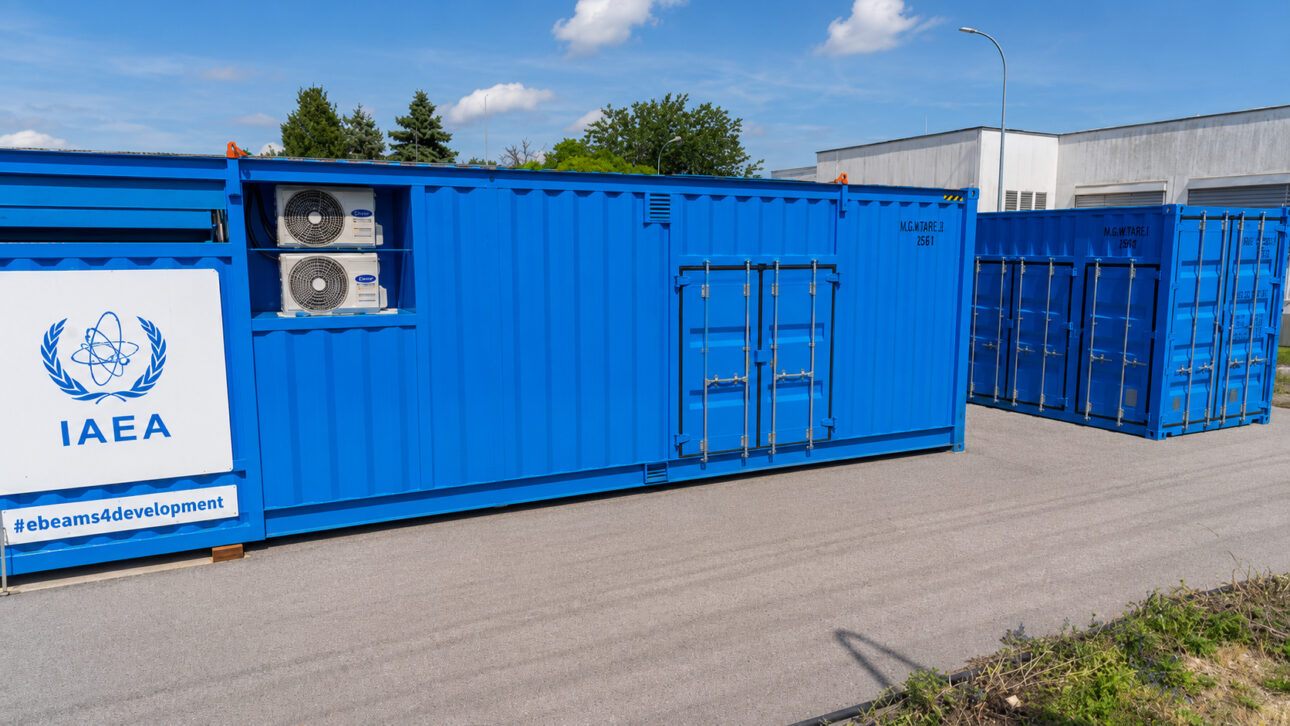
Electron accelerators usually operate inside large concrete rooms. In this model, part of the shielding was integrated into the transportable structure, which facilitates relocation without dispensing with a prepared location to receive the unit.
What is an electron beam and why it can alter materials
The electron beam is produced by a type of particle accelerator. The machine accelerates electrons and directs this energy to a material, causing changes in its physical, chemical, or biological characteristics.
This capability explains why the technology appears in different areas. The method can sterilize medical products, support food safety, preserve cultural objects, and help materials better resist heat or chemical substances.
The term ionizing radiation may seem difficult, but it simply means energy capable of acting on materials and microorganisms. Its use needs to be planned for each test, with appropriate protection and trained professionals.
Water treatment and industrial waste enter the list of tests
The electron accelerator can be used in research with wastewater, chemicals, sludge, gases, and solid materials. The structure also allows studying the reuse of plastic waste, odor control, and treatments related to climate-affecting gases.
The possibility of working with liquids, gases, and solids in the same system broadens the testing options. Nevertheless, each application depends on technical analysis, material preparation, and controlled operation.
The International Atomic Energy Agency, an international organization focused on the peaceful use of nuclear technology, maintains the unit at the Seibersdorf laboratories in Austria and allows its loan for specific experiments in other countries.
Why nuclear technology also appears in factories and research centers
Nuclear technology is not limited to electricity generation. It also includes controlled uses of radiation in research, factories, medicine, food, and object preservation.
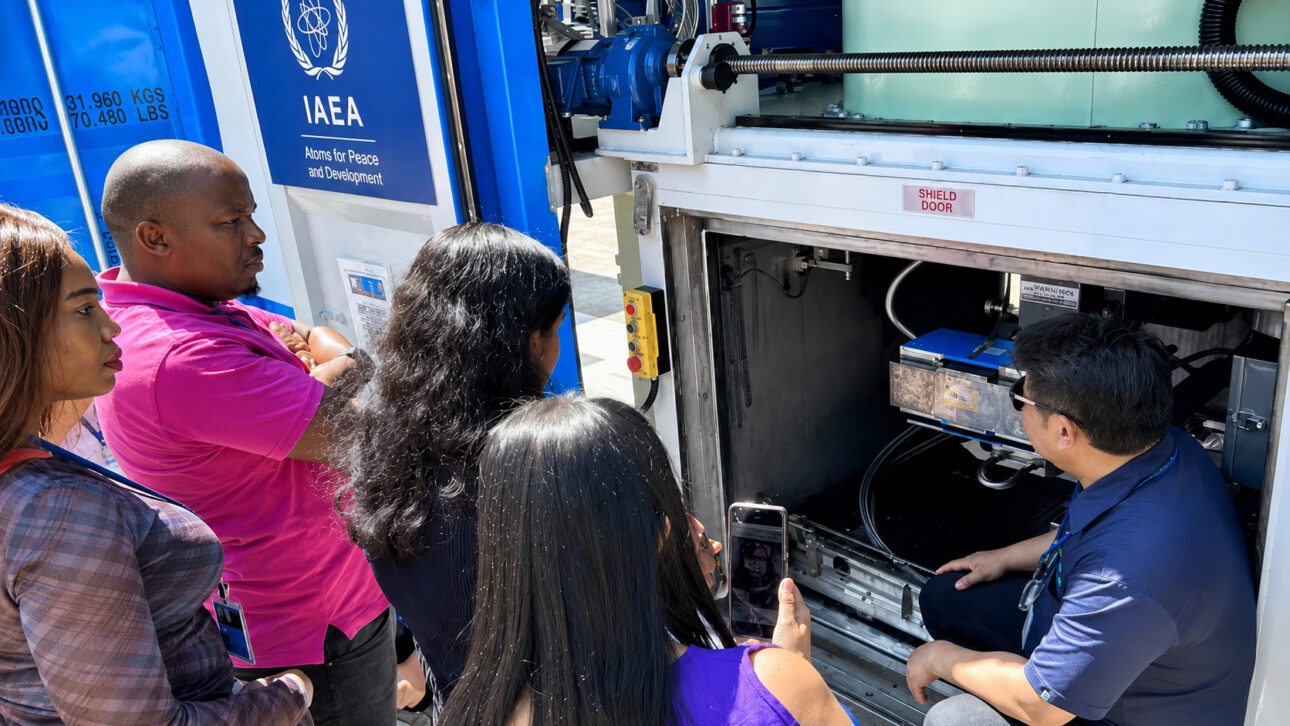
In the electron accelerator, energy is produced only while the machine is on. The system can be turned on and off, does not use radioactive sources, and does not generate radioactive waste.
This difference helps to understand why the equipment can be transported without carrying a radioactive source. Even so, the beam requires protection, technical control, and safety procedures throughout the operation.
Transport does not turn the equipment into a common machine
Containers facilitate access to technology that previously depended on permanent structures. This does not mean that the accelerator can be installed in any warehouse or used without preparation.
The training linked to the system includes safety, operation, and correct use of the electron beam. Countries can send professionals to the Seibersdorf laboratories or request the unit’s loan for defined experiments.
Mobility reduces the need to have a fixed laboratory in each country, but it still requires shielding, technical team, and space prepared for working with radiation.
What changes for countries without a fixed laboratory
Setting up an electron accelerator in a permanent facility usually requires a robust structure and a high level of preparation. The container model brings training and applied research to locations that do not yet have this type of laboratory.
In practice, research centers can test applications of water treatment, materials, and industrial waste with a structure that can be borrowed. The goal is to expand access to technology without abandoning safety requirements.
The two containers show that an electron accelerator can move from a fixed installation to locations prepared for applied research. The change is in bringing training and testing closer to teams that need to evaluate environmental and industrial uses of the technology.
The equipment does not replace infrastructure, qualified professionals, or safety rules. It creates an alternative for more countries to study solutions for wastewater, materials, and waste without building a permanent structure from the start.
In your opinion, can bringing an electron accelerator to prepared centers help cities and industries test better solutions for water and waste without compromising safety? Leave your opinion in the comments and share this post.