Portuguese
  Spanish


Discover the journey of 3D printing, a technology that began as a concept in 1945 and evolved into industrial, medical, and construction applications
3D printing seems like a recent invention, linked to modern machines, rapid prototyping, and parts made in offices or factories.
However, its origin is much older. The idea appeared in 1945, in the short story Things Pass By, by Murray Leinster, which described a mechanical arm creating objects with hardened material in the air.
Decades later, in 1971, Johannes F. Gottwald registered the patent for the Liquid Metal Recorder, a proposal that already envisioned the fabrication of objects by layers using liquefied material.
-
SpaceX’s Billion-Dollar Decision Could Propel Company to Historic $800 Billion Valuation

-
Nigerian-Built Sports Car Prototype Showcases Low-Cost Automotive Engineering with Fiberglass, Foam, and Volkswagen Engine

-
Robots Tested in the Atlantic to Inspect Offshore Turbines Without Initial Human Deployment
-
USP Plant Demonstrates Hidden Value in Daily Organic Waste Disposal




Thus, even before becoming a commercial technology, additive manufacturing was already pointing to a new way of producing.
Discover the history of 3D printing
The evolution of 3D printing gained momentum from the inkjet technologies developed by Teletype Corporation in the 1960s.
Initially, these systems served for conventional printing. However, later on, they helped inspire methods capable of depositing solid or liquid materials in successive layers.
In 1980, in Japan, Hideo Kodama described processes with light-sensitive polymers. Despite this, the research did not advance commercially at the time.
Even so, other initiatives quickly emerged. In 1982, Raytheon registered a patent involving powdered metal. By 1984, Bill Masters mentioned the term 3D printing in a patent related to computer-automated manufacturing.
During the same period, stereolithography also began to be studied. Soon after, Chuck Hull built the first functional 3D printer.
His company, 3D Systems Corporation, launched the SLA-1 in 1987, the world’s first commercial stereolithography machine.
The technology allowed for the manufacturing of complex parts layer by layer, based on digital files. This way, prototypes began to be produced in less time.
At that time, however, the machines were still expensive. Additionally, the available materials had limitations. Therefore, 3D printing was mainly restricted to large factories and specialized centers.
How 3D Printing Reached Consumers and Medicine
Between 1999 and 2010, 3D printing demonstrated much greater potential.
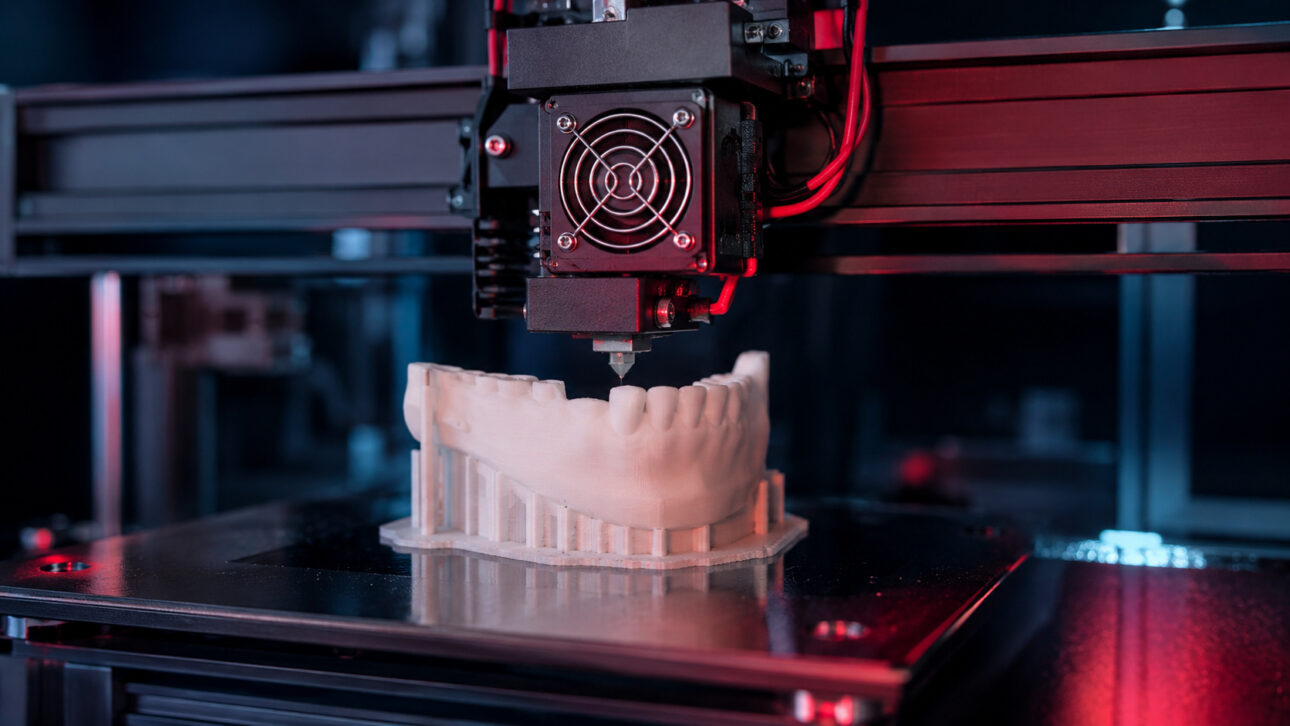
In the medical field, scientists at the Wake Forest Institute for Regenerative Medicine in the United States printed basic structures of a human bladder. The organ was coated with the patient’s own cells, reducing the risk of rejection.
After that, other advances involved miniature kidneys, complex prosthetics, and bioengineered blood vessels.
At the same time, the technology also became closer to the general public.
In 2005, the open-source project RepRap, led by Adrian Bowyer, developed a printer capable of producing most of its own parts.
A few years later, in 2009, MakerBot popularized desktop 3D printer kits. Thus, digital manufacturing began to attract consumers, investors, and companies.
Currently, additive manufacturing is present in sectors such as construction, architecture, design, medicine, energy, electronics, the automotive industry, and aerospace.
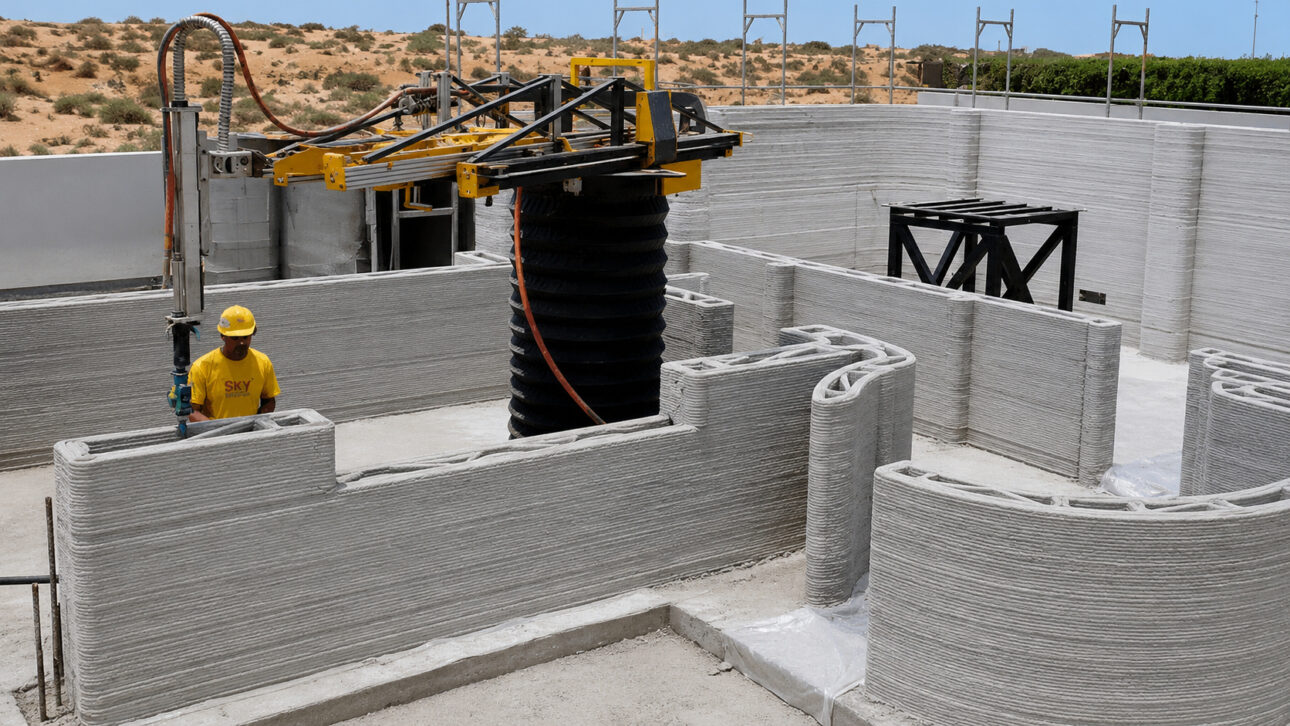
In construction, for example, the technology allows for the creation of walls and structures more quickly.
In 2016, a Chinese company printed a two-story house in 45 days. In the same year, Apis Cor printed the structure of a 37-square-meter house in just 24 hours.
In architecture, 3D printing helps in creating physical models from digital projects. In product design, it accelerates testing, adjustments, and prototypes.
With the advancement of materials, the technology also began to work with metals, ceramics, resistant polymers, superalloys, and even human tissues.
Thus, 3D printing is no longer just a technological curiosity. Today, it represents a real tool for producing parts, prosthetics, structures, and industrial solutions.
According to Lux Research, the 3D printing market could reach US$ 51 billion by 2030. Additionally, data from Statista indicated significant expansion of additive manufacturing between 2020 and 2026.
For Todd Spurgeon of America Makes, the next advances are expected to gain momentum in electronics, medicine, and the aerospace sector.
Therefore, 3D printing carries a long trajectory, starting in science fiction and solidifying in the industry. And, most importantly, it remains one of the most promising technologies in modern manufacturing.