Portuguese
  Spanish


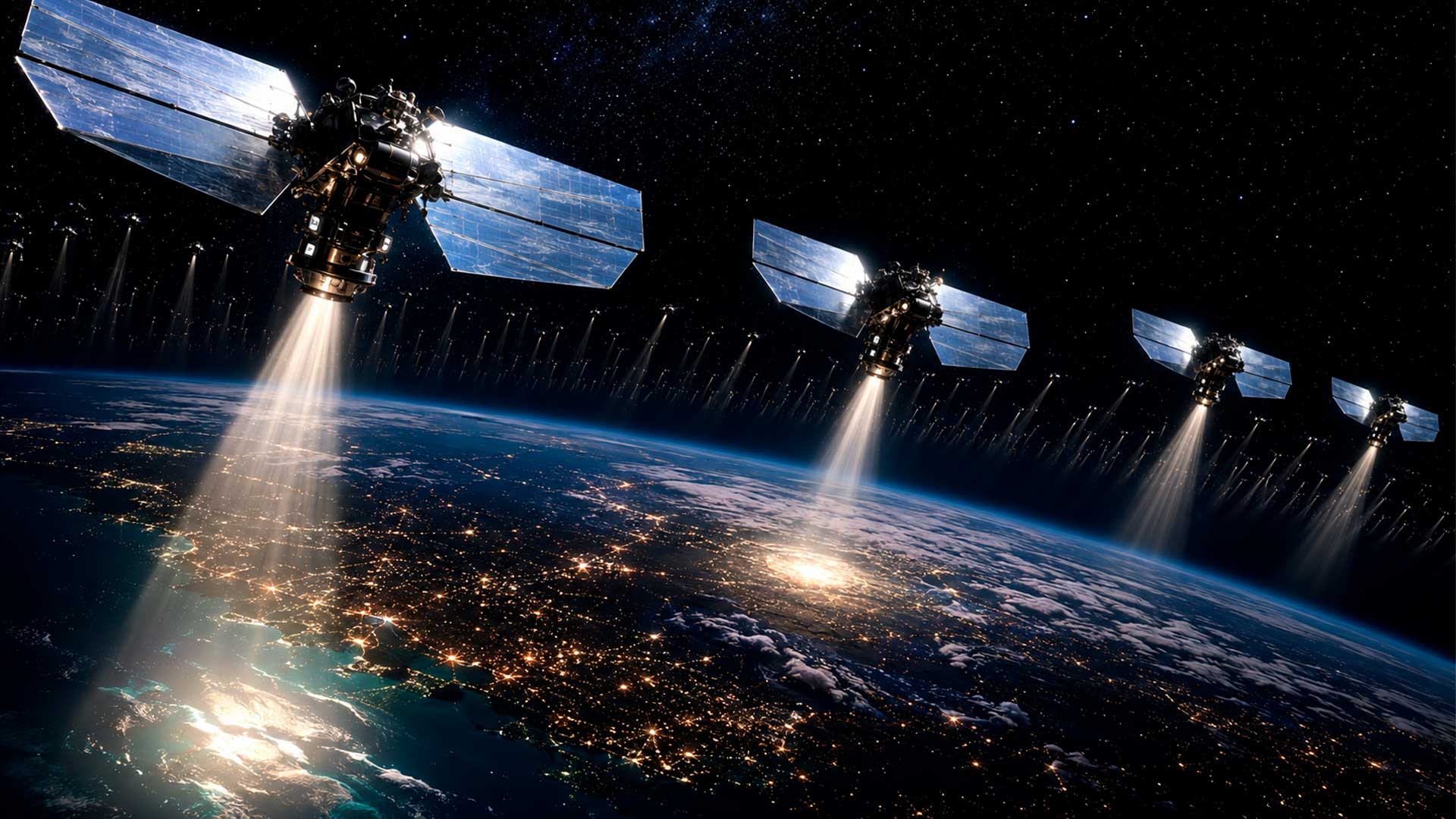

Reflect Orbital’s project envisions satellites capable of reflecting sunlight to specific points on Earth, but the request under review in the United States has sparked reactions from astronomers, environmentalists, and scientific entities concerned about turning night into a commercial service.
The idea of illuminating Earth at night with mirrors in space has moved from the realm of science fiction to the desks of U.S. regulators. The American startup Reflect Orbital is trying to advance with the demonstration satellite Earendil-1, presented as the first step towards a future network of reflectors in orbit.
The plan draws attention for its ambitious scale. The company talks about more than 50,000 satellites by 2035, capable of redirecting sunlight to specific areas of the planet during the night.
In practice, it would be a kind of “sunlight on demand,” contracted for industrial operations, emergencies, solar farms, construction, agricultural areas, and cities.
-
Brazil’s Cost-Cutting Housing Design Leaves Southern Residents Vulnerable to Cold Winters

-
Entrepreneur Turns Sweaty Helmet Problem into Million-Dollar Business with National Cleaning Machine, Aiming for $12 Million and 300 Locations by 2026 Amid Growing Demand from Delivery Services and 35 Million Motorcycles in Brazil
-
Orphaned Youth Turns Dismissed Idea into Global Prestige with Innovative Wristwatch

-
English Skills Boost Career Opportunities in the Oil and Gas Industry




The initial request does not, by itself, authorize a complete constellation. What is under review is a demonstration phase. Even so, the case has opened a broader discussion about who can decide when and where the night should remain dark.
The first step is a test satellite, but the plan goes far beyond it
According to Reflect Orbital, its constellation would start with a few satellites in 2026 and grow in stages to surpass 50,000 units by 2035. The company itself reports that the service could range from 0.1 lux, brightness comparable to a full moon, to 36,000 lux for hours, a level associated with daylight, in future scenarios with many satellites operating together.
The proposal works through ultra-light reflectors installed on satellites in low Earth orbit. These mirrors would be positioned to redirect sunlight to a defined area on the ground, without relying on poles, cables, or generators at the illuminated location.
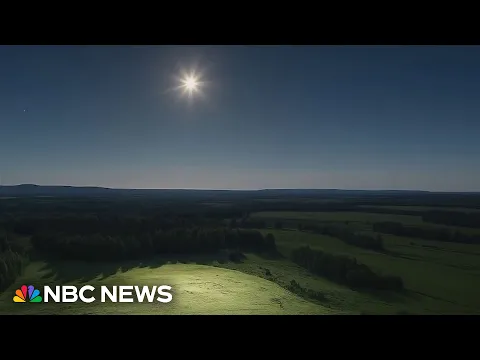

The company claims that the light could be turned on, off, and adjusted by programming. It also says that the beam would be directed to a specific area, with a promise not to spread light beyond the contracted point. This detail is one of the most contested points by experts, because any calculation error, atmospheric dispersion, or operational failure could affect neighboring regions.
In commercial use, Reflect Orbital cites applications such as reinforcement for solar plants after sunset, lighting disaster areas, search and rescue, agriculture, construction, and replacing part of public lighting.
The FCC’s analysis became the center of the dispute over the night sky
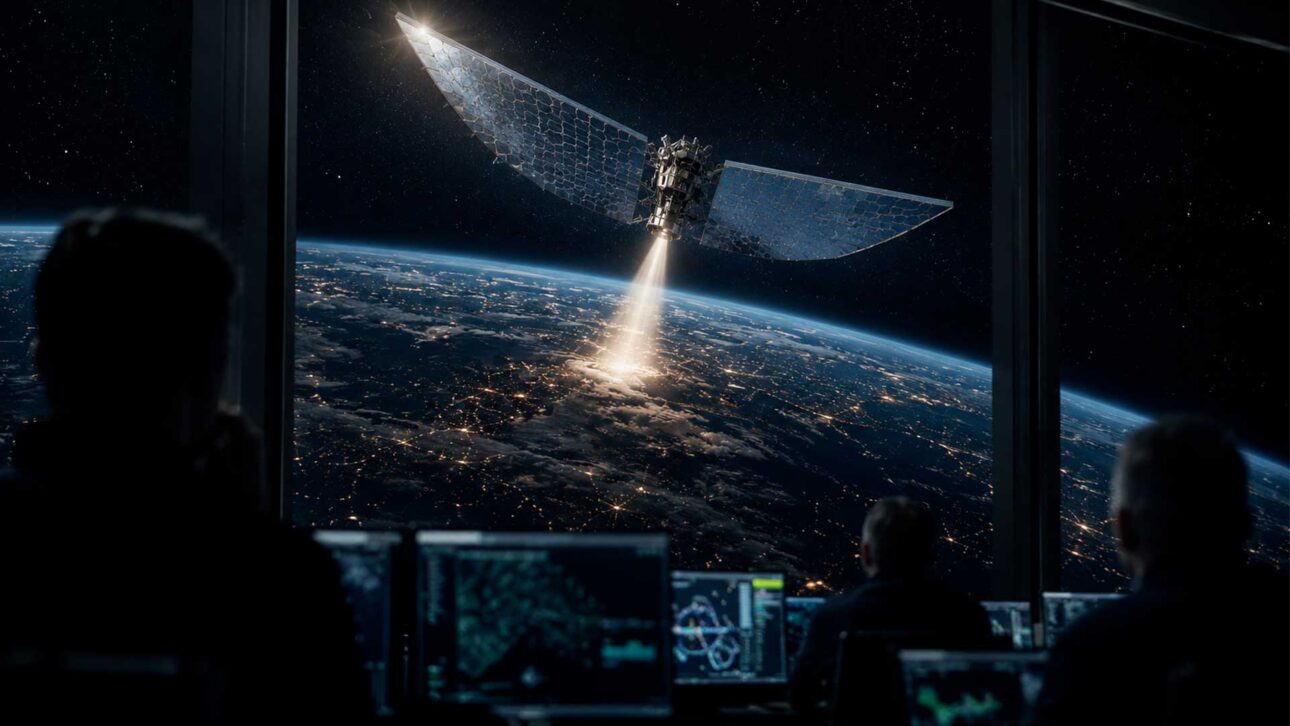
The project came into the public radar because Reflect Orbital filed with the United States Federal Communications Commission, the FCC, a request related to Earendil-1. As reported by the American Astronomical Society, the file associated with the case is SAT-LOA-20250701-00129, with the deadline for public comments ending on March 9, 2026.
The demonstration satellite planned by the company would use a thin-film reflector about 18 meters by 18 meters, at an approximate altitude between 600 and 650 kilometers. The AAS states that the proposal targets a beam about 5 kilometers in diameter on the Earth’s surface.
The sensitive point is that the initial authorization goes through a national body, but the potential impact does not respect borders. An orbital light system could affect observatories in different countries, migratory routes, protected natural areas, and communities that would not participate in the American regulatory decision.
The discussion also exposes a gap in the commercial space race. Communication satellites have already altered the routine of observatories, but a system designed precisely to reflect light at night changes the scale of the problem.
Astronomers fear that the mirrors will erase part of the observable sky
The harshest reaction came from the astronomical community. The problem is not just seeing a bright spot passing in the sky. For telescopes, scientific cameras, and long-exposure observatories, reflective satellites leave trails that can render images useless, contaminate data, and delay research.
The Royal Astronomical Society stated in March 2026 that Reflect Orbital’s plans could make the night sky three to four times brighter in certain scenarios and hinder ground-based observations. The entity also warned that each beam could surpass the light of the full moon and contaminate areas outside the main illuminated point.
This warning does not appear in isolation. A study led by NASA researchers, cited by Reuters in December 2025, estimated that light emitted or reflected by low-orbit satellites could contaminate images from space telescopes. In the case of the Hubble, the cited projection was about 40% of images affected, while some current or planned observatories could reach 96% of images with interference.
For astronomy, the practical risk is losing observation time, increasing costs, and making it difficult to capture faint objects, such as asteroids, distant galaxies, and transient phenomena. In observatories with a busy schedule, a lost image is not just a discarded file. It can mean months of waiting for a new window.
The concern is not limited to telescopes
DarkSky International, an organization dedicated to preserving the dark sky, states that orbital lighting systems would create a new source of artificial night light and should undergo formal environmental review before any deployment. The entity also points out risks of collisions and debris generation due to large mirrors in low orbit.
The environmental critique has two fronts. The first is the light itself. The dark night regulates the behavior of animals, plants, and humans. The second is the space infrastructure needed to keep thousands of reflectors operating, maneuvering, and avoiding collisions in an increasingly congested orbital region.
According to NASA, debris in low orbit travels at about 7 to 8 kilometers per second, with average impacts between objects potentially reaching about 10 kilometers per second. At this speed, even small fragments carry enough energy to damage satellites and generate new pieces of space debris.
This data makes the scale of the project even more delicate. A constellation with tens of thousands of satellites does not only depend on launch. It requires permanent control, safe disposal, diversion capability, and clear rules for failures.
Sleep, animals, and ecosystems are on the list of risks
Artificial light at night is already treated by researchers as a factor capable of interfering with human health and ecosystems. A systematic map of evidence published in the journal Environments analyzed 552 studies on artificial night light and health, including relationships with sleep, circadian rhythms, physical and mental health.
In the human body, the alternation between light and dark helps organize the biological clock. Exposure to light during the night can alter sleep, hormone production, and alertness. The debate around Reflect Orbital becomes more sensitive because the lighting would come from outside the traditional local infrastructure.
Wildlife is also vulnerable. International guidelines from the Convention on the Conservation of Migratory Species of Wild Animals state that artificial light can disrupt migrations, reproduction, and behavior of species, with examples involving sea turtles, birds, and other animals that rely on darkness to navigate.
Therefore, the central question is not just whether the technology works. The issue is who sets the usage limits, which areas would be excluded, how they would be monitored, and who would be responsible for damages if the light affects observatories, natural reserves, communities, or migratory routes.
The technological promise now faces a difficult question
Reflect Orbital sells an enticing idea to sectors that depend on energy, lighting, and quick response in critical situations. In natural disasters, for example, light over an isolated area could aid rescue teams. In solar plants, it could extend production by a few minutes or hours during peak demand times.
But the collective cost is still unclear. A technology capable of turning night into a commercial product simultaneously affects science, health, space regulation, orbital safety, and environmental preservation.
The case of Earendil-1 has become a political and scientific test. If the demonstration progresses without a comprehensive evaluation, other similar projects may use the precedent to accelerate larger constellations.
The discussion, at its core, is simple to understand and difficult to resolve. Should the night continue to be a natural limit shared by all, or can it become a service sold on demand by private companies? Leave your opinion in the comments and say whether you see this project as a useful solution for emergencies and energy or a risk too great for the sky, sleep, and life on the planet.