Portuguese
  Spanish


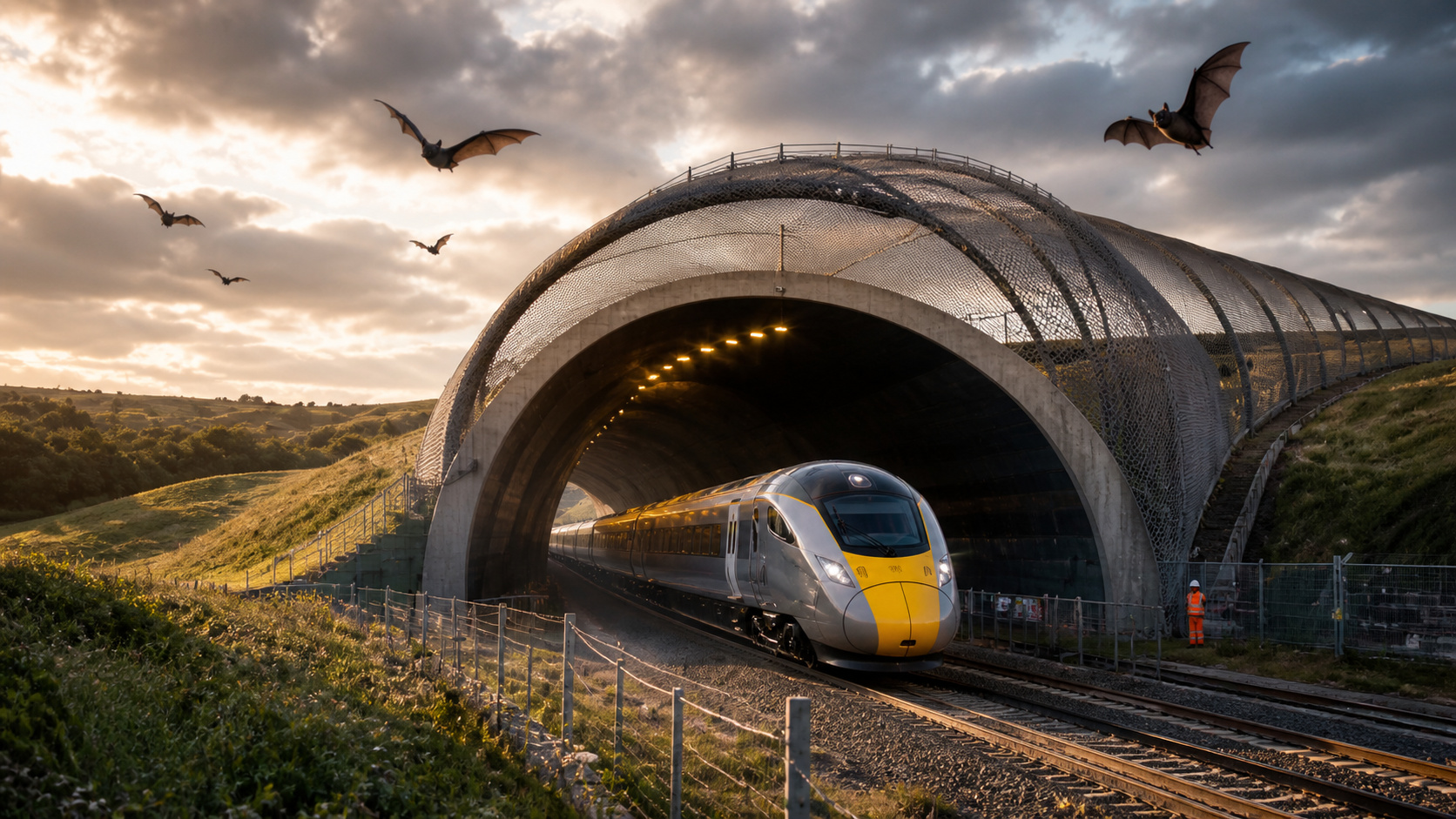

Structure created to protect rare Bechstein bats exposed the weight of environmental licensing, put HS2 under new public pressure, and became an example of how a billion-dollar project can lose support when specific costs seem difficult to explain
The over £100 million bat tunnel on the British high-speed train HS2 became one of the most curious cases of billion-dollar infrastructure projects in the United Kingdom.
The structure was planned in Buckinghamshire to protect Bechstein bats, a legally protected species. The investigation was published by The Guardian, a British newspaper for international news and reports.
The case gained repercussion because HS2 was already under criticism for delays and cost increases. Now, a billion-dollar project built to protect rare bats has become a symbol of public waste, environmental bureaucracy, and political weariness.
-
New York removed the tracks from over 2,500 subway cars and dumped everything at the bottom of the Atlantic, and what seemed like trash turned into an artificial reef teeming with fish and divers.

-
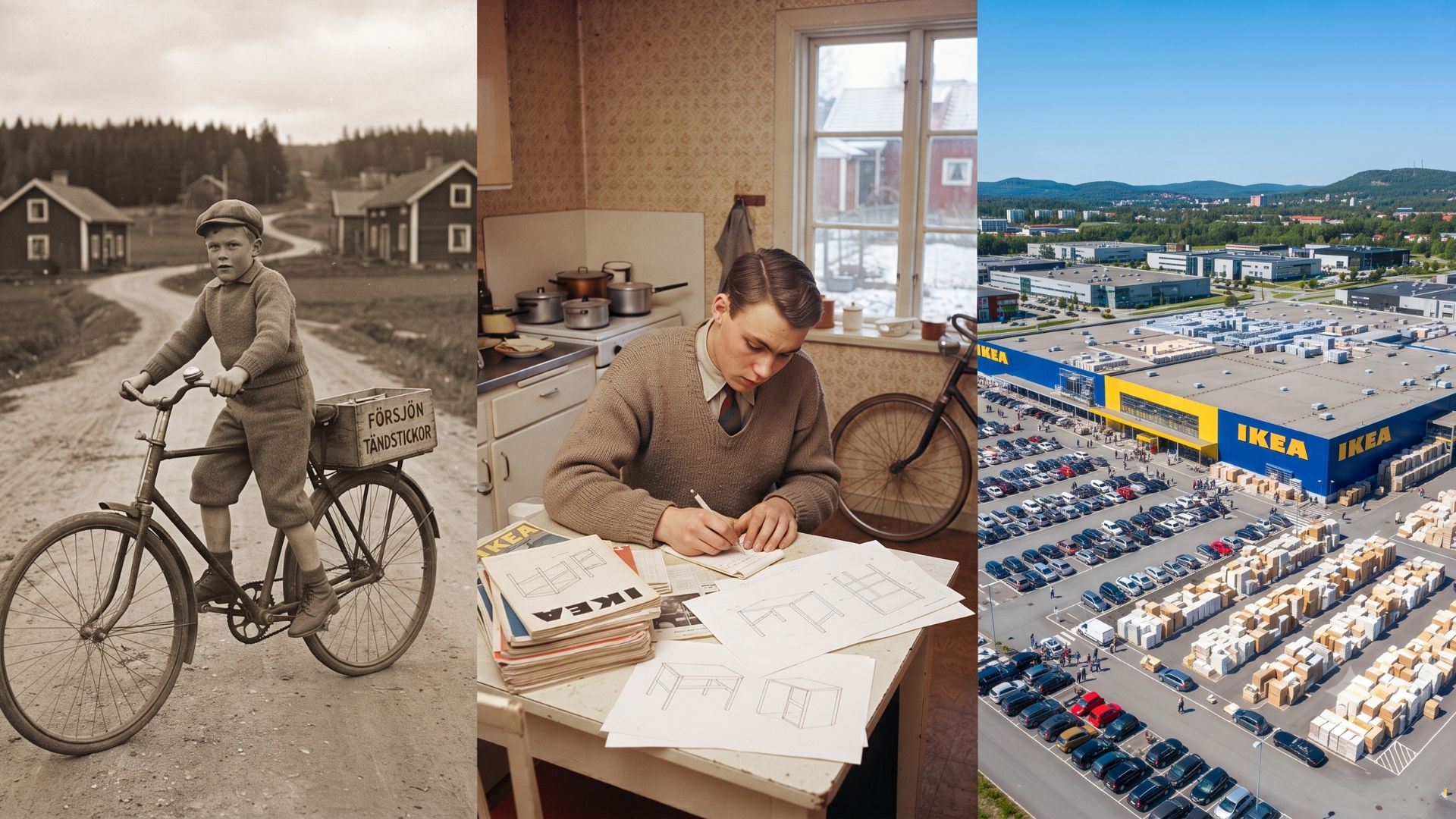
From matches sold by bicycle at age 5 to a global furniture empire: the lumberjack’s son founded IKEA at 17 in his uncle’s kitchen and transformed a small company into the largest furniture retailer on the planet.
-
The mansion in Flamengo, built in 1865 for the Baron of São Clemente and closed for 20 years, has become a spa, event hall, and gym for “Symphony,” a luxury condominium that sold 70% of its gross development value in the first month on the R$ 60 million land of the former Bennett College.

-
The Ipiranga convent, a 1924 building adjacent to the Museum that remained vacant for a decade and became home to dozens of cats, is reborn as “Alma Mater,” a luxury development worth R$ 130 million with a pool in the courtyard and a clubhouse in the former nuns’ chapel.




HS2 bat tunnel exceeded £100 million and became target of criticism in the UK
The structure became known as the bat shed, an expression used to refer to the protection installed near the high-speed line. The work aims to prevent Bechstein bats from being hit or disoriented by trains.


The value drew attention: the cost exceeded £100 million. For critics, the figure became proof that the railway project lost control over expenses and obligations.
The impact went beyond engineering. For part of the public, the bat tunnel came to represent a simple question: how did a billion-dollar railway end up marked by such an expensive structure to protect small and rare animals?
Bechstein bats put a billion-dollar railway before environmental rules
Bechstein bats are protected by law in the United Kingdom. This means that works capable of affecting these animals must adopt measures to reduce risks.
In the case of HS2, the chosen solution was a protective structure in the railway’s path. In simple terms, it functions as a cover that tries to keep bats away from the danger caused by trains.
This type of environmental care can be mandatory in large projects. However, when the cost exceeds £100 million, protection ceases to be a technical detail and becomes a political issue.
The Guardian reported the cost, location, and reaction to the so-called bat shed
The Guardian, a British newspaper for international news and reports, reported that the mesh structure will be 1km long and built where the London Birmingham high-speed line exits a tunnel in Buckinghamshire.
Sir Jon Thompson, chairman of HS2, criticized the cost of the structure at an industry conference. His quote helped amplify the controversy: “This shed, you’re not going to believe this, cost more than £100m.”
The statement made the tone of the debate clear. The billion-dollar project was not treated merely as environmental protection, but as an example of how the cost of a requirement can become a public scandal.
Environmental licensing became a central part of the HS2 high-speed rail crisis
Environmental licensing exists to prevent projects from causing severe damage to nature. In large projects, it may require studies, authorizations, and specific solutions for sensitive areas.
On HS2, this process became central to the discussion because the railway already had schedule and budget problems. With the bat tunnel, the pressure increased even further.
The most delicate point is that environmental protection does not appear in isolation. It is part of a huge infrastructure project, already questioned for rising costs and difficult political decisions.
Critics see public waste, defenders point to legal obligation
For critics, the bat tunnel shows overly expensive environmental bureaucracy. The image of an over £100 million structure for bats became a strong argument against how the project was managed.
Advocates of the measure see the case differently. The protection would be a consequence of legal obligations and choices made in the planning of HS2.
This conflict explains why the case made headlines. It’s not just about bats, but about public money, environmental rules, and confidence in the government’s ability to deliver major projects.
An environmental protection became a national joke and exposed HS2’s struggles
The nickname bat shed helped transform a technical solution into an easy-to-understand symbol. The expression simplified the debate and made the project seem even stranger to the public.
The irony is strong: a bullet train created to modernize British transport ended up being ridiculed for a structure for bats. The case thus became an example of how details of a billion-pound project can dominate popular perception.
With this, HS2 began to carry another burden on its image. In addition to delays and high costs, there is now the memory of a bat tunnel that exceeded £100 million.

Case shows the challenge of protecting nature without losing cost control
The episode exposes a real difficulty of large-scale projects. It is necessary to protect rare species and comply with the law, but it is also necessary to explain expenses clearly to the public.
When an environmental solution exceeds £100 million, communication needs to be very strong. Otherwise, the public tends to see only waste, even when legal obligations are involved.
HS2’s bat tunnel became a portrait of this clash. The project mixes engineering, nature, politics, and public money in a case that seems absurd but reveals a serious planning problem.
In the end, the British bullet train gained fame for an unexpected reason. A structure created to protect Bechstein’s bats ended up becoming a symbol of political wear and tear and doubt about cost control in megaprojects.
Do you think a public project should pay any price to protect a rare species, or is there a limit where the environmental solution starts to demand another type of planning? Leave your opinion in the comments and share this post with those who also follow debates on infrastructure and the environment.