Portuguese
  Spanish


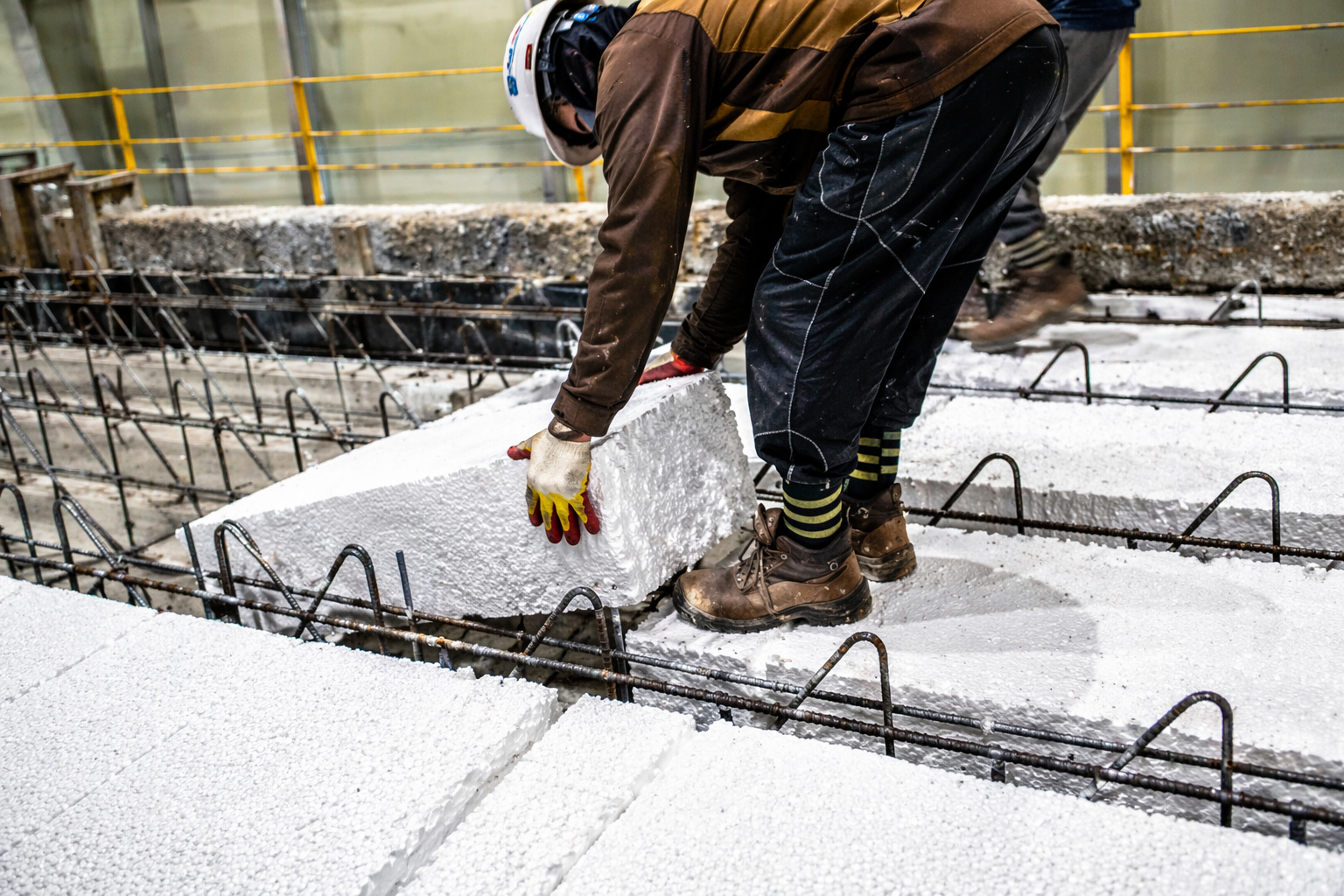

New slab technology with foam makes constructions lighter and more efficient, with fewer columns and better space utilization
The method that uses foam inside the concrete slab is transforming building construction by combining strength with weight reduction. The technique uses EPS inside the structure, creating lighter pieces without compromising safety.
In practice, this allows for projects with fewer columns and more open space, which is ideal for parking lots and warehouses. Additionally, there is an improvement in thermal and acoustic comfort, something increasingly valued in projects.
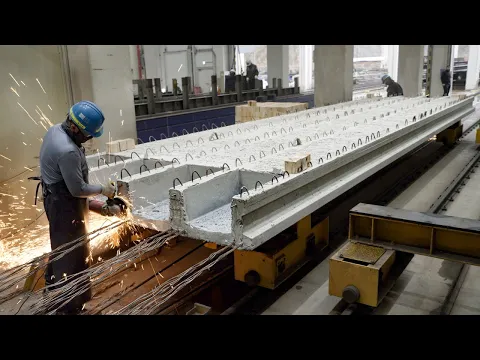

How the slab with foam and tensioned steel works
The production begins with the assembly of the mold and the rebar, which forms the support base of the structure. Next, high-strength steel wires are installed, positioned to ensure the stability of the assembly.
-
Bruno Guimarães, 28, Misses Crucial Penalty Against Norway in World Cup After Replacing Vinicius Jr.

-
Inspired by a school lesson on Africa’s water crisis, a young boy raised money through chores to fund a well that transformed a Ugandan community.

-
Brazilian Construction Worker Moves to France, Earns Up to €2,500 Monthly with Home Renovations, Gains Social Media Attention

-
US Navy Sinks USS Oriskany with 230 kg of C-4, Creating World’s Largest Artificial Reef in 37 Minutes





These wires undergo a high-tension process before concreting. This technical detail creates an internal force that increases durability, helping the concrete to better withstand time and continuous use.
After that, the concrete is applied and distributed evenly. Removing air is essential at this stage, as it prevents internal failures and ensures that the slab is fully filled and resistant.
Use of EPS makes the slab lighter and improves insulation
EPS, known as foam, is inserted into the structure to form controlled empty spaces. This reduces weight without compromising the strength of the assembly.
This material also improves the performance of the construction, as it aids in thermal and acoustic insulation, in addition to absorbing impacts. The result is a more efficient and comfortable structure.
The information was released by Factory Monster, a channel specialized in industrial process videos on YouTube, which showed the step-by-step of the manufacturing of this type of slab.
Curing stages ensure strength and durability
After concreting, the slab undergoes a curing process in a controlled environment. The use of steam accelerates hardening and ensures that the material reaches its maximum strength.
After this period, the structure is completely rigid. At this moment, final adjustments are made, such as cutting the ends of the steel wires and preparing for use.
This process ensures a resistant, uniform slab ready for application in demanding projects.
Hollow slabs allow constructions with fewer columns
The hollow shape of these slabs is one of the major differentiators. It reduces the total weight of the structure and allows for a decrease in the number of columns needed in the construction.
This brings important advantages, such as more internal space and better utilization of the built area, especially in large projects.
Factory Monster, a channel specialized in industrial process videos on YouTube, also showed that this type of slab is ideal for large spaces, such as parking lots and warehouses.

Industrial production ensures efficiency and standardization
The manufacture of these slabs can reach large dimensions, up to 150 m in length before the final cut. After molding, the material goes through automated stages until curing and finalization.
The pieces are then cut according to the needs and prepared for assembly. The fitting is done precisely, like a puzzle, facilitating installation on site.
This industrial model ensures speed, standardization, and quality, essential factors for modern construction.
Simple technology improves performance and reduces costs
The combination of concrete, tensioned steel, and EPS shows how simple solutions can yield great results. The slab with foam delivers strength, lightness, and efficiency in a single system.
This method helps reduce structural costs, improve the comfort of environments, and speed up the progress of construction. Therefore, it is gaining traction in different types of projects.
If this content was useful to you, leave your comment and share it with others interested in construction and innovation.