






 Portuguese
  Spanish


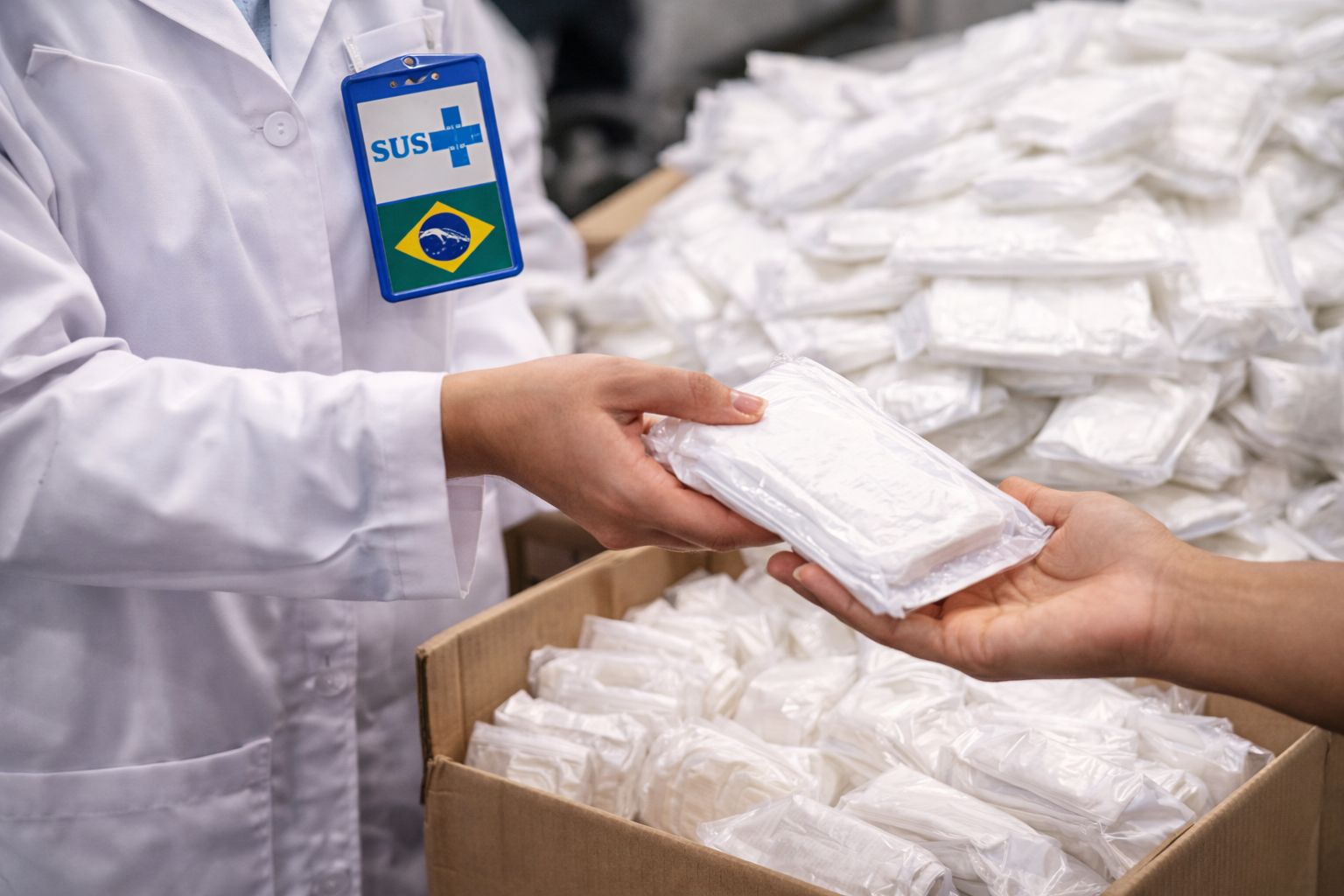
The SUS has already distributed around 500 million free sanitary pads in two years through the Menstrual Dignity Program, benefiting more than three million people with an investment exceeding R$ 248 million. Women aged 10 to 49 registered in CadÚnico can collect 40 units per authorization at pharmacies of the Popular Pharmacy.
The SUS has already placed more than 500 million free sanitary pads in the hands of those in need. In two years of operation, the Menstrual Dignity Program distributed these units with an investment that exceeded R$ 248 million and benefited more than three million people across Brazil. To collect free sanitary pads through the SUS, it is necessary to be between 10 and 49 years old and meet at least one of the program’s criteria: being registered in CadÚnico with a monthly income of up to R$ 218, being a low-income student from the public network, or being homeless. The collection is done at pharmacies accredited to the Popular Pharmacy with CPF and a photo ID.
The program exists because the lack of sanitary pads is a problem that goes far beyond hygiene. Studies indicate that school-age girls can miss up to six days of classes per month due to lack of access to sanitary pads, and adult women have compromised access to work, culture, and leisure for the same reason. The general coordinator of the Popular Pharmacy, Bruno Fernandes, emphasized that “this item brings dignity and more gender equality” and that “it is not just a health program, but an initiative with various other benefits.” The SUS has transformed the sanitary pad into a public policy issue, and the numbers show that the demand is real.
How to collect free sanitary pads through the SUS step by step
The process to obtain sanitary pads through the SUS is simpler than many people think. The first step is to obtain the withdrawal authorization, which can be issued in two ways: in person at Basic Health Units or digitally through the Meu SUS Digital app or website. For low-income students from the public network, the authorization can also be generated through the program’s Pé-de-Meia consultation page. The document is valid for 180 days, giving the beneficiary enough time to organize the collection.
-
JBS Halts Beef Production for China as Brazil Exceeds 50% of 1.106 Million-Ton Quota; Tariff May Rise from 12% to 67%, Raising Concerns Over Cattle Prices.

-
Brazil’s Social Security Alters Biometric Rules for Pensions and Benefits, Sets 30-Day Deadline, Expands Requirements, and Clarifies Who Is Exempt from Immediate Update

-
Major Brazilian Supermarkets, Including Carrefour and Assaí, May Close Earlier to Prevent Price Increases
-
Coca-Cola Shuts Down 100-Year-Old Factory in the U.S., Impacting 85 Workers and Shaking Local Community with Historic Consequences


With the authorization in hand, the collection is made at any pharmacy accredited to the Popular Pharmacy program. For each authorization issued by the SUS, the beneficiary can collect 40 sanitary pads, a quantity calculated to cover two menstrual cycles. At the pharmacy, just present the CPF and a photo ID. It is not necessary to bring the SUS card or a medical prescription. The process is free from start to finish, with no cost to the beneficiary.
Who is entitled to the free sanitary pads distributed by the SUS
The Menstrual Dignity Program of the SUS serves women and people who menstruate aged between 10 and 49 years, but it is not open to the entire population in this age group. There are three eligibility criteria: being registered in CadÚnico with a monthly income of up to R$ 218 per person, being a low-income student enrolled in the public education system, or being homeless. At least one of these criteria must be met for the person to be entitled to the withdrawal.
The age range of 10 to 49 years includes girls who are just starting to menstruate to women approaching menopause. For the SUS, including adolescents from the age of 10 is essential because menstrual poverty affects those who are in school the most, a period during which absence due to lack of sanitary pads can compromise learning and increase the risk of dropout. The program recognizes that ensuring access to sanitary pads is not a luxury; it is a basic condition for girls and women to fully participate in social life.
What the program numbers reveal about menstrual poverty in Brazil
The 500 million sanitary pads distributed by the SUS in two years are not just an impressive statistic; they are a measure of a problem that Brazil has faced in silence for decades. More than three million people have benefited from the program, indicating that millions of Brazilian women could not afford to buy sanitary pads on their own and relied on makeshift solutions like toilet paper, cloths, or even newspaper to deal with their menstrual cycle.
The investment of over R$ 248 million by the SUS in free sanitary pads may seem high, but the returns are measurable. Every girl who no longer misses school because she has sanitary pads is a girl with a better chance of completing her studies, entering the job market, and escaping the vulnerability that made her eligible for the program. For the SUS, the cost of distributing sanitary pads is significantly lower than the social cost of a generation of women being kept away from school and work due to the lack of a basic hygiene item.
The role of Farmácia Popular in the distribution of sanitary pads by the SUS
The Farmácia Popular program, which was already known for distributing free or discounted medications, has gained a new function with the Menstrual Dignity Program. The pharmacies accredited to Farmácia Popular are the pickup points for the SUS sanitary pads, which significantly expands the program’s reach by using a distribution network that already exists and is spread across practically all Brazilian municipalities.
This logistical choice is strategic. Instead of creating a new distribution structure, the SUS took advantage of the reach of Farmácia Popular to bring sanitary pads to locations where Basic Health Units may not be available or where the operating hours of the UBS do not meet the routine of the beneficiaries. The accredited pharmacies operate during extended business hours and are present in neighborhoods and small towns where public health infrastructure is limited, facilitating access for those who need it most.
What still needs to improve in the SUS sanitary pad program
Despite the impressive numbers, the program has room to grow. It is estimated that millions of eligible women have not yet picked up sanitary pads through SUS, either due to lack of knowledge about the program, difficulty accessing CadÚnico, or lack of information on how to generate the authorization. Promotion in public schools, which directly serve one of the main target groups, is one of the avenues that can expand the initiative’s reach.
Another point of concern is the number of sanitary pads per authorization. The 40 pads available for each issuance cover two menstrual cycles, but for women with heavy flow, the quantity may be insufficient, forcing them to supplement with out-of-pocket purchases or wait for the next authorization. Nevertheless, the SUS program represents the largest public effort ever made in Brazil to tackle period poverty, and the 500 million sanitary pads distributed prove that the demand justifies every penny invested.
SUS has already distributed over 500 million free sanitary pads through the Menstrual Dignity Program. Did you know you could pick up sanitary pads for free at the pharmacy? Do you know someone who needs this information? Share and comment.







Be the first to react!