






 Portuguese
  Spanish
  4 min of reading
  0 comments


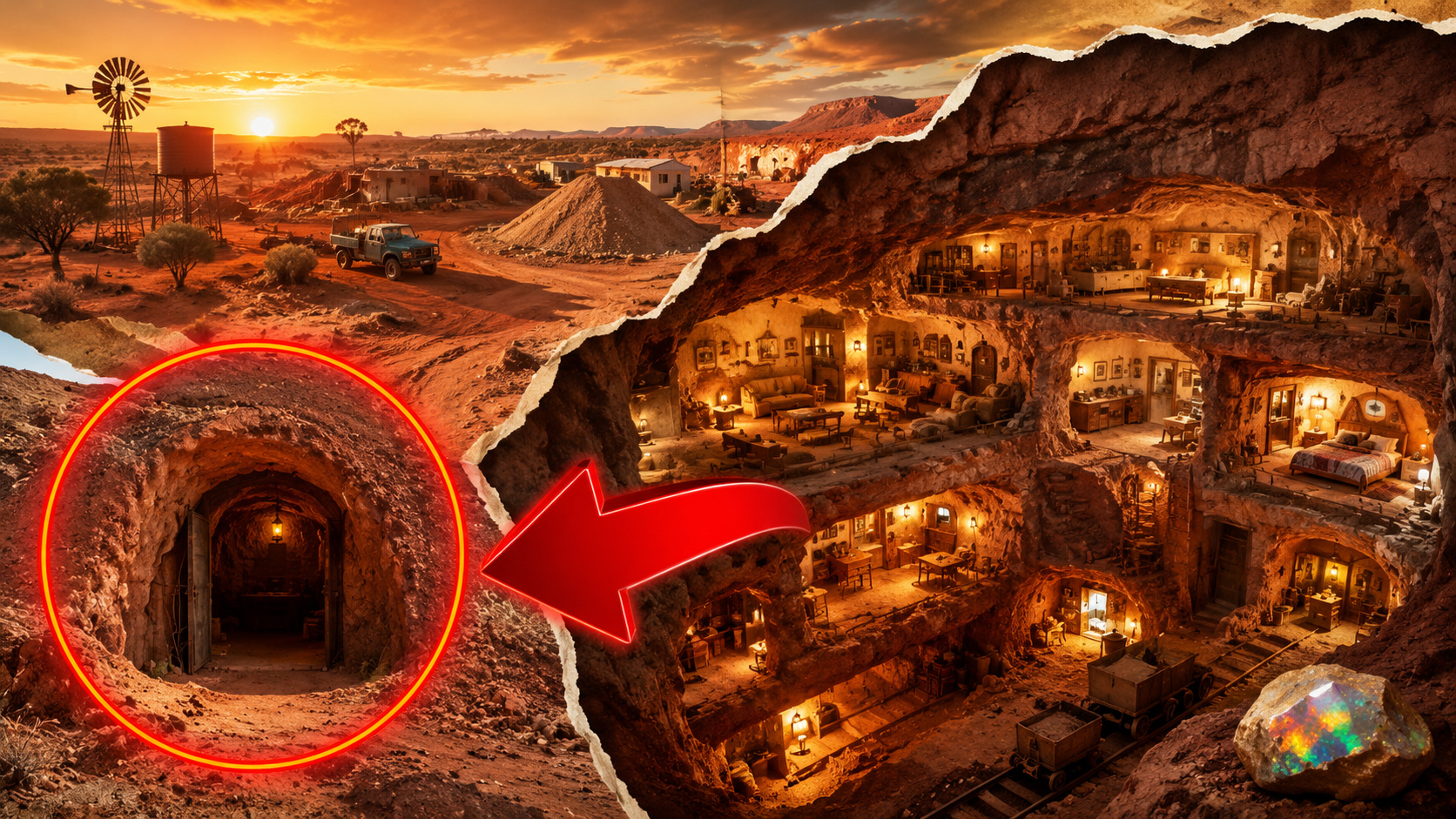
Coober Pedy, in Australia, has underground houses at 23°C and has lived off opal since 1915, transforming the desert into a city underground.
In the far reaches of the South Australian outback, a town decided to face the desert in a way that seems unlikely even today: by going underground. In Coober Pedy, located 850 kilometers north of Adelaide and with a population of approximately 2,000 people, much of everyday life takes place in rock-dug homes known as dugouts. The place was born from the opal rush and ended up becoming one of the most radical examples of human adaptation to a hostile environment.
The town became known worldwide not only for mining but for its ability to transform the underground into a permanent refuge. According to the official local tourism website, more than half of the families live in underground dwellings, where the temperature remains between 23°C and 25°C throughout the year. The Smithsonian Magazine notes that in summer, the surface heat can reach 113°F in the shade, about 45°C, which helps explain why Coober Pedy became synonymous with underground living.
Coober Pedy was born from opal and became a world symbol of desert adaptation
The origin of Coober Pedy is directly linked to the discovery of opal. According to the District Council of Coober Pedy, the stone was found in the region in February 1915 by members of the New Colorado Prospecting Syndicate, after weeks of unsuccessfully searching for gold.
-
SBT host, Otávio Mesquita had his R$ 7.5 million mansion in Morumbi destroyed by a storm in 2019, with damages exceeding R$ 1 million and no insurance.

-
At 86 years old, a farmer transforms fruits that could rot into free food on the streets, sets up a “Zero Cost” stand every day with oranges, vegetables, and juices, and says that seeing people happy also makes him happy in Santa Catarina.

-
Pablo Marçal charges up to R$ 1,497 per ticket to watch Brazil’s World Cup game in Alphaville, but followers remember that he used to call soccer a frivolity.
-
At 61 years old, comedian Chris Rock has a fortune of up to R$ 500 million, but has lived for 20 years in the same mansion in an environmental preservation area in New Jersey.


The settlement grew around this find and came to be recognized nationally and internationally as the “Opal Capital of the World”, a title that still supports its economic and tourist identity.
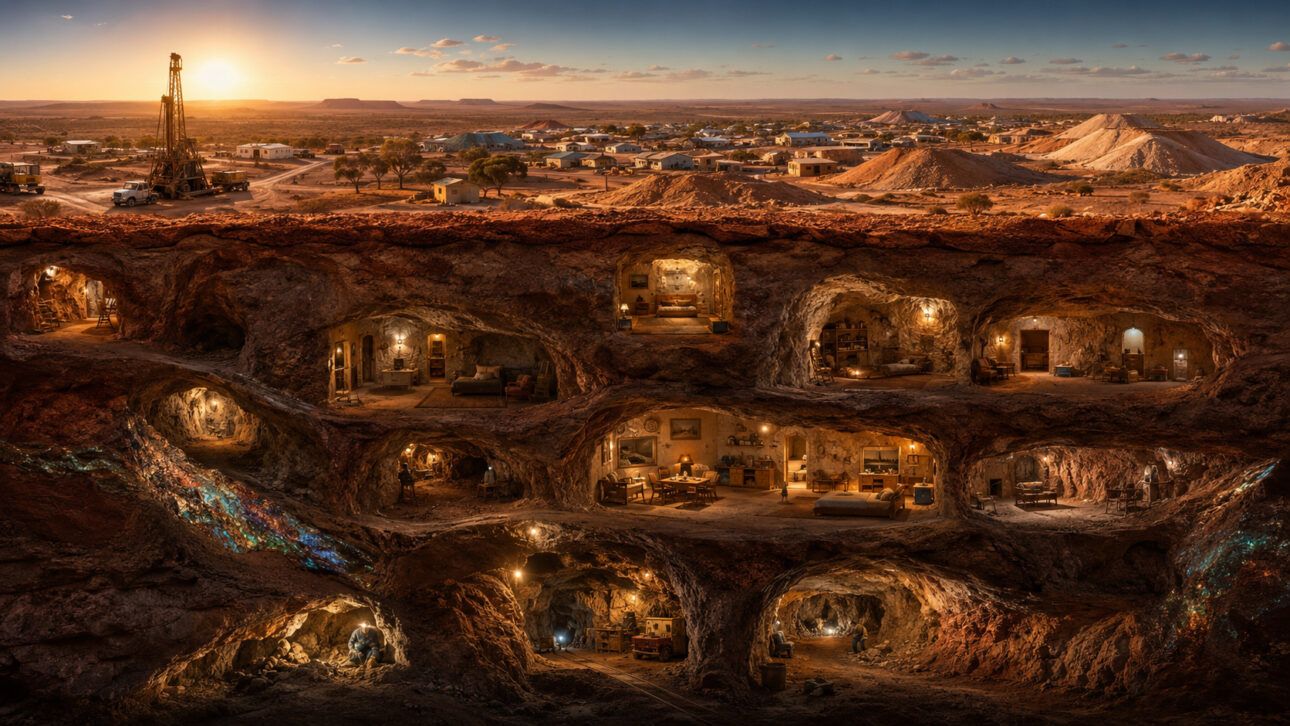
The strength of this activity is enormous. The Smithsonian Magazine reports that about 70% of the world’s opals come from Coober Pedy, a fact that helps explain why the town has thrived in the desert despite extreme isolation and resource scarcity. The very name of the place reinforces this origin: according to the district council, “Coober Pedy” comes from an Aboriginal term translated as “white man in a hole”, a direct reference to mining and the underground occupation of the territory.
Underground houses maintain stable temperature and have become a real solution against extreme heat
The great differentiator of Coober Pedy lies in the dugouts, dwellings dug into the slopes and underground to escape the brutal surface conditions.
The city’s official attractions website states that more than half of the families live in these underground houses and that the internal temperature remains at a pleasant 23°C to 25°C throughout the year. In a region where summer can approach 45°C in the shade, this thermal stability turns the underground into a practical response, not an architectural eccentricity.


The Smithsonian reinforces that about half of the population lives in such dwellings, originally constructed with mining logic and adapted for residential use. Instead of fleeing the desert climate, residents have turned the land itself into a permanent shelter.
The result is a city where the underground is not an exception: it is part of the domestic routine, urban identity, and the way the community has learned to survive in one of the driest and hottest settings in Australia.
Churches, hotel, and galleries show that Coober Pedy has taken entire life underground
The adaptation was not limited to houses. According to Coober Pedy’s official attractions website, the city also hosts underground churches, art galleries, and the Desert Cave Hotel, presented as the first four-star luxury underground property of its kind.
This shows that community life has been pushed underground as the model established itself as the most efficient way to deal with the extreme climate.
The Smithsonian Magazine adds that the city’s underground also includes spaces like a museum, hotel, and even Underground Books, described as the only local bookstore.
Instead of functioning as an isolated curiosity, the underground infrastructure has come to organize a significant part of urban daily life, blending housing, tourism, commerce, and heritage in the same rock-excavated environment.
Australia’s underground city proves that the underground can become a permanent home
Coober Pedy has evolved from being just a remote mining field to becoming one of the most emblematic examples of human adaptation to extreme climate. The combination of opal, geographic isolation, severe heat, and architectural ingenuity has produced a city that operates differently from almost anything else on the planet.
What began with the rush for gemstones ended up creating a unique form of urbanization in the middle of the Australian desert.
More than just a curious landscape, Coober Pedy stands as concrete proof that adaptation can reshape an entire city.
Where the surface became too harsh for daily life, the residents made the underground a stable, habitable, and enduring space. It is this inversion that transforms the municipality into one of the most impressive stories of contemporary Australia.





Be the first to react!