






 Portuguese
  Spanish
  7 min of reading
  0 comments


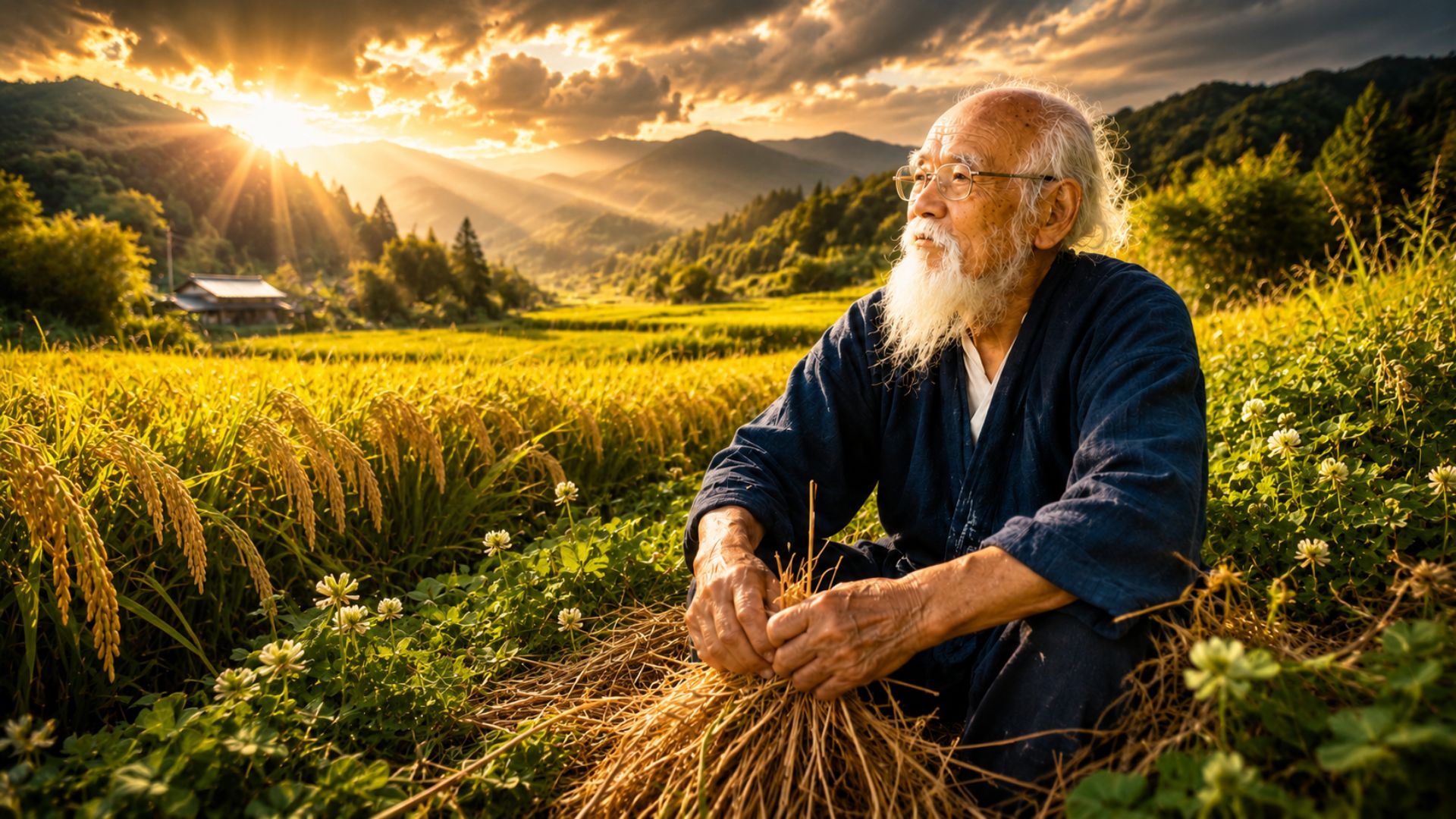
In 1938, the Japanese scientist left a prestigious career to cultivate without plowing, fertilizing, or spraying on the island of Shikoku. Betting on clover and straw, he created natural farming, which today serves as the basis for a program that already reaches 1.76 million producers in India.
Japan called him a fool for using clover and straw instead of fertilizer, but 40 years later, Masanobu Fukuoka’s fields equaled the most productive farms in the country, and the book he wrote was translated into more than 25 languages. The story began with a radical decision and spanned four decades of skepticism before becoming a global reference.
In 1938, after surviving a nearly fatal pneumonia, the young plant scientist left one of Japan’s most prestigious agricultural research careers. According to information from the portal kkbooks and information from the portal apcnf, he took a train back to his father’s tangerine orchard on the island of Shikoku, determined to produce food by doing almost nothing, without plowing, without fertilizers, without pesticides, without weeding, and without flooding the rice fields. While Japan adopted chemical fertilizers, pesticides, and mechanization, Fukuoka removed everything and built a system based on ecological processes, later named natural farming. The book that gathered these ideas became a reference, and today, the principles support a verified program in the Indian state of Andhra Pradesh that reaches 1.76 million farmers.
The day Fukuoka gave up everything
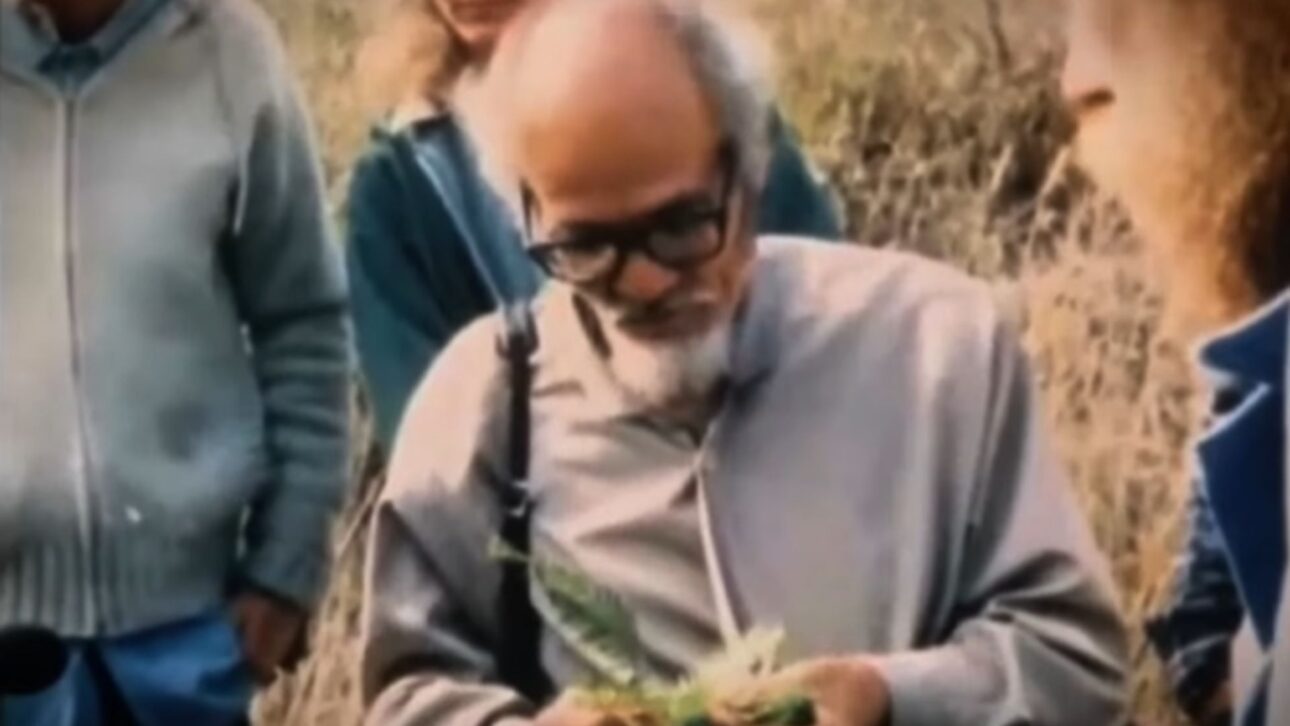
At 25, after weeks in a Yokohama hospital, Fukuoka made a decision that no one around him understood. In 1938, he abandoned his research career and took a train back to his father’s tangerine orchard in Shikoku, carrying a strange idea: nature already knew how to cultivate food, and humans had spent 10,000 years interfering with this process.
-
Bored at home, a 13-year-old teenager discovered tutorials on building studio apartments, raised $1,500, and turned the family’s backyard into a construction site.

-
Few remember, but a woman entered the basement of her own house, dug 9.1 meters underground, installed ventilation, created a mine cart, and became famous on social media before being stopped by authorities.
-
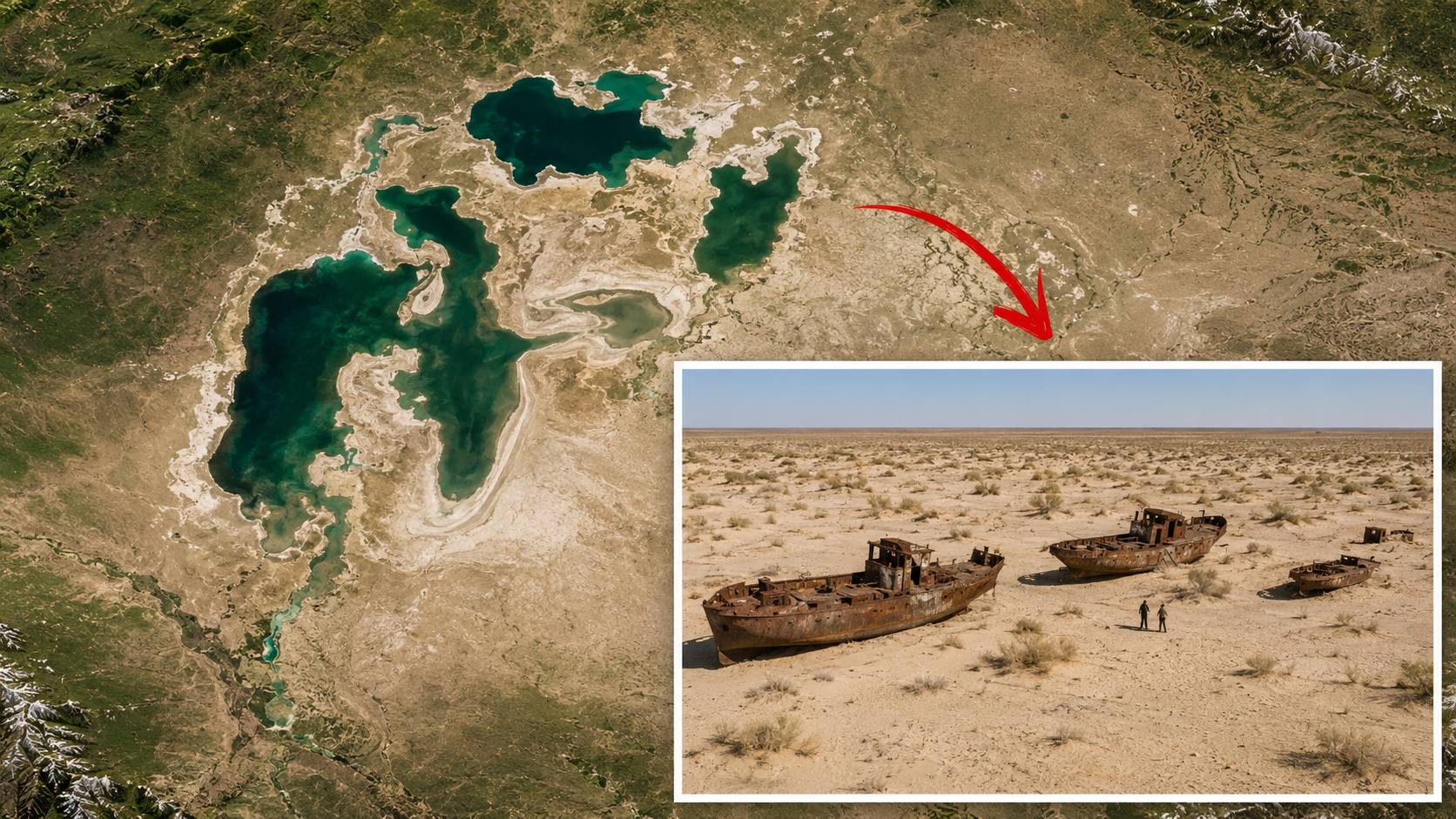
An entire sea disappeared from the map: the Aral Sea, formerly the fourth largest lake on the planet, lost more than 90% of its area in a few decades and left behind a toxic desert where fishing boats rust over 100 km from the water that once supported entire cities.
-
Mother of 4 children started as a salesperson and became the owner of 4 franchises: Pamela Oliveira took over the first unit, saw the revenue more than double, and turned a busy routine into proof that motherhood and business can grow together with organization.



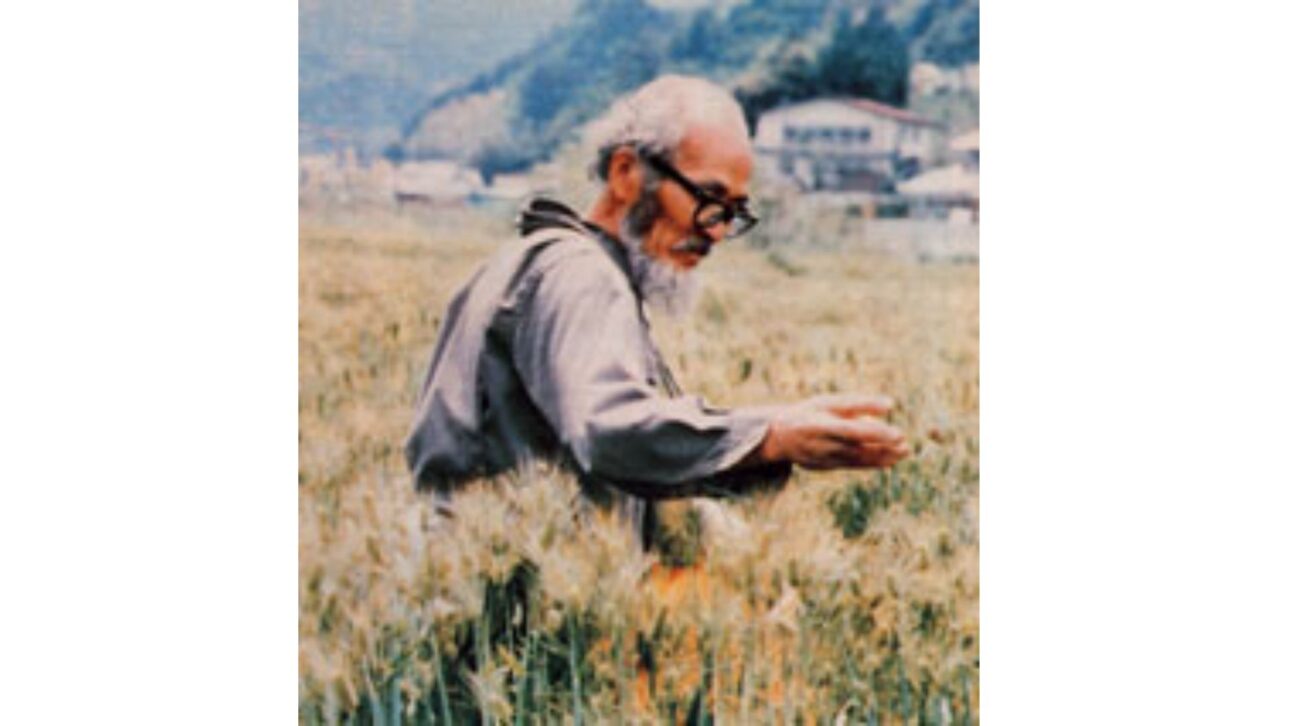
The conviction had been forming for years. As an inspector who had spent three years observing the chemical system from the inside, Fukuoka had seen a vicious cycle where each product created a new problem, requiring another product. One morning, seeing a heron take flight at dawn, he felt that all human categories, between pests and beneficial insects, weeds and crops, good soil and bad soil, were inventions of the mind, and that nature did not divide the world in this way. The radical bet on clover and straw that would come later was born from that moment.
The bet on clover and straw that became a joke
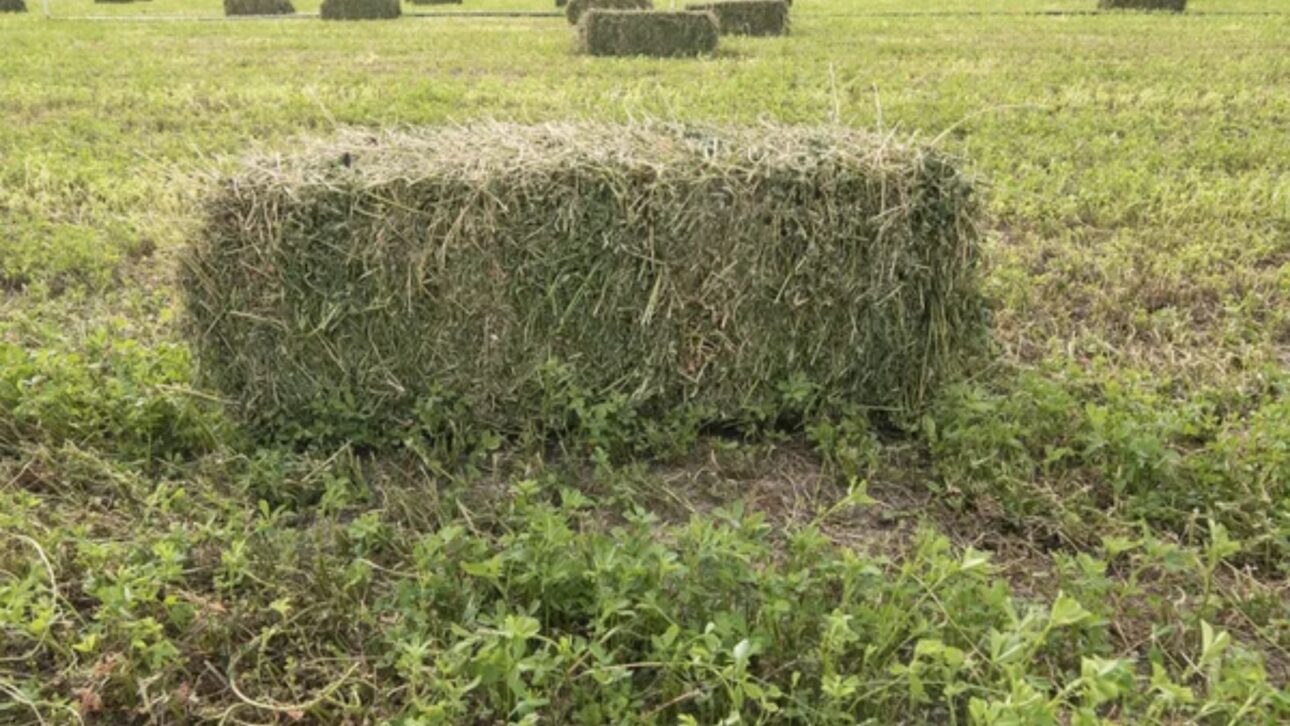
Back in Shikoku, Fukuoka was given a piece of the citrus orchard by his father to experiment with, and there, he literally did nothing: no pruning, no fertilizers, no insect control. In a few months, about 0.8 hectares of tangerine trees, equivalent to 2 acres, collapsed, overtaken by insects and tangled branches, and the neighbors, seeing him scatter rice seeds on non-flooded land covered with clover and weeds, reached a short verdict: he was a fool.
Buried in that disaster, however, was the realization that would define his life. The trees did not die because nature failed, but because they had been raised under human management and were not wild; by removing this management abruptly, they collapsed. There was a difference, he concluded, between natural farming and simple laziness, because nature does not abandon plants, it partners with them, and the partnership he would build was based on clover and straw: white clover covering the ground and a layer of straw on top.
How natural farming worked
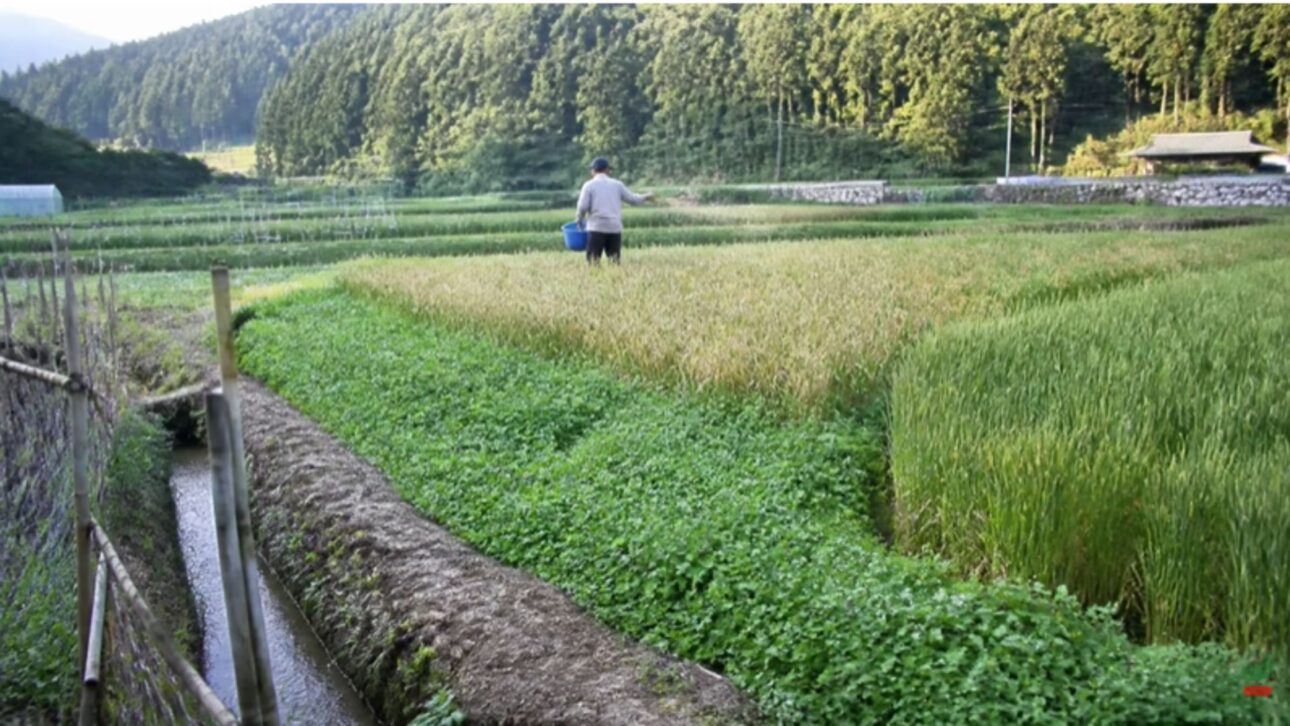
From there, Fukuoka examined every practice of conventional Japanese agriculture and asked if nature really required it. Plowing was left to the worms, roots, and microorganisms; weeding was resolved by a living carpet of white clover under the straw, leaving no space for weeds to grow; fertilizer became unnecessary when crop residues returned to the soil, when clover fixed nitrogen from the air, and when deep-rooted plants like daikon and burdock extracted minerals from below. The combination of clover and straw was at the center of everything.
Flooding, he realized, was a weed control technique, not a requirement for rice, so the rice fields remained dry. The transition was not smooth: the first attempt at mulching almost ruined the harvest because he piled the barley straw too thickly and in clumps, and the rice couldn’t break through, leaving a yield around 20% of the neighbors’, who laughed. But as he learned to spread the clover and straw loosely, the rice sprouted while the weeds were suffocated.
The perfect cycle and the nendo dango seed balls
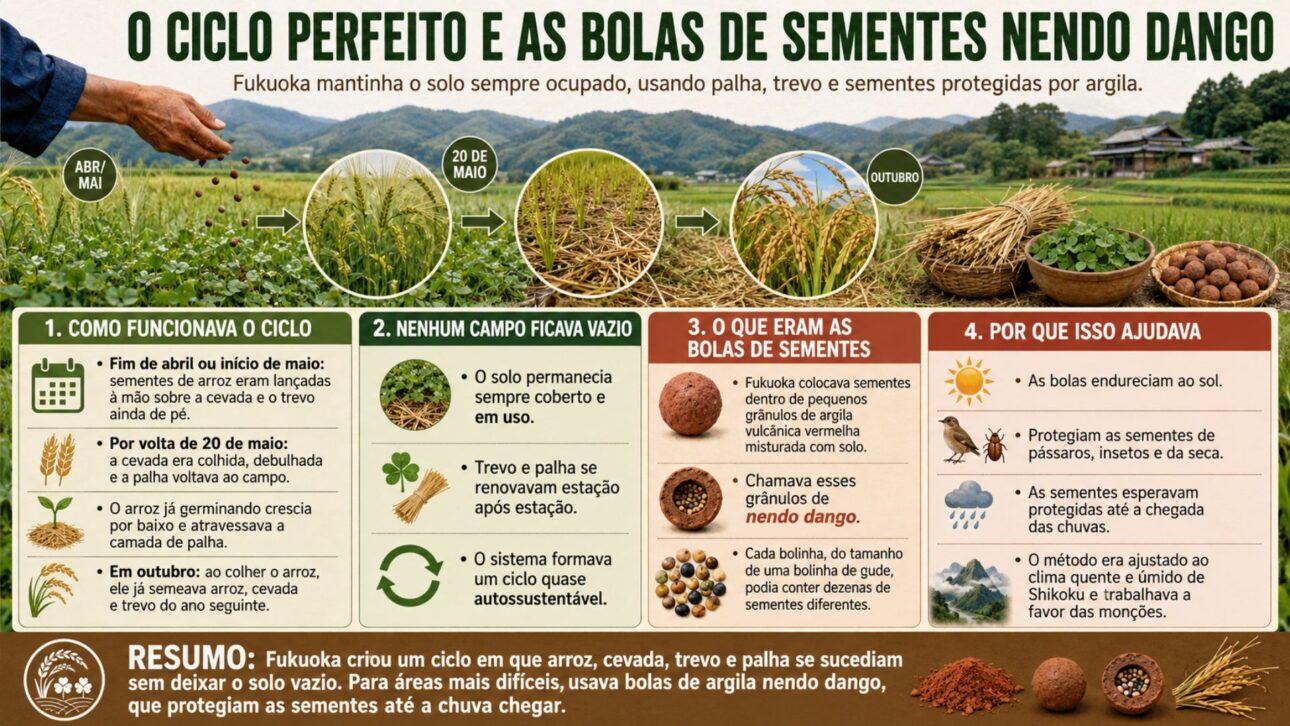
Once adjusted, the cycle began to spin almost on its own. At the end of April or early May, with the barley and clover still standing, Fukuoka scattered rice seeds by hand, directly over the growing crop; around May 20, he harvested the barley, threshed it, and returned the straw to the field, so that the rice already germinating underneath pushed through the layer; and in October, when harvesting the rice, he simultaneously sowed the rice, barley, and clover for the following year, leaving no field empty. The clover and straw renewed themselves season after season.
For the more difficult terrains, he revived an ancient technique used by farmers in Egypt and the Middle East thousands of years ago. Fukuoka inserted seeds into small pellets of red volcanic clay mixed with soil, which he called nendo dango. Each pellet was the size of a marble, could contain dozens of different seeds, and hardened in the sun to protect the seeds from birds, insects, and drought until the rains arrived. The system was not a universal recipe but something adjusted to the hot and humid subtropical climate of Shikoku, where the clover and straw and the clay balls worked with the monsoons, not against them.
The soil that became richer every year
In a land that, by conventional logic, should become poorer each year, the soil did the opposite and became richer. Far from being a passive container to be filled with nutrients, the soil behaved like a living system of microbes, fungi, worms, and roots, all feeding on each other, and what it needed most was not constant intervention, but food, time, and to be left alone, exactly what the clover and straw provided.
The clover fixed nitrogen, the straw fed the microbes, and the deep-rooted plants pulled minerals from below, so that an orchard once eroded to the subsoil had its fertility rebuilt. In the 1980s, those same slopes carried about 800 citrus trees that produced around 90 tons of fruit per year, equivalent to about 200,000 pounds, without fertilizers, pesticides, or pruning, while the work plummeted from hundreds of hours per area to a few days per season. The clover and straw had transformed the endless effort into something closer to care.
The book that became the bible of agriculture and today’s numbers
The farm’s recovery attracted curious visitors, among them a young American named Larry Korn, who lived there for two years. Upon leaving, he took the manuscript that would become The One-Straw Revolution, published in Japan in 1975 and in English in 1978.
The book that celebrated clover and straw was read by influential voices in the movement for better food, such as Frances Moore Lappé and Michael Pollan, was treated as a direct influence by the permaculture movement that Bill Mollison founded, and ended up being translated into more than 25 languages.
Recognition came late. In 1988, Fukuoka received the Ramon Magsaysay Award, often called the Nobel of Asia, as well as a high honor from Visva-Bharati University in India, and in 1997, the Earth Council Award at the Earth Summit Plus 5 forum in Rio de Janeiro, before dying in 2008 at the age of 95.
Today, the idea behind clover and straw supports real numbers: the natural farming program of Andhra Pradesh disclosed on the APCNF portal, launched in 2016 with 40,000 farmers, now reaches about 1.76 million producers and almost 1 million hectares, with the goal of reaching 6 million farmers in the state by 2031, and independently verified results show income between 38% and 66% higher, water consumption up to 50% lower, and emissions per area falling by up to 46%.
Japan called Masanobu Fukuoka a fool for betting on clover and straw instead of chemical fertilizer, but 40 years later his fields in Shikoku equaled the most productive farms in the country, his book reached more than 25 languages, and the natural farming he created became one of the most influential agricultural experiments ever conducted.


What began as a subject of ridicule in a ruined orchard today supports regenerative agriculture across millions of hectares on various continents, from the Andhra Pradesh program, which reaches 1.76 million farmers in India, to a broader movement that treats soil health as the foundation of everything. The bet on clover and straw, once dismissed as nostalgia without science, turned out to be a lesson the world is still learning.
And you, what do you think of Fukuoka’s natural farming, based on clover and straw? Do you believe this regenerative model could work on a large scale today? Share your opinion, respecting different views, and exchange ideas with other readers about agriculture and the environment.





Be the first to react!