Portuguese
  Spanish


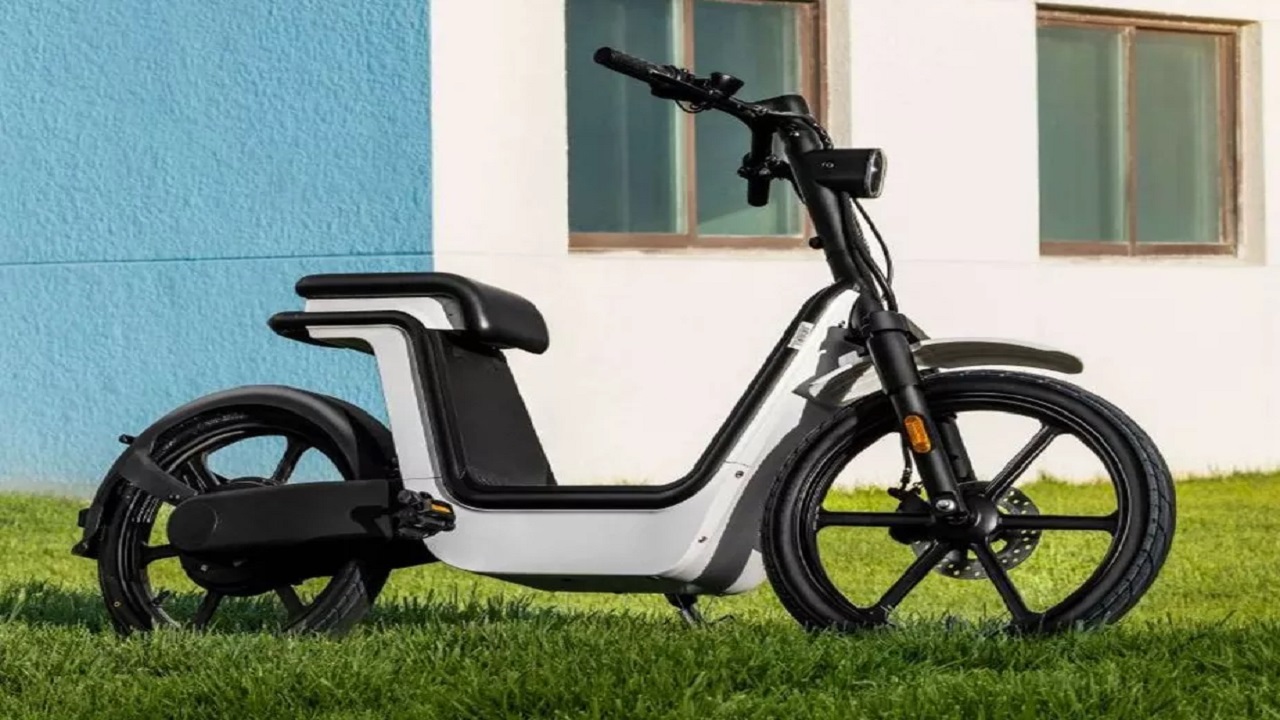

Honda Electric Motorcycle Arrives in the Chinese Market Offering a Range of 65 km and a Top Speed of 25 km/h. The Model is Perfect for Urban Environments and Short Trips.
Electric two-wheeled models are gaining increasing prominence in the market. Whether for cost-effectiveness or various advantages, electric motorcycles are superior compared to a Mobylette, for example. Thus, Honda developed a new electric motorcycle model that features a special design and promises to win the hearts of fans, providing practicality and comfort in a single product.
Honda Electric Motorcycle Features a Minimalist Design
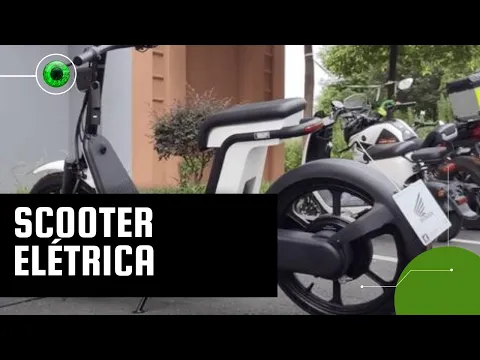

The electric motorcycle, named Honda MS01, was developed through a partnership between Honda and MUJI, a retail chain from Japan. Although there is growing demand around the world, there is one catch: the product in question is an exclusivity of the Chinese market, at least for now. The design of the model is very similar to a Mobylette and focuses on short distances and quick, short commutes.
MUJI is a company that emphasizes ecology and minimalism and developed the sophisticated and modern design of Honda’s electric motorcycle, while the manufacturer has been gaining ground in other sectors, such as mechanics and structure. The Honda model features black, matte, and white tones that express the principles of minimalism.
-
End of an era in Brazil: beloved sedan by Brazilians is discontinued despite having a 2.0 engine with 151 hp, CVT transmission, 466-liter trunk, and up to 650 km of range.

-
New Law Proposal in Brazil Could Heavily Penalize Drivers: Dangerous Overtaking May Become a Serious Offense with Fines Increased Tenfold and a 12-Month License Suspension; Update on 2026 Progress

-
Electric Revolution: Watts W125 Motorcycle Offers 160 km Range, 90 km/h Speed, and Affordable Price Starting at $3,000
-
General Motors Replaces Over a Thousand Workers with 50 Cobots at Electric Vehicle Plant, UAW Union Criticizes Move Amid Industry’s Automation Push




With an electronic throttle and a pedal assist, the model allows the choice of tucking or not tucking the feet up. If it were sold in Brazil, this model would require a specific driver’s license to operate.
The electric motorcycle has 17-inch wheels and tubeless tires, making the vehicle ideal for any type of urban roadway. Additionally, it features a 400 W electric motor that allows for a top speed of 25 km/h.
Electric MS01 Costs Less Than R$ 4,000
Still with no expectation of arriving in the Brazilian market, the model costs around 4,980 CNY in the Chinese market, which, in direct conversion to the real, is approximately R$ 3,818.60. With its cutting-edge yet simple style, Honda’s electric motorcycle would be a great alternative to existing electric bicycles and scooters in Brazil.
The model features a regenerative energy EBS system and a 48V/20Ah lithium battery, which offers a range of 65 km on just one charge. Thus, Honda’s electric motorcycle needs to be charged only once or twice a week, potentially achieving hours of use per day, provided the rider limits trips within the city.
It is worth mentioning that the model does not have additional functionality and has a common handlebar with basic features to keep prices low.
Understand Controversy Between Honda and Shineray
In April 2022, Shineray introduced its new model called Ray 50 to the Brazilian market, a moped launched starting at R$ 8,900. The problem starts with its visual aspect, which bears a striking resemblance to Honda’s Biz.
As a result, the company sued Shineray in December for plagiarism. Shineray still has the right to appeal, but the Ray 50 model has had its sales suspended and no longer even appears on the company’s website.
Honda states that it operates under the principle of fair and free competition, defending the right to intellectual property as a way to foster an environment that encourages innovation. Its models are produced based on extensive development research and testing batteries to ensure quality and safety for consumers.