






 Portuguese
  Spanish
  5 min of reading
  0 comments


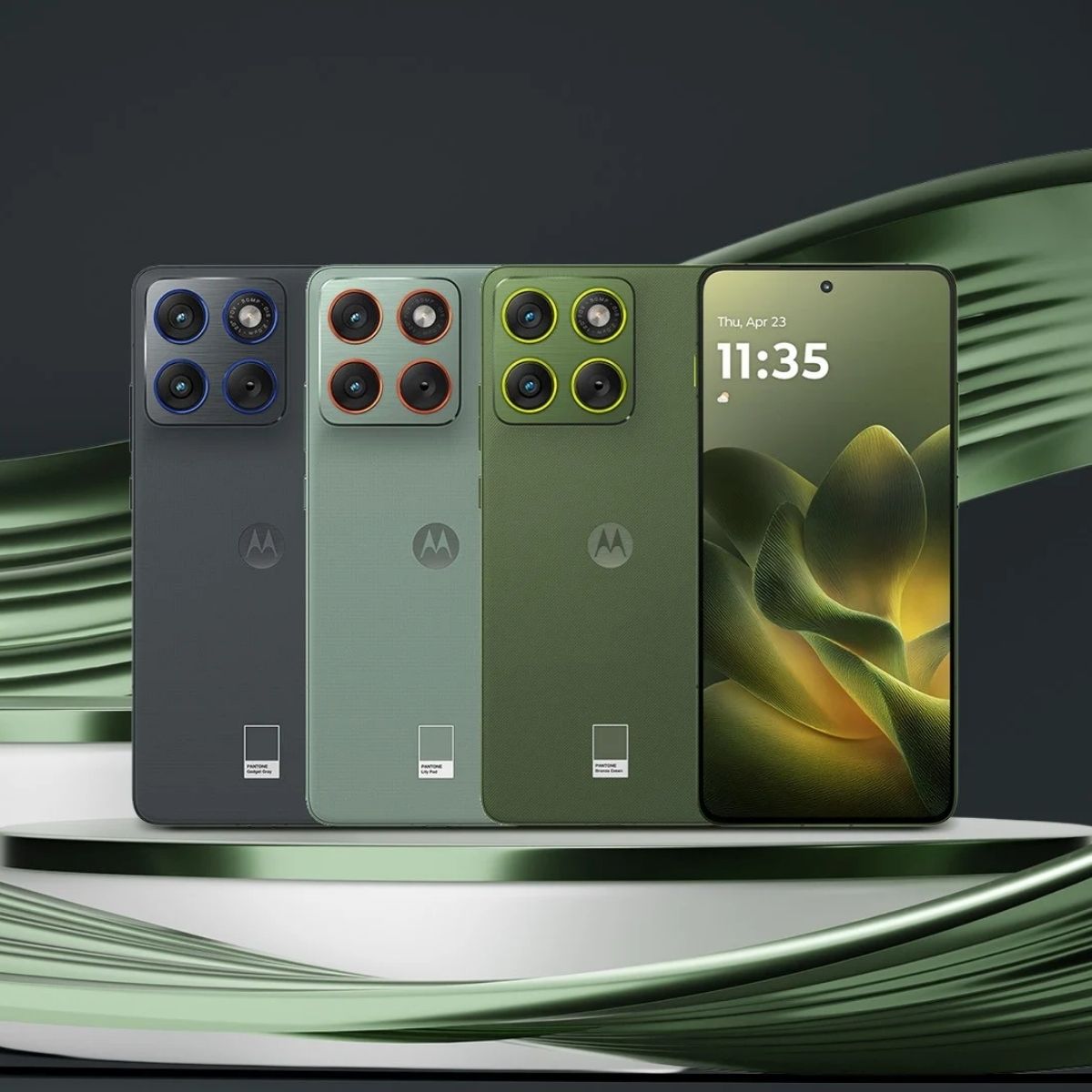
Motorola introduced the Edge 70 Pro with a 6.8-inch pOLED display at 144 Hz and 5,200 nits, Dimensity 8500 Extreme processor, 6,500 mAh battery with 90 W charging, 50 MP Sony main camera, and aluminum body with IP68 certification, launched in India starting at R$ 2,110.
Motorola has released another mid-range device that blurs the line with flagship models. The Edge 70 Pro arrived with specifications that, two years ago, would only be found in flagships: a 6.8-inch pOLED display with a 144 Hz refresh rate, a resolution of 2,772 by 1,272 pixels, a main camera with a Sony sensor, and a peak brightness of 5,200 nits, numbers that place the panel among the brightest and smoothest in its category. The model was launched in the Indian market with an initial price of 38,999 rupees, equivalent to about R$ 2,110, and in the version with 12 GB of RAM, it rises to 41,999 rupees, approximately R$ 2,273.
What makes Motorola competitive in this range is the combination of specifications that typically do not appear together at this price point. 4-nanometer processor, silicon-carbon battery with 6,500 mAh, monoblock aluminum body with Gorilla Glass 7i, and MIL-STD-810H military resistance certification form a package that positions the Edge 70 Pro to challenge more expensive models from other brands. The device runs Android 16 out of the box with the Hello UI interface and promises three years of updates for the operating system and five years of security patches.
What the Edge 70 Pro display from Motorola delivers in practice

The Edge 70 Pro’s panel is one of the main selling points of the device. The 144 Hz refresh rate ensures superior visual fluidity compared to the 120 Hz that have become standard in the segment, a noticeable difference in gaming, scrolling feeds, and interface transitions. The maximum brightness of 5,200 nits allows for comfortable use under direct sunlight, a scenario in which many mid-range devices struggle with reflections that make the screen unreadable.
-
Humanoid Robot Climbs 6,263-Meter Volcano in Ecuador, Sets Sights on Everest Challenge

-
Physicist Harvests Water from Fog in the World’s Driest Desert, Turning Mountains into Water Traps

-
Wikipedia Blocks AI-Generated Edits, Citing Distrust in Automated Systems and Outlining Plans to Use Technology Without Losing Article Control
-
NASA Tests Rover with Lizard-Like Suspension and Independent Wheel Traction, Aiming for Speed Ten Times Faster than Perseverance on Mars




Motorola has also invested in color fidelity. The display features Pantone validation for color and skin tone accuracy, SGS certification against harmful blue light, and motion blur reduction, a set of credentials typically found in high-end devices. The software allows the refresh rate to operate adaptively in specific applications, reducing power consumption when maximum fluidity is not needed, a smart feature that extends battery life without the user noticing a drop in visual quality.
The battery and performance that make the Motorola device seem like a flagship

The silicon-carbon cell with 6,500 mAh is one of the largest available in mid-range smartphones. This technology allows for greater energy density in the same physical volume, meaning Motorola has managed to pack a large battery without making the device excessively heavy: the Edge 70 Pro weighs between 183 and 190 grams with a thickness of 6.99 mm, competitive measurements for a device with such charging capacity. The 90 W TurboPower fast charging via cable speeds up recharging, and there is support for 5 W reverse transfer that allows using the phone as a power source for accessories.
The MediaTek Dimensity 8500 Extreme processor, manufactured using a 4-nanometer process, surpassed 2.4 million points in the AnTuTu benchmark. To keep the chip operating at a stable temperature during heavy tasks like gaming and video editing, Motorola installed a vapor chamber cooling system with 4,600 mm² of area. The model is available with 8 GB or 12 GB of LPDDR5X RAM and 256 GB of UFS 4.1 internal storage, a combination that ensures quick app launches and fast file transfers.
The cameras of the Edge 70 Pro and what Motorola delivers in photography
The main camera system uses the 50-megapixel Sony LYT-710 sensor, a component recognized in the market for good performance in low-light conditions. The ultra-wide camera, also 50 MP, offers a field of view of 122 degrees and supports macro photography with autofocus, versatility that eliminates the need for a dedicated lens for close-ups of small objects. A third multispectral sensor assists the set in calibrating light and color, although Motorola chose not to include a telephoto lens in this generation.
The 50 MP front camera has an f/1.9 aperture and autofocus, capable of recording videos in 4K resolution at 60 frames per second. All lenses of the Edge 70 Pro feature the Moto AI system, Motorola’s artificial intelligence tool aimed at automatic image editing and enhancement, a resource that helps less experienced users achieve quality visual results without manual adjustments. The camera setup is solid for the price range, although the lack of optical zoom may disappoint those who rely on zooming in for distant photography.
Construction, durability, and the design that Motorola chose for the Edge 70 Pro
The device’s body uses a monocoque aluminum alloy with curved edges, protected by Corning Gorilla Glass 7i. The IP68 and IP69 certifications ensure resistance against water immersion and high-pressure jets, while the military-grade MIL-STD-810H rating indicates that Motorola’s device has undergone drop, vibration, and extreme temperature tests. These durability credentials reinforce the proposition of a mid-range device with a 144 Hz display and a 50 MP camera that competes with flagships not only in performance but also in the ability to survive daily use without extra protection.
The color options follow the trend of certified customization: white (Pantone Lily White), green (Pantone Tea), and blue (Pantone Titan). Motorola is expected to expand the distribution of the Edge 70 Pro to other markets in the coming weeks, and an Edge 70 Pro Plus variant may be announced soon, although there is no official confirmation yet. For Brazilian consumers, the central issue will be the arrival price: if Motorola can position the model below R$ 2,500 in the national market, the Edge 70 Pro will have technical arguments in abundance to compete with devices that cost double.
And you, would you pay R$ 2,300 for a mid-range device with these specifications? Do you think Motorola made the right choice by investing in a 144 Hz display and a 6,500 mAh battery in this price range? Leave your opinion in the comments.








Be the first to react!