Portuguese
  Spanish


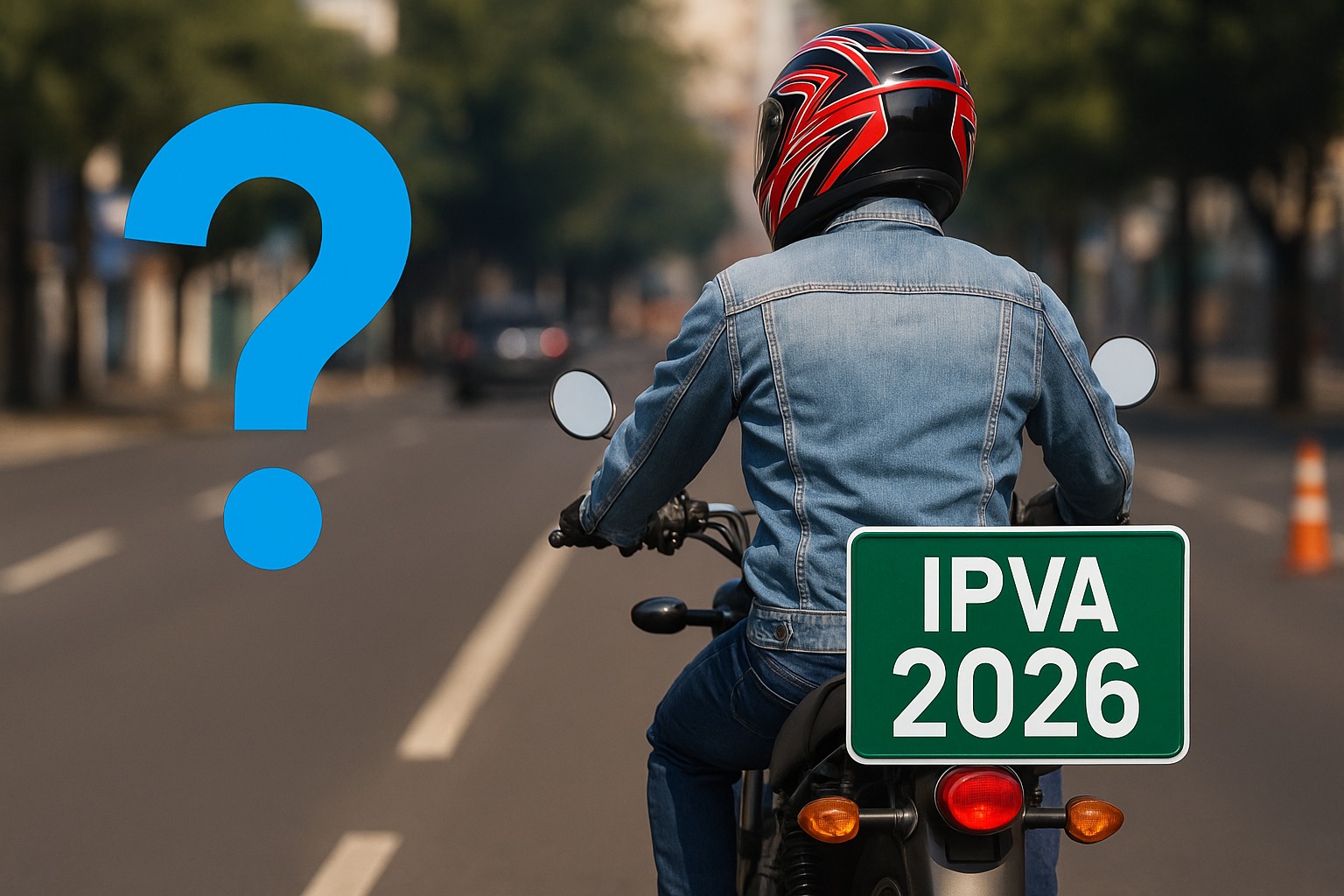


The Approach of 2026 Brings Important Changes for Motorcyclists Because Several States Decided to Apply IPVA Exemption on Small Motorcycles, But Each Government Defines Its Own Rules and the Measure Does Not Automatically Apply to the Whole Country
With the approach of January, many motorcyclists begin to assess the mandatory expenses with taxes. However, 2026 arrives with a different perspective because several states decided to ease the burden on those who use small motorcycles daily. The IPVA exemption, however, does not automatically apply to the whole country.
Exemption for Small Engine Motorcycles: Origin of the Measure
The rule originated from Resolution PRS 3/2019, approved by the Senate. It allowed states to eliminate the IPVA for motorcycles up to 170 cm³.
The authorization does not impose mandatory adherence, so each government chooses how to implement the change. Additionally, the aim is social, as most owners belong to classes C, D, and E.
-
Toyota to Open New Factory in Brazil by November 2026 with $2.2 Billion Investment, Creating 2,000 Jobs, and Ending Corolla Production in Indaiatuba

-
Brazilian Factory Restores Truck Engines and Parts, Reducing Raw Material Use by Up to 85% After 80 Years in Business

-
British Marines Set Record by Changing Ford Escort Engine in 42 Seconds, Unbroken for 40 Years

-
BYD Owners in Brazil Raise Concerns Over Warranty After 87,000 km, Two Repairs in Three Days, and Over $500 in Costs




Social Purpose
These motorcycles are predominantly used as a tool for work. Many use the vehicle for deliveries or simply to avoid public transport.
Therefore, the exemption reduces operational costs and provides significant relief. It serves as a direct incentive for those who depend on their motorcycle daily.
State Criteria
Each government created its own rules. This explains why some expanded the engine capacity range while others require income or proper behavior in traffic.
Different states have adopted different paths, following their own profiles and regional needs.
Paraíba
The state was a pioneer and adopted the measure in 2023. Rule: total exemption for motorcycles up to 170 cm³. Impact: approximately 320,000 owners were relieved from the charge.
Paraná
The benefit remains active and has the largest reach in the country. Rule: exemption for motorcycles up to 170 cm³.
Impact: more than 732,000 motorcyclists no longer pay the tax.
Santa Catarina
Residents of Santa Catarina expanded the limit and created conditions. Rule: exemption for motorcycles up to 200 cm³.
Condition: the driver must not have any fines in the previous year. It is a reward that values good behavior in traffic.
Sergipe
The state adopted a social criterion. Rule: motorcycles between 50 and 165 cm³. Condition: proof of income up to two minimum wages.
Exemption for Motorcycles: What Is Ahead
The expectation is for the measure to expand in 2026. Governors may adopt the exemption as mobility policy.
Even so, if the state has not approved specific legislation, the charge remains active. This applies even to smaller motorcycles, such as the popular 50cc models.
With information from Garagem 360.