Portuguese
  Spanish


The 1985 feat, shown on a British TV program and trained for two weeks, became a synchronized workshop dance that no team has been able to surpass to this day
The Ford technical document was clear: the complete engine replacement of a Ford Escort required 3.1 workshop hours. In 1985, five British marines tore up the manual in front of the cameras of a TV program and performed the entire service in 42 seconds, according to Xataka Brasil in a report from June 23, 2026.
Four decades later, the mark remains untouched. The world record for the fastest engine swap in history remains unbeaten to this day, according to Xataka Brasil, and the video of the feat has been circulating on YouTube for 17 years collecting incredulous reactions from mechanics around the world.
The challenge: record rules, not workshop rules
The feat had strict regulations, and it did not forgive shortcuts or staging. According to MotorBiscuit, the team needed to drive the car to the starting line to prove it worked, turn off and restart the engine, and only on the second stop did the timer start running.
-
BYD Owners in Brazil Raise Concerns Over Warranty After 87,000 km, Two Repairs in Three Days, and Over $500 in Costs

-
Classic Volkswagen Beetles of Brazilian Presidents to Swap Museums in Historic Partnership

-
British Factory Transitions from Mechanical Parts to Producing 420,000 Electric Power Units Annually, Supplying 70% of Ford’s Electric Cars Sold in Europe
-
Toyota Shifts from Hybrid Cars to Electric Air Taxis with Joby’s 6-Rotor Aircraft, Capable of 322 km/h, Aiming for Mass Production to Electrify Urban Skies


From then on, everything counted. The five men had to remove the engine, reinstall the assembly, get into the car, start it, and drive 10 meters to the finish line, according to MotorBiscuit, with the clock stopping only when the rear wheels crossed the final mark. In other words: the 42 seconds even include the meters driven to prove the car was truly running again.
42 seconds on the clock: how the race went
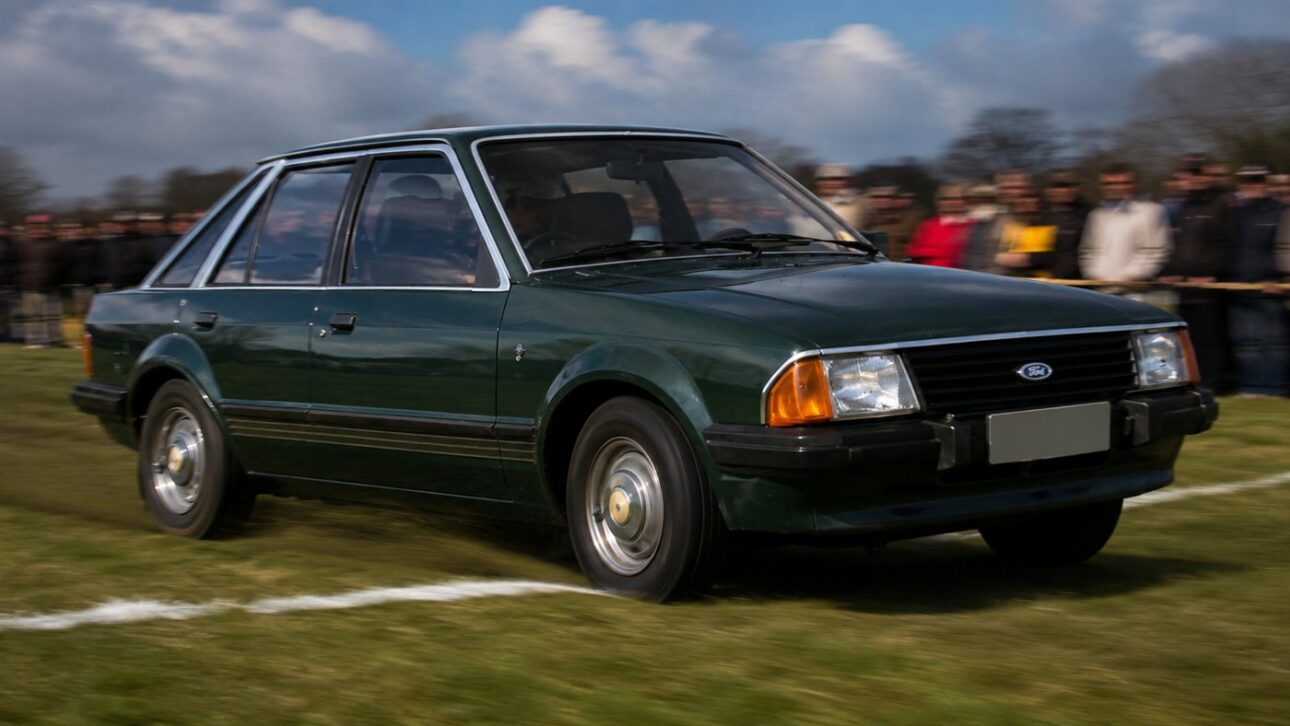
What the cameras captured seems like an editing trick, but it was all in real-time. According to Xataka Brasil, the marines’ work was a perfectly synchronized dance: each man had an exact function, each bolt a designated hand, and the engine block came out and went back into the bay without a moment’s hesitation.
The most impressive detail requires no crane. The engine was carried on the shoulders of the marines themselves, without any lifting equipment, as Xataka Brasil describes. A set that workshops move with hoists and patience flew through the air supported by muscle and coordination, in a style that only a platoon trained to carry heavy equipment in combat could replicate.
Two weeks of training for 42 seconds of glory
None of that was born from improvisation. According to MotorBiscuit, the five members of the British Royal Navy trained for two consecutive weeks with a single goal: to remove and reinstall the engine assembly of a two-door Ford Escort in the shortest time possible.
The math of the training explains the magic of the result. Two weeks of obsessive repetition to compress 3.1 hours of manual work into less than 1 minute of execution, a compression rate of over 260 times the official workshop time. It’s the same principle as a Formula 1 pit stop, where teams rehearse each movement until the body memorizes what the mind no longer needs to think about.
There is also the factor that no civilian workshop can replicate: military discipline. Marines train their entire lives to perform complex physical tasks under time pressure, carrying weight, obeying short commands, and blindly trusting the companion next to them. The Ford Escort challenge took exactly that combat repertoire and poured it over an engine bay, and the result was less a scene of mechanics and more a military operation with a wrench.
Street pit stop: where this logic appears today
The spirit of those 42 seconds survives in places that the 1985 spectator could not have imagined. In modern races, top teams change all four tires of a car in about 2 seconds; in dealerships and quick service centers, entire networks time oil changes and express check-ups in 30-minute windows that would have been unthinkable in the 1980s.
The difference is that today the rush has become a process, not a spectacle. The industry has turned heroic improvisation into a replicable method, with standardized benches, torque checked by electronic tools, and a digital checklist for each tightening, the opposite path of the marines, who sacrificed torque precision on the altar of the stopwatch. Between the TV record and the certified workshop, the common lesson is one: time is gained in preparation, never in haste.
The trick that torque reveals: what was left out
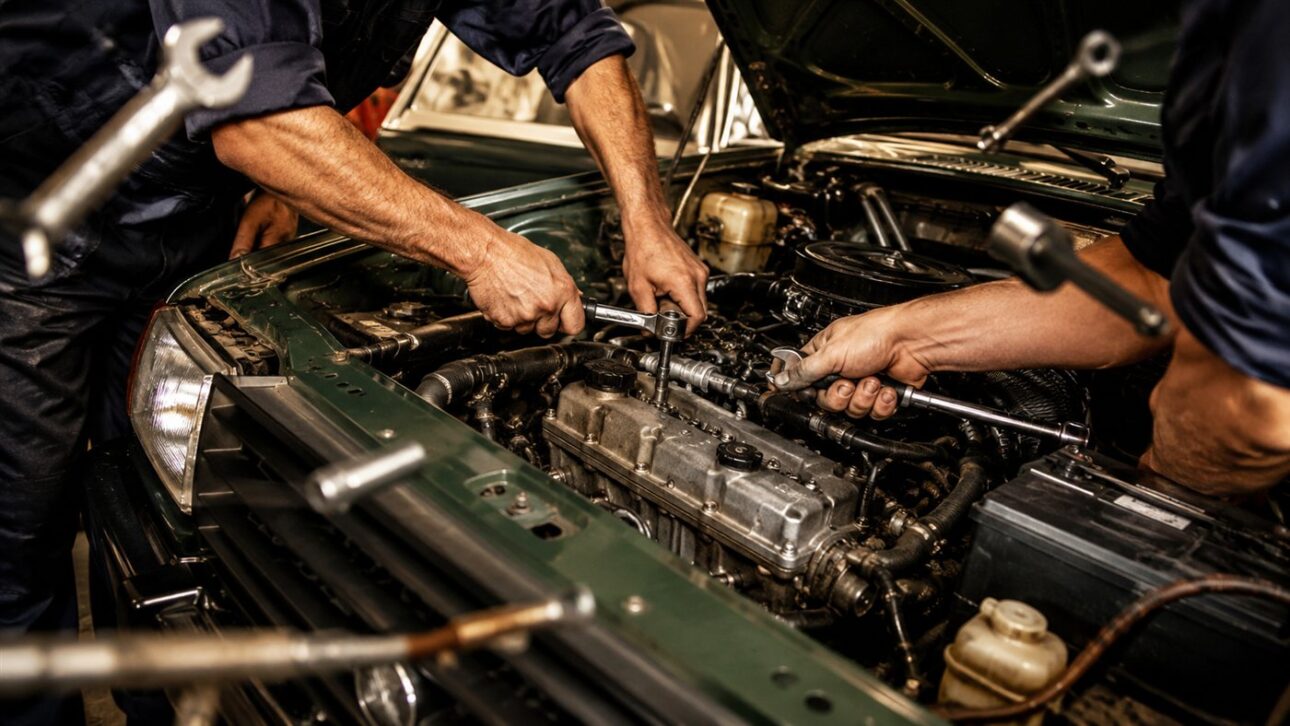
The record is real, but technical honesty is part of the story. According to Xataka Brasil, the sound and movement of the car at the end were not ideal: the screws were not tightened with the correct torque, and the fluids were not changed, which no mechanic would recommend for a car that was to be driven for real after the exhibition.
The caveat does not diminish the feat, it defines what was proven. The challenge measured the speed of removal and functional reinstallation, not a complete workshop overhaul, and the car fulfilled the golden rule of the regulations by starting and crossing the final 10 meters with the newly installed engine. No manual foresees this modality, and that is exactly why it set a record.
Why the Ford Escort was the perfect car for this
The choice of car was not by chance. The Ford Escort of that generation was one of the best-selling models in Europe, with simple mechanics, an accessible engine bay, and a light enough set to be lifted by five strong men, the portrait of the popular car of the 1980s that any corner workshop knew by heart.
This simplicity is a museum piece today. A modern car hides the engine under plastic covers, electrical harnesses, electronic modules, and sensors that would turn the same 42 seconds into hours of delicate disconnections, and that is why experts consider the record unbeatable in practice: there is no new car that allows for such a feat anymore.
The video that has been on YouTube for 17 years
The second life of the feat happened on the internet. According to Xataka Brasil, the record has been available on YouTube for 17 years and continues to be rediscovered by new generations of mechanics enthusiasts who doubt the stopwatch until they see the images.
The phenomenon says a lot about what ages well. Four decades later, no team of mechanics, military, or tuners has presented a better official mark, according to Xataka Brasil, and each new wave of sharing renews the implicit invitation: who dares to try to beat 42 seconds?
What the Marines’ pit stop teaches the industry
For the Brazilian reader, the story has a direct mirror on the factory floor and in the workshops of the country. The principle that the Marines applied in 1985 is the same that the Brazilian automotive industry uses today on assembly lines: divide the work into timed movements, train to exhaustion, and eliminate every dead time between one stage and another.
The final lesson applies to any profession. A 3.1-hour service turned into 42 seconds without any secret tool, just with task division, repetition, and five people rowing in the same direction, and this is the cheapest productivity recipe that exists. The manual states how long it takes for an ordinary person to do the work under ordinary conditions; it never said how long it takes for a team that decided to be extraordinary.
Tell us in the comments: what is the task in your routine that a truly trained team would do in a tenth of the time?