





 Portuguese
  English
  Spanish
  4 min of reading
  87 comments


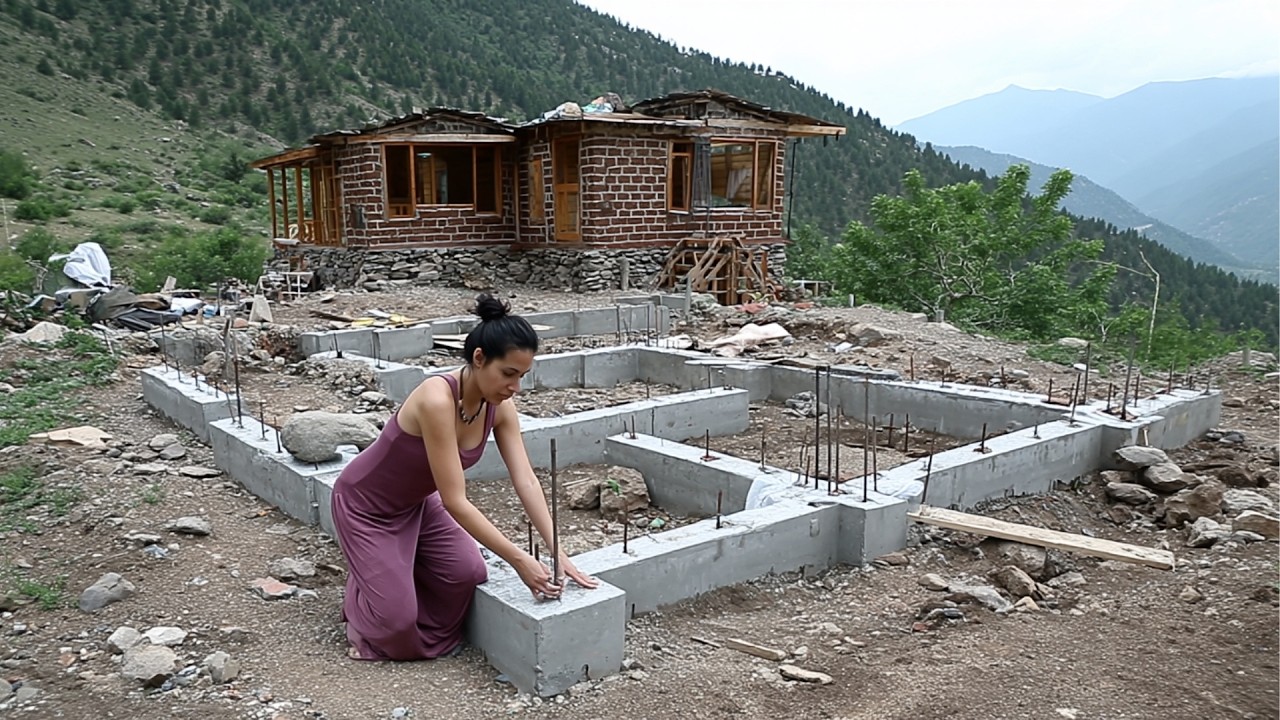


Woman Builds Her Own Off-Grid Village In The Mountains In 210 Days, With House, Sanitation, And Food Production, Without Urban Support Or Conventional Infrastructure.
As global urbanization advances over increasingly dense areas that rely on public services, a woman decided to execute the opposite of the conventional model. In an isolated mountainous region, without electrical grid, piped water, paved roads, or neighbors, she built a complete village on her own over 210 days. The project, documented by the Wild Novels channel, is not limited to constructing a house, but to implementing a fully habitable, functional, and permanent system, entirely outside the urban grid.
From the start, the challenge was not just structural, but logistical. All planning had to consider restricted access to materials, absence of machines, individual physical effort, and the need to integrate housing, sanitation, and food production into one coherent set.
Vietnamese Vernacular Architecture Applied To Off-Grid Logic
The main house follows principles of traditional Vietnamese vernacular architecture, known for its thermal efficiency, cross ventilation, and adaptation to the local climate. The choice is not aesthetic but functional. The use of local materials reduces logistical dependency and enhances the construction’s performance in response to environmental variations.
-
A R$ 370 million tender for the construction of 4 prisons in SC is released from blockage after correction of flaws, unlocking works in Chapecó, Lages, and Xanxerê, and reigniting the debate on the urgency of the Santa Catarina penitentiary system.

-
Mother and daughter build a 70 m² house with more than 8,000 discarded glass bottles and impress with their creativity; known as the Casa de Sal, the property is located on Itamaracá Island, in Pernambuco.
-
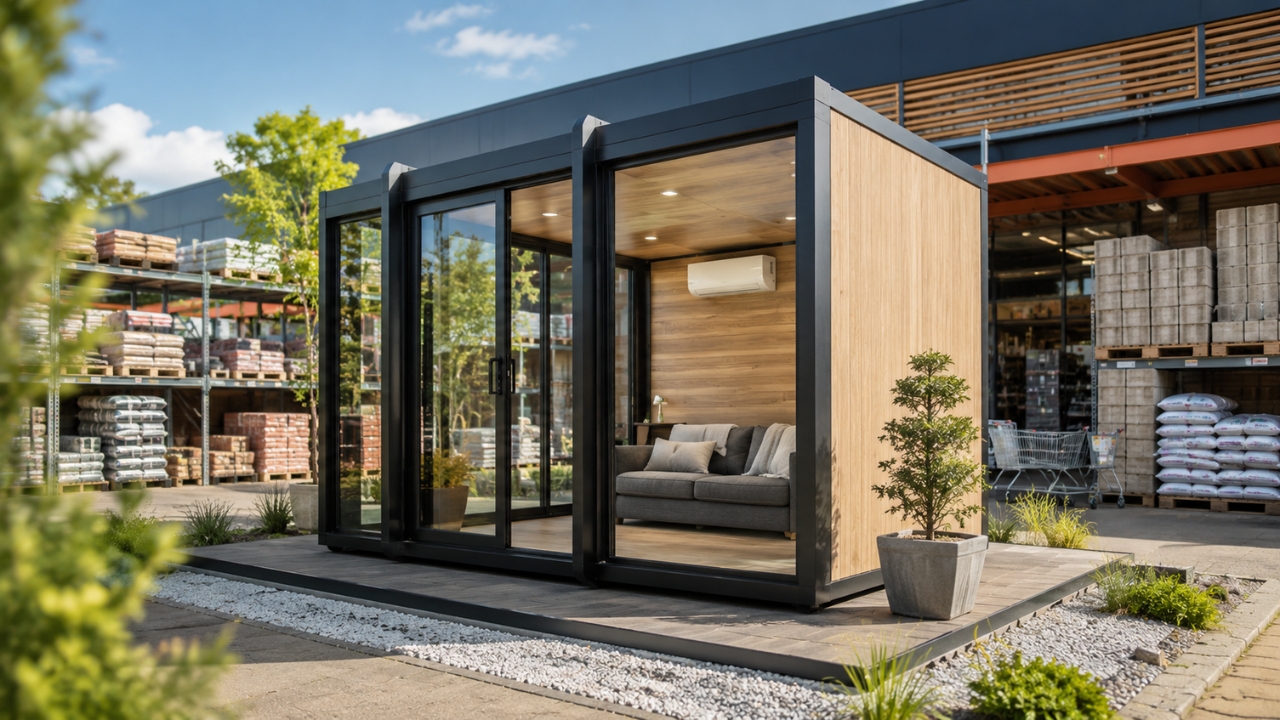
Construction material store starts selling modular units that resemble small houses, assembled in a few days in the backyard, as the housing crisis pushes families towards unconventional solutions in Australia.
-
India approved the country’s first submerged road-rail tunnel, 15.8 kilometers dug under the bed of the Brahmaputra River.



The entire structure was erected manually, without the use of industrial equipment, respecting construction techniques passed down through generations. The result is a compact, durable building with passive thermal comfort, eliminating the need for continuous artificial climate control systems.
Sanitation Planning And Hydraulic System Off The Public Grid
One of the most critical points of the project lies in sanitation. In off-grid environments, errors at this stage compromise habitability in the medium and long term. The village has a complete bathroom, tiled with manually laid tiles, a functional hydraulic system, and its own septic tank.

The implementation of the system demonstrates technical knowledge and prior planning, as the correct handling of waste is essential to avoid soil contamination and ensure continuous use of the structure. Unlike improvised projects, the sanitation here has been designed for permanent operation.
Outdoor Kitchen And Functional Organization Of Spaces
The village includes a fully operational outdoor kitchen, designed to work without piped gas or conventional electricity. The solution reduces risks, facilitates ventilation, and better adapts to the routine in an isolated environment.

The layout of the spaces follows a functional logic. There are no excess or decorative areas. Each environment serves a specific function within the overall system, reducing movements, facilitating maintenance, and improving efficiency in daily use.
Food Production As Part Of The Village Infrastructure
Self-sufficiency is not limited to construction. The village incorporates a chicken coop, pigsty, and cultivation areas organized for continuous food production.
These elements are part of the essential infrastructure of the project, not accessories or aesthetic complements.

By integrating animal husbandry and plant cultivation into housing, the village drastically reduces external dependency and ensures minimal subsistence even under prolonged isolation conditions.
Hand-Molded Concrete Paths Connect The Whole System
A relevant technical detail lies in the internal circulation. All structures are connected by hand-molded concrete paths. These paths serve practical functions: they improve drainage, reduce soil erosion, and facilitate movement during rainy periods.
In mountainous and isolated regions, this type of solution increases durability and reduces the need for constant maintenance, which is essential when there is no quick access to materials or external assistance.
Off-Grid Village As An Integrated And Functional System
At the end of the 210 days, what is seen is not just a set of rustic buildings, but an integrated habitable system. Housing, sanitation, food production, and circulation have been planned to function continuously, with low resource consumption and minimal external dependency.
The achievement stands out not only for its isolation or manual execution, but for the level of technical planning involved. The entire project was conceived, executed, and completed by a single person, without modern machines, without a team, and without prior infrastructure.
In a global scenario marked by housing crisis, energy dependency, and rising building costs, the isolated village built in 210 days becomes a practical example of how traditional techniques, when well applied, still offer viable, resilient, and functional solutions.




It’s really encouraging and amaizing and she is ahard working woman
Inspiring
Depósito de materiais de construção homens para carregar tudo isso ela teve nê não, assim até eu construo 2 casas