Portuguese
  Spanish


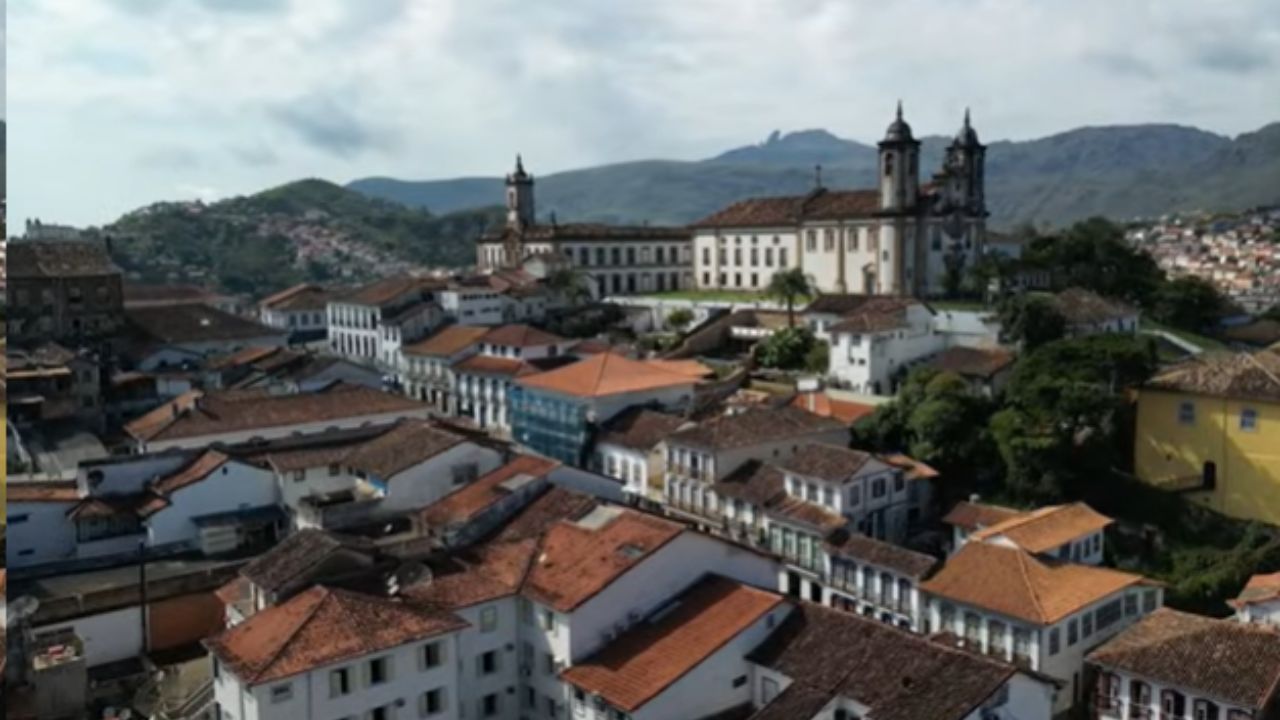


The Historic City, One of the Main Destinations in the Country, Is a Brazilian Municipality Where UNESCO Preservation Prevents the Installation of Traffic Lights in the Center.
The famous phrase “Ouro Preto has more churches than traffic lights” is more than a curiosity; it is a fact that defines the identity of this iconic Brazilian municipality. A detailed investigation reveals that the historic city, recognized as a World Heritage Site by UNESCO, has no traffic lights in its historic core, while housing at least 31 religious temples. This paradox is not a coincidence, but a direct relationship of cause and effect.
The explanation lies in a constant tension between the past and the present. The same proliferation of churches, born from the explosive wealth of the Gold Cycle and intense social and racial competition in the 18th century, is the direct cause of the absence of traffic lights. The legal and physical preservation of this baroque architecture prevents the implementation of modern traffic infrastructure, forcing the city to find alternative solutions for mobility.
The Investigation of “Zero Traffic Lights”: Fact or Folklore?
The claim of “zero traffic lights” is accurate when referring to the protected historic center. The local government does install this technology in other areas of the city. More modern neighborhoods, like Barra, have received traffic lights to organize problematic intersections and deal with constant traffic jams. This proves that the absence in the historic core is not due to a lack of technical capacity, but rather a deliberate decision.
-
Brazilian Airport to Receive $2.8 Million Investment, Completion Expected Within a Year

-
UN Warns of AI’s Environmental Impact and Calls for Greater Corporate Transparency

-
Former Atacadão Employee Turns Online Cake-Baking Lessons into a Confectionery Brand with Factory, Store, Delivery, and Nearly $400,000 in Revenue
-
Brazilian Startup Sells Nearly 9 Million Surprise Bags of Near-Expiry Food, Prevents Thousands of Tons of Waste, Aiming for $42 Million Revenue by 2026




It is crucial to note that searches for “traffic lights in Ouro Preto” may lead to false results. There are homonymous neighborhoods in cities like Campinas (SP) and Olinda (PE) that have lights and undergo road changes, which can confuse the search. However, in Ouro Preto, Minas Gerais, the rule of the historic center remains intact: traffic is managed without traffic lights.
The Physical Barrier: Why Would a Traffic Light Be Unfeasible?
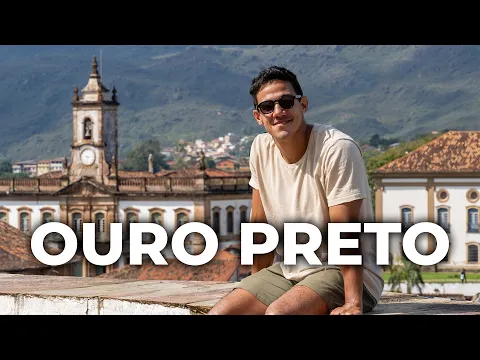

The first obstacle to modernizing traffic is physical. The urban layout of Ouro Preto was designed in the 17th century for pedestrians, mules, and litters, not for the intense flow of cars and buses in the 21st century. The streets are notoriously narrow, steep, and irregular, following the rugged topography of the land.
Traffic engineering experts point out that installing a traffic light under these conditions would be counterproductive. A red light on a narrow slope, where often two cars cannot pass at the same time, would create insurmountable bottlenecks and exacerbate traffic jams, rather than alleviate them. The original layout simply cannot support the logic of modern traffic.
The Legal Barrier: The Mandate of UNESCO and IPHAN
If the topography makes traffic lights impractical, the law makes them prohibited. Ouro Preto was one of the first places in Brazil to be designated as a World Heritage Site by UNESCO, in 1980. This honor places the historic core under the strict oversight of the National Institute of Historical and Artistic Heritage (IPHAN).
The preservation rules aim to maintain the “visual integrity” of the architectural ensemble. A traffic light, with its metal poles, lights, and wiring, is considered “modern urban furniture” and intrusive, characterized as “visual pollution” and “disfigurement of heritage”. The installation of simple tourist signs already requires compliance with IPHAN guidelines; therefore, heavy traffic infrastructure is out of the question.
Without the ability to use active control (traffic lights), the city opts for passive and restrictive management. The traffic strategy relies on hundreds of “no parking” signs, speed bumps, and crosswalks. In critical locations, such as Praça Tiradentes, the solution is the occasional closure of streets to vehicles, prioritizing pedestrian flow and preserving the architecture.
Why So Many Churches? Competition, Gold, and Segregation
If traffic lights are scarce, churches are abundant. The claim of “more than 20” is conservative; an official survey indicates at least 31 temples. The reason for this proliferation was not a unified religious plan, but intense social competition rooted in the structure of Vila Rica in the 18th century.
During the Gold Cycle, the Portuguese Crown prohibited the establishment of religious orders (like Jesuits) in the region, fearing the diversion of wealth. This vacuum was filled by brotherhoods and lay fraternities, which were rigidly segregated by race and social class. There were brotherhoods for the white elite (the “good men”), for the “pardos” (mulattos, craftsmen, and artists), and for the “blacks” (slaves and freedmen).
In a status-obsessed society, building one’s own church, more opulent than the rival group’s, became the main way to demonstrate power and identity. The Basilica of Our Lady of the Pillar, of the white elite, was covered with about 434 kilograms of gold. In contrast, the Church of Santa Efigênia was built by the Brotherhood of Blacks, supposedly after a racial split in another brotherhood. This social and racial competition is the true engine behind the architectural landscape of this Brazilian municipality.
The Artistic Legacy: Masterpieces of Aleijadinho
This fierce competition between the brotherhoods had a positive side effect: it financed the heyday of Brazilian colonial art. Each group competed to hire the best masters, driving innovation and creating the unique style known as Mineiro Baroque and Rococo. The wealth of gold provided the material, but social rivalry financed the genius.
Names like Antônio Francisco Lisboa, the Aleijadinho, and the painter Manuel da Costa Ataíde were products of this system. The Church of Saint Francis of Assisi, considered the masterpiece of Aleijadinho, is the perfect synthesis: financed by an elite order and designed by the colony’s greatest artist, who was, himself, a “pardo” embedded in this complex social structure. The result is an open-air museum, where art and history at every corner justify modern restrictions.
The history of Ouro Preto shows how a preservation decision, vital for culture and tourism, directly impacts modern life and mobility. Should the city prioritize the convenience of traffic or the integrity of its unparalleled heritage?