






 Portuguese
  Spanish


Chico Science and Nação Zumbi Addressed Digital Art Back in the 90s
Long before artificial intelligence dominated global discussions, Brazilian music showed boldness by predicting technological trends.
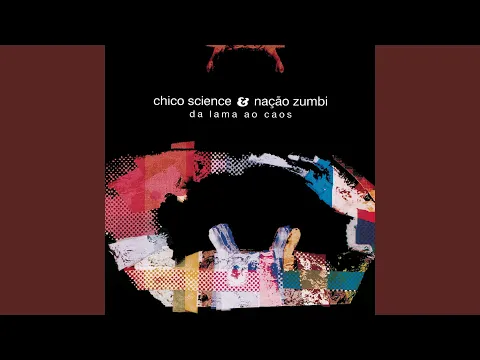
Released in 1994 on the album Da Lama ao Caos, the track “Computers Make Art” performed by Chico Science & Nação Zumbi anticipated a new scenario.
In it, machines would be capable of creating art in surprising ways.
The song mixes maracatu, hip hop, alternative rock, and electronic music, marking the Manguebeat movement as a fusion of the regional with the global.
Since its release in April 1994, the song made it clear that Northeastern culture could boldly engage with the future.
Manguebeat and the Beginning of the Fusion Between the Ancestral and the Digital
Still in the 90s, the Manguebeat movement consolidated as a cultural response to the inequalities in Recife.
Thus, artists like Chico Science transformed maracatu into a pop language and creatively connected the cangaço to the cyber era.
With the production of the album Da Lama ao Caos in 1994 and the release of Afrociberdelia in 1996, they reinforced this vision of the future.
In this way, the almost hypnotic repetition of the phrase “Computers Make Art” sounded provocative and visionary to those who listened at the time.
Although in 1996 all of this seemed distant, today it is a reality.
The group showed that technology and popular culture can coexist in innovative ways.

Prediction of Artificial Creativity Becomes Reality in 2025
Currently, platforms like ChatGPT, DALL·E, Midjourney, and Sora realize what Chico Science foresaw with his visionary music.
Although all this automatic generation of images, texts, and videos still relies on human data, the question remains relevant and necessary.
“Can the Machine Be Creative?”, the song provocatively questioned.
Thus, in 2025, the answer becomes increasingly affirmative for researchers and digital artists.
According to the Institute of Technology of Pernambuco (ITEP), over 65% of digital artists already use artificial intelligence in creative processes.
Therefore, the impact of the track “Computers Make Art” proves to be even greater in this technological scenario.
-
AI Customizes Burgers for Individuals and Impresses in Blind Test with Over 100 Participants, Matching or Surpassing Fast-Food Chains’ Approval Ratings

-
AI Revolutionizes Digital Entrepreneurship by Enabling Lean Startups and Rapid Scaling

-
The ‘tsunami’ of investments directed at Artificial Intelligence (AI) and semiconductor companies, which prioritize security and more predictable profits, has been a determining factor in the declining trajectory of Bitcoin.

-
Samsung eyes strategic chip factory in South Korea and could shake up the global AI landscape with advancements in HBM memories and advanced packaging.


Peripheral Art Projected the Digital as a Global Language
It is important to highlight that Chico Science did not limit his view to music in his creations.
By mixing rhythms from the mangue with electronic beats, the artist suggested a globalization of Northeastern popular culture with courage.
Furthermore, the cultural manifesto created with Fred Zero Quatro united the periphery, technology, and social criticism in one revolutionary aesthetic proposal.
The dialogue between the local and the digital was innovative in Brazilian music of the 90s.
For this reason, the relevance of Manguebeat persists even three decades after its birth.
From Digital Cangaço to Algorithms
As the discussion about authorship and originality intensifies, Chico Science’s prediction proves to be increasingly fundamental in 2025.
Today, algorithms write books, paint pictures, and produce songs with impressive speed.
However, digital art still relies on human sensitivity to exist fully.
Thus, the question resonates among scholars and artists: who creates, after all, the machine or the person?
In 2025, Manguebeat remains current, reminding us that culture and technology walk together in the same rhythm.
Thus, “Computers Make Art” becomes more than just music; it is a reminder that inspiration still pulses within humanity.


